Korte broek
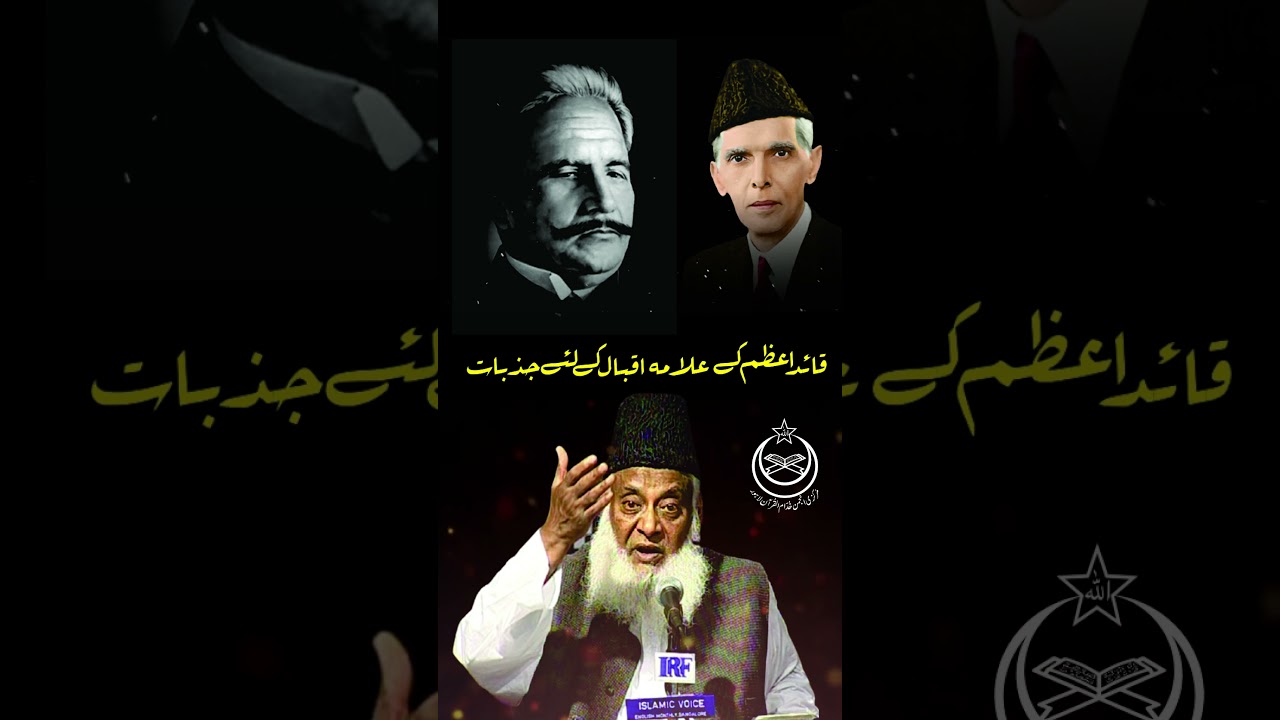
This lecture discusses the precise and deliberate manner of speech employed by Muhammad Ali Jinnah. It highlights that Jinnah was not one to engage in frivolous talk, but rather carefully considered each word before speaking. The speaker emphasizes Jinnah's commitment to accuracy and thoughtfulness in his communication, contrasting it with superficial rhetoric.

76
Islam is a complete way of life and cannot accommodate elements from other systems. The speaker argues against the integration of modern democracy and socialism into Islam, asserting that Islam possesses its own inherent democratic and socialist principles rooted in its teachings and jurisprudence. He points to the presence of the term ‘jumhoor’ (the public) in Islamic texts as evidence of Islam’s democratic foundation, and the concept of ‘shirkat’ (partnership) as its socialist basis. Islam’s system is comprehensive and self-sufficient, rejecting external ideological grafting.
56
Dr. Israr Ahmad explains the profound wisdom behind the Prophet Muhammad's (peace be upon him) decision to refrain from accepting charity (sadqa) or Zakat for himself and his household. This ensured that the benefits reached those truly in need – the poor and deserving. He emphasizes that wealth carries obligations beyond just Zakat, encouraging additional support for those less fortunate. The speaker repeatedly highlights that wealth carries responsibilities beyond the obligatory Zakat and encourages providing aid beyond it.
113
This lecture emphasizes solely relying on Allah for assistance and rejecting the practice of seeking help from spiritual entities or intermediaries. It asserts that Allah possesses the power to alleviate suffering directly, without requiring the intervention of spirits or angels. The speaker stresses that true solace and resolution come from turning to Allah alone with sincere prayer and supplication, and that Allah can grant relief through any means He chooses, independent of any external agent. The core message is a firm rejection of practices involving seeking help from anything other than the Divine.
63
True prayer transcends ritual; it’s a direct communion with God achieved when the soul awakens. This lecture emphasizes that merely performing the actions of prayer—recitation and physical movements—is insufficient. Real connection occurs when one feels present before God, experiencing a sense of humility and closeness akin to placing one’s head in God’s lap. If the soul is dormant, oppressed, or dead, genuine prayer cannot occur, regardless of adherence to schedules or outward displays of devotion. Awakening the soul and establishing direct communication with God is the essence of achieving the spiritual elevation that prayer promises.
75
The speaker reflects on a lifetime of acquiring knowledge – philosophy, Eastern and Western learning – and realizes its inadequacy without divine connection. He describes this knowledge as a fruitless palm tree, devoid of benefit. He expresses a desire to move beyond intellectual understanding to experience divine madness, passion, and a consuming love for God, seeking a spiritual awakening after resolving life’s complexities.
61
