Şort
This lecture discusses humanity’s trial within life, emphasizing a decline from the original purpose of establishing divine guidance on Earth. It reflects on the current state of Muslims globally, questioning the presence of Islamic principles—prayer, fasting—without the accompanying just system and true faith. The speaker asserts that humanity has become deserving of divine punishment, mirroring the fate of earlier nations. The core message centers on accountability and the necessity of aligning actions with true Islamic values.

46
The Quran uses the term ‘Noor’ (light) as a metaphor for Allah and also for the Quran itself. The verse ‘Believe in Allah, His Messenger, and the light which We have sent down’ clearly refers to the Quran. While ‘Noor’ can encompass the entirety of religion, the core essence of religion ultimately boils down to the concept of Tawhid (Oneness of God). Therefore, equating ‘Noor’ with Tawhid is also justifiable. This lecture explores the multifaceted meaning of ‘Noor’ within the Quranic context and its significance for faith and understanding.
59
The Prophet Muhammad (peace be upon him) once asked his companions about bankruptcy. They defined it as a lack of wealth. The Prophet corrected them, stating the true bankrupt in his nation will be the one who comes with a large number of prayers, fasts, and pilgrimages, but also with the burdens of having wronged others – having insulted someone, unjustly taken their wealth, or falsely accused them. On the Day of Judgment, these wronged individuals will present their claims, depleting the bankrupt’s good deeds. If the deeds are insufficient, their sins will be transferred to them, leading to their destruction in Hell. This is the true meaning of bankruptcy – a spiritual and moral deficiency.
50
This lecture emphasizes the religious obligation of every Muslim to strive for the establishment of the Caliphate system. It asserts that failing to do so constitutes a contradiction of faith and a disregard for divine law. The speaker criticizes a narrow focus on material possessions and worldly concerns, arguing that a true Muslim’s life should be dedicated to this essential struggle, regardless of whether their efforts are recognized or accepted by others. The lecture draws a parallel to the tireless work of past prophets, highlighting that persistent effort is key to success, even in the face of rejection.
67

The Quran was the instrument of revolution brought by the Prophet Muhammad (peace be upon him). It transformed minds, altered beliefs, and reshaped value systems. Before, life was the most cherished possession; now, martyrdom is the most welcomed. This revolution, initiated by a single individual, prioritized striving in the way of God over material gain. Surah Al-Furqan emphasizes the directive to not heed the disbelievers and to wage a great struggle through the Quran. The Quran itself was the greatest sword in the hands of the Prophet Muhammad (peace be upon him).
97
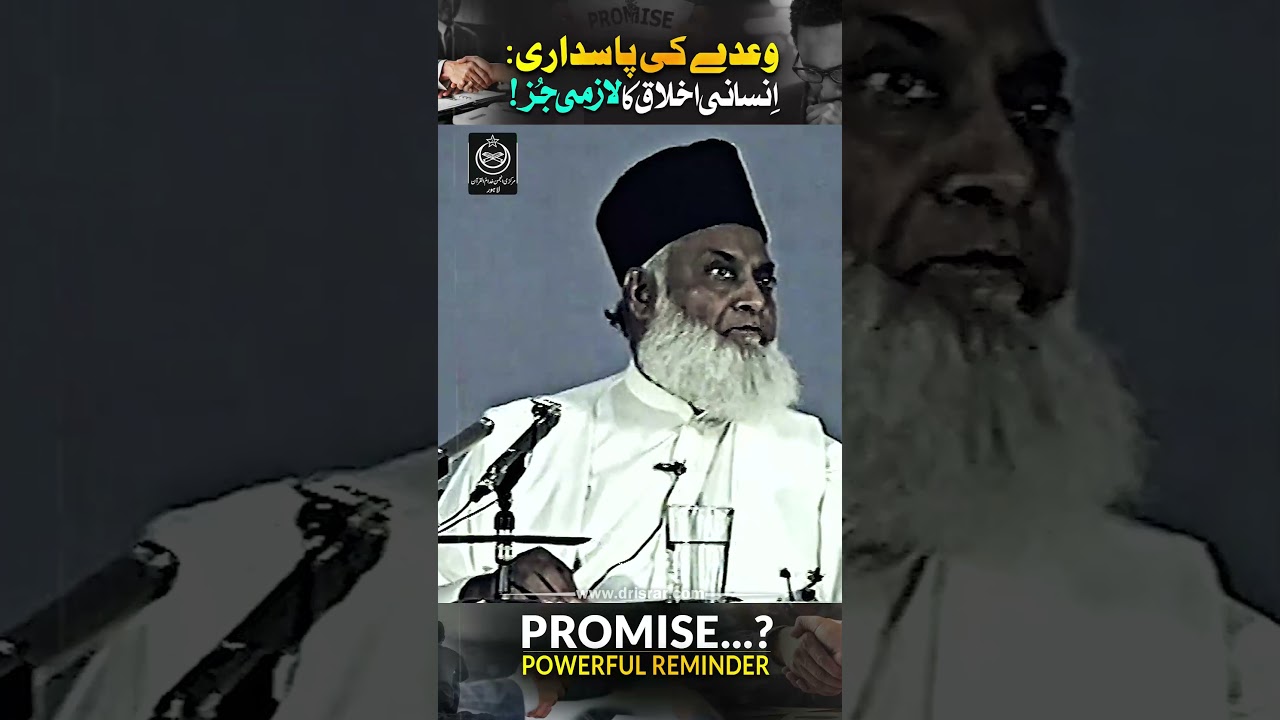
The speaker discusses a decline in ethical standards within society, moving beyond mere indecency to a fundamental erosion of basic human morals. This manifests as a lack of integrity – saying things one doesn’t mean and failing to uphold promises. Historically, even non-believers maintained a directness lacking in current society; they were either openly hostile or adhered to their word. The speaker draws a parallel to the historical figures of Medina and Mecca, noting the presence of hypocrisy and deceitful behavior in Medina, while Mecca generally upheld a more straightforward code of conduct. The speaker asserts a general decline in societal capacity for integrity and principled action.
53
