Corti

This lecture discusses humanity’s trial within life, emphasizing a decline from the original purpose of establishing divine guidance on Earth. It reflects on the current state of Muslims globally, questioning the presence of Islamic principles—prayer, fasting—without the accompanying just system and true faith. The speaker asserts that humanity has become deserving of divine punishment, mirroring the fate of earlier nations. The core message centers on accountability and the necessity of aligning actions with true Islamic values.

46
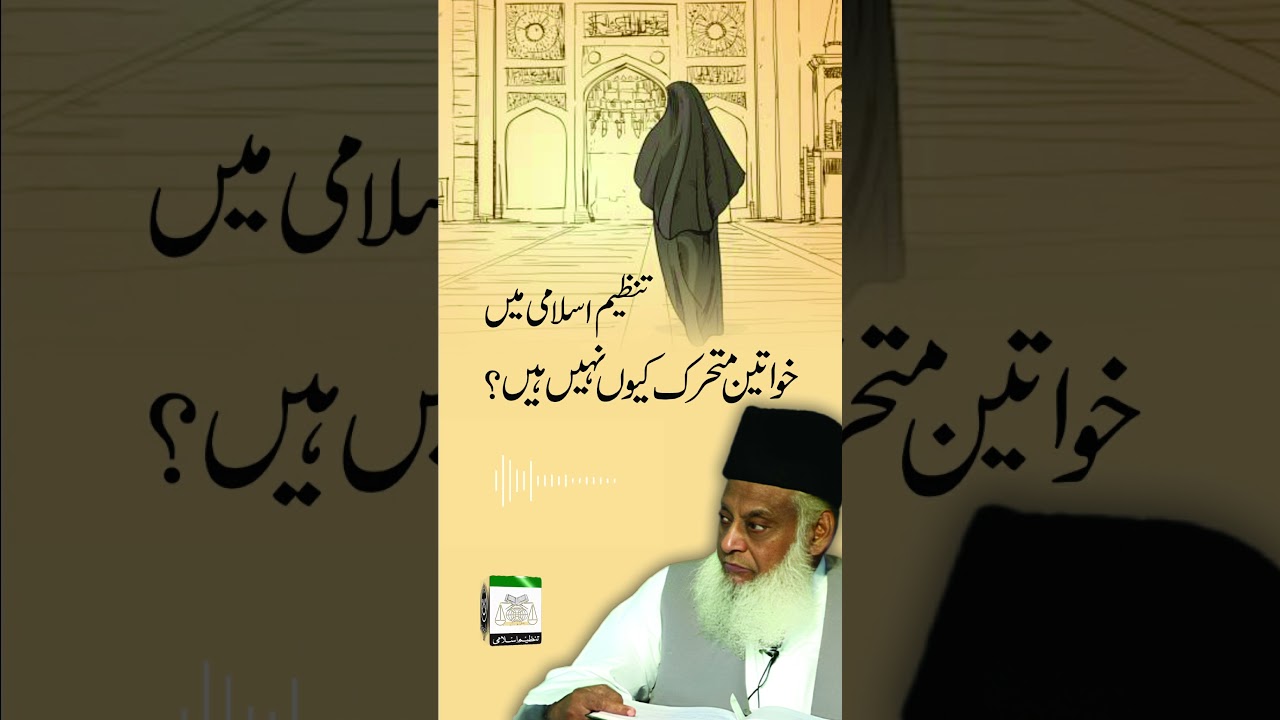
This lecture discusses the societal expectations placed upon women, particularly within a traditional framework. It highlights the prioritization of domestic responsibilities and the perceived conflict between these duties and external activities like preaching or political canvassing. The speaker emphasizes that a woman’s primary sphere of influence is her home, and while participation in other areas isn’t forbidden, it should not come at the expense of her familial obligations. The lecture addresses the potential for conflict when societal expectations clash with a woman's desire to engage in public life and suggests a balanced approach is necessary. It suggests that societal structures will naturally slow the pace of external activities for women prioritizing their homes.
89

The lecture clarifies the distinction between being a Muslim—one who outwardly professes the faith—and a *mumin*—a true believer. It explains that merely claiming faith is insufficient; genuine belief requires complete trust in God and His Messenger, coupled with striving in His path with both wealth and life. The speaker references Surah Al-Hujurat, verse 14, highlighting that true faith enters the heart and manifests in dedicated action and sacrifice. A Muslim may adhere to the rituals, but a *mumin* embodies the complete essence of faith through unwavering dedication and continuous struggle for the sake of Allah.
75

This lecture discusses the inevitability of trials and tribulations in the lives of believers, referencing historical hardships faced by early Muslims, particularly during times of famine and war. It emphasizes that these tests are not punishments, but opportunities to demonstrate patience and faith. The speaker recounts instances of extreme hunger experienced by companions of the Prophet Muhammad (peace be upon him), highlighting their resilience and sharing of limited resources. The core message is that enduring hardship with patience brings divine reward and strengthens one’s connection with God.
54
The Quran’s true greatness lies in its being the expression of the Divine Speaker, revealing the entirety of God's attributes. Just as one can discern a person's intellect, understanding, and character from their speech, the Quran manifests all of God’s qualities. The text’s eloquence embodies complete divine attributes, making it a reflection of the Divine Being.
64

Pride, or *takabbur*, is presented as a grave sin in Islam, likened to attempting to strip a divine covering from God. This lecture explains that arrogance isolates individuals from divine grace, referencing a hadith stating that no one with even a speck of pride in their heart will enter Paradise. The act of removing someone’s shawl is described as a profound dishonor in Arab and Pashtun cultures, and pride is similarly presented as a transgression against God. It’s emphasized that God alone deserves such grandeur, and arrogance is a rejection of divine majesty. The lecture highlights that true humility is essential for spiritual growth and acceptance by God.
105
