Quần short
Death is not an end, but a pause in life, a transition to what comes next. This lecture explores the revolutionary impact of faith on the companions of the Prophet Muhammad, peace be upon him. They were dedicated, committed seekers of the afterlife, lovers of God, and devoted to the Prophet. For them, the Prophet’s gesture was a command, and they willingly sacrificed their lives, homes, and worldly possessions for the sake of their faith. This dedication birthed a revolution, and the Quran was the means by which these exceptional individuals were prepared.

76
This lecture emphasizes a reciprocal relationship with God. True acceptance of prayers hinges on actively aiding God's cause and distancing oneself from those who defy Him. Divine assistance isn’t granted to those aligned with rebellion against God. Becoming a true servant of God guarantees His support, but allegiance to others while seeking divine favor is inconsistent. This is a two-way commitment, not a one-sided expectation. Support from God is earned through unwavering devotion and righteous action.
53

The speaker asserts that religious morality built upon a foundation lacking inherent ethical character is inherently weak and ineffective. He illustrates this with the example of a local businessman known as Haji Blackia, a wealthy sugar distributor known for his outward religious observance (leading prayers, having a long beard) but lacking genuine moral principles. The speaker argues that superficial religious practice without inner integrity is meaningless and ultimately futile. True religious morality must be rooted in solid ethical character.
66
Dr. Israr Ahmad explains that contemporary Urdu utilizes easily understood vocabulary rooted in common usage. He points out that words like ‘Asr’ (era/time) and ‘Khassara’ (loss) are well-established in Urdu. The lecture emphasizes that even words with Arabic origins are integrated naturally into the language, demonstrated by terms like ‘Iman’ (faith) and ‘Wasi’at’ (breadth). The discussion highlights the seamless blend of Arabic and Urdu, making the language accessible and relatable.
64
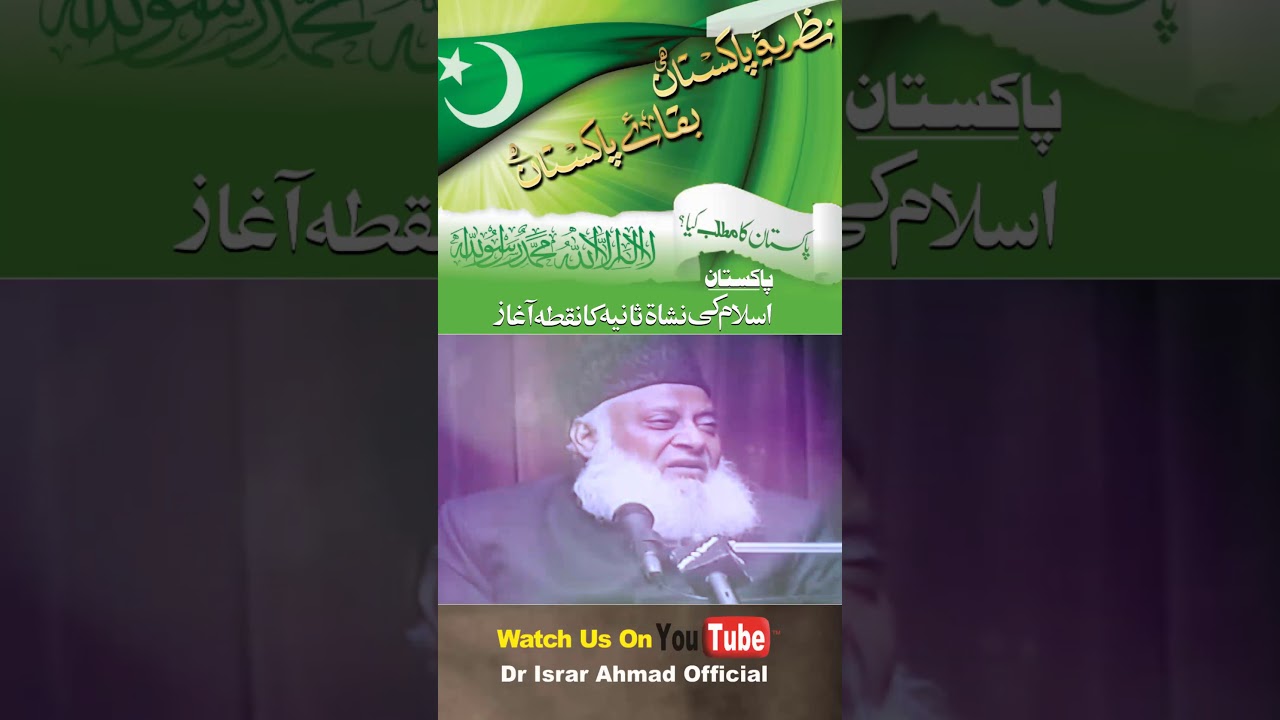
A recent gathering of Islamic movement leaders in London assessed global regions for the potential revival of Islam and the establishment of an Islamic system. The consensus identified Pakistan as the sole viable country for this purpose, possessing the inherent capabilities, resources, and challenges necessary for this undertaking. The lecture emphasizes Pakistan’s unique position and potential in the context of global Islamic resurgence.
241
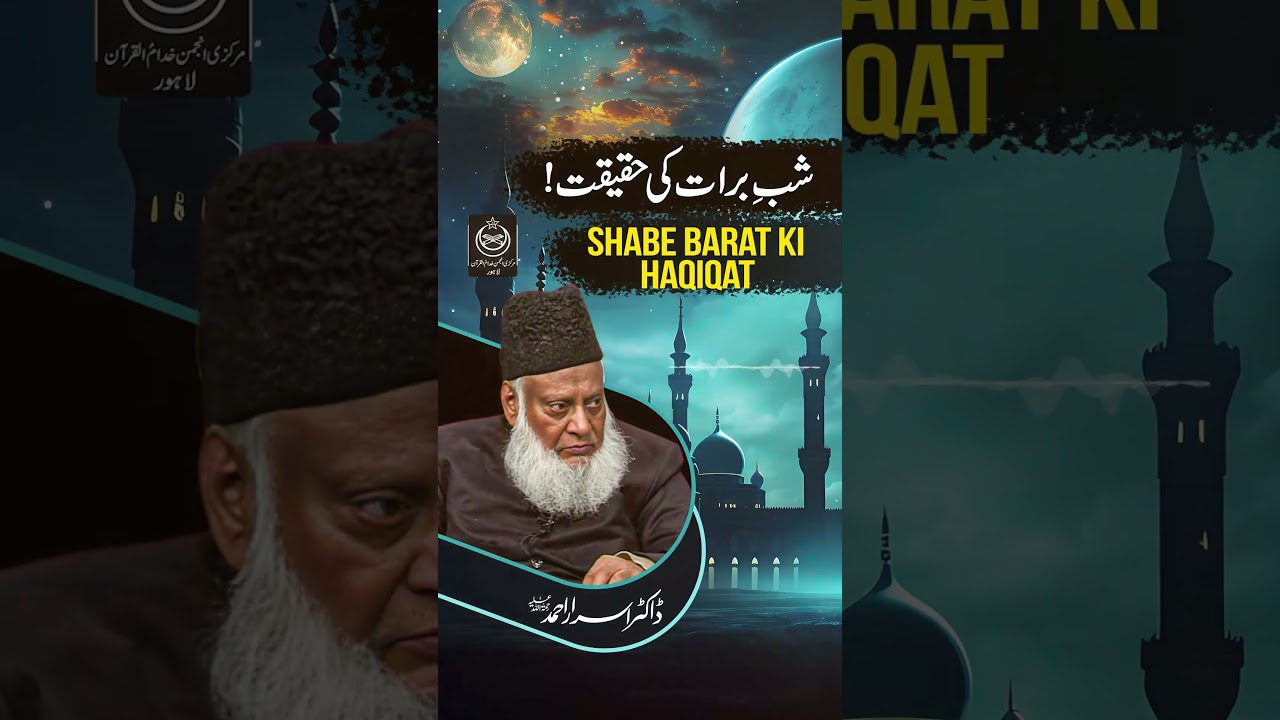
This lecture clarifies the significance of Shab-e-Barat based on authentic hadith. It explains that the Prophet Muhammad (peace be upon him) would visit the Baqi graveyard to seek forgiveness for the deceased. The speaker emphasizes that while night-long worship is virtuous, celebrating with fireworks and imitating Diwali practices are not part of Islamic tradition. Fasting on the 15th of Sha'ban is also discussed, linking it to the Prophet’s regular practice of fasting on the 13th, 14th, and 15th of each lunar month. The core message is to focus on sincere worship, seeking forgiveness, and remembering the deceased.
85
