Quần short
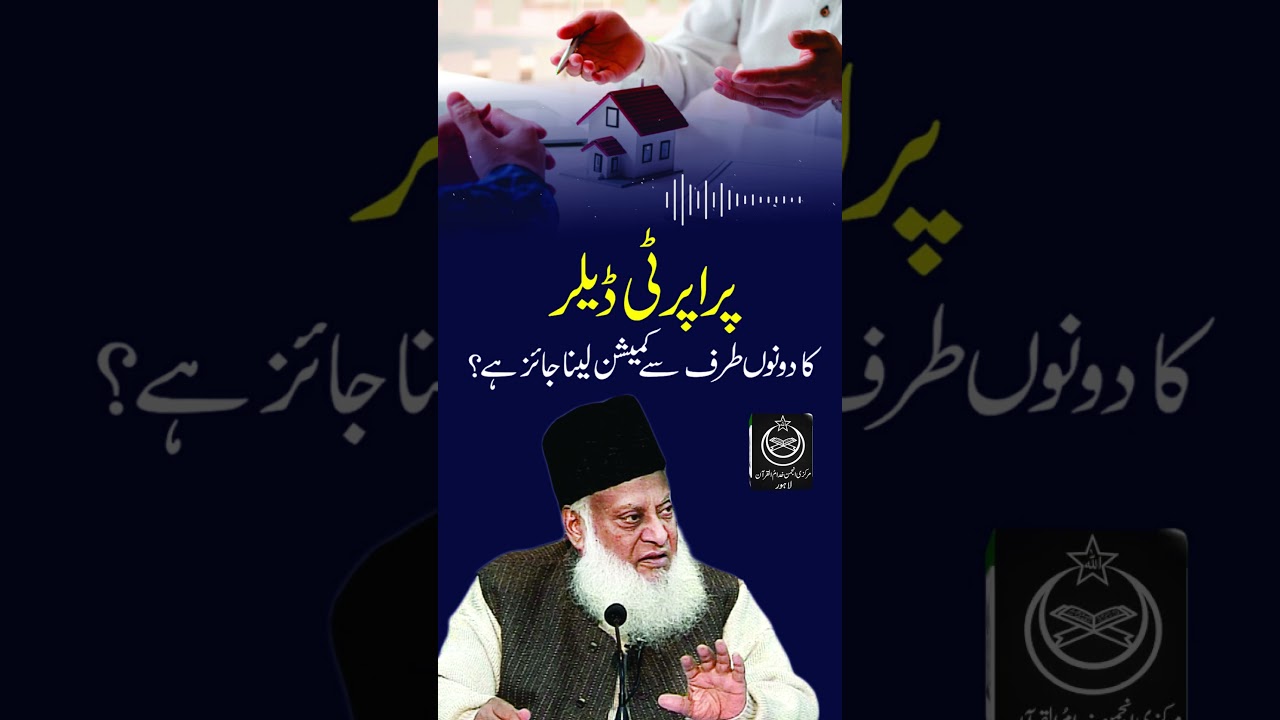
Dr. Israr Ahmad discusses the Islamic ruling on property dealers charging fees from both the buyer and seller, or from both landlord and tenant. He asserts that taking fees from both sides is *haram* (forbidden). The dealer should only take a commission from one party to incentivize securing the best possible deal for that client, whether a lower rental price or a better sale price. This approach ensures fairness and ethical conduct in property transactions.

83
This lecture explores the concept of divine guidance and its profound impact on human life. It emphasizes that success and righteousness are not achieved through personal effort alone, but are gifts from God. The speaker highlights the importance of recognizing God's favor and the potential for life to drastically change with even the smallest deviation. It underscores that all praise and gratitude belong to God, who bestows guidance and directs individuals toward the right path. The lecture serves as a reminder of God's grace and the need for constant acknowledgment of His blessings.
78
This lecture discusses the dual approach of encouragement and warning found within Islamic teachings, specifically referencing Surah Al-Asr. It emphasizes that effective guidance requires both positive reinforcement—recognizing potential and offering hope—and constructive criticism, alerting individuals to the consequences of negative actions. The speaker highlights that humans are susceptible to ruin unless they fulfill four conditions: faith, righteous deeds, upholding truth, and encouraging it in others. The balance of *tabshir* (giving good news) and *anzar* (warning) is essential for personal and collective development, reflecting the comprehensive nature of the Quranic message.
70
This lecture details three effective methods for conveying the message of faith: wisdom-based argumentation, positive and appealing counsel, and respectful debate. It emphasizes approaching dialogue with intellect, kindness, and a focus on constructive engagement rather than conflict. The core principle is to guide others towards the right path through reasoned discussion and gentle persuasion, avoiding harshness or coercion. It’s a blueprint for effective *dawah* rooted in intellectual honesty and compassionate communication.
85
This lecture explores the concept of existence prior to the Big Bang, positing a pre-existing state beyond scientific comprehension. It details the creation of human souls and angels before the material universe, asserting their non-material nature and timeless existence. The lecture explains that all souls—from Adam to the last human before the Day of Judgment—were created in this pre-Big Bang realm, existing outside the confines of the material universe and time itself. This pre-existence is presented as a foundational element of Islamic cosmology.
53
This lecture details the immense sacrifices parents make, particularly mothers, during pregnancy and early childhood. It highlights the physical and emotional burdens mothers endure, from carrying the child in the womb for nine months to nurturing and feeding them for two years. The text emphasizes the profound debt of gratitude children owe their parents, both for their care and as a reminder of our ultimate return to God, mirroring the parent-child relationship. It stresses that acknowledging and appreciating parents is a fundamental aspect of faith and righteousness.
66
