מִכְנָסַיִים קְצָרִים
The text emphasizes that true life resides in the afterlife, not the material world. It critiques a materialistic focus, stating that people are lost in the pursuit of worldly possessions, mistakenly believing they are achieving something substantial. This pursuit leads to being lost in matter and consumed by materialism, exhausting all efforts within a limited scope. The core message is a rejection of prioritizing worldly gain over spiritual fulfillment and preparation for the afterlife.

40
Allama Iqbal eloquently states that a Muslim's life is defined by adherence to a constitutional framework – the Quran. This framework sustains the Muslim community, analogous to the body sustained by the soul. Just as a body ceases to function without a soul, the community’s vitality depends on the Quran. The Quran is the heart of the Muslim community, a guiding force and connection to God. Without this divine connection, existence is meaningless; the community is merely dust without a guiding light. The Quran is the rope of God, providing strength and direction. A life devoid of this connection lacks purpose and substance.
59

This lecture details the life of Abu Bakr Siddique, focusing on his successful business prior to embracing Islam. It highlights how his dedication shifted from commerce to the propagation of the faith after accepting Islam. The lecture emphasizes Abu Bakr’s pivotal role in early Islamic outreach, specifically detailing how his efforts led six individuals from the 'Ashra Mubashara' (ten blessed companions) to accept Islam and join the Prophet's cause. The discussion underscores the transformation from worldly pursuits to devotion to religious work, and the sacrifices made for the sake of Islam.
42
This lecture explores the multifaceted greatness of Prophet Muhammad (peace be upon him). It distinguishes between his status as a prophet and his humanity, noting that understanding the full extent of his greatness is beyond human comprehension. The lecture emphasizes that only a prophet can truly appreciate the stature of another prophet, highlighting the unique qualities inherent in Prophethood. It explains that assessing the Prophet's significance requires a perspective beyond that of a mere physician or scholar, acknowledging his exceptional position in both spiritual and worldly affairs.
49
In his final days, Allama Iqbal expressed deep concern about the continuation of his mission after his passing. He feared a lack of capable successors to carry forward his work, drawing a parallel to the anxiety of Prophet Zakariya when he prayed for a son in old age. Iqbal worried about the potential inability of his relatives and those around him to follow the righteous path he advocated. He implored God for a devoted successor, mirroring Zakariya’s plea. This lecture explores these anxieties, referencing Iqbal’s famous verses, ‘Sarod-e-Raftbaz,’ ‘Nayeem-e-Az-Hijaz,’ and ‘Sar-e-Rozgar-e-In Faqir-e-Dagar Dana-e-Rah.’
52
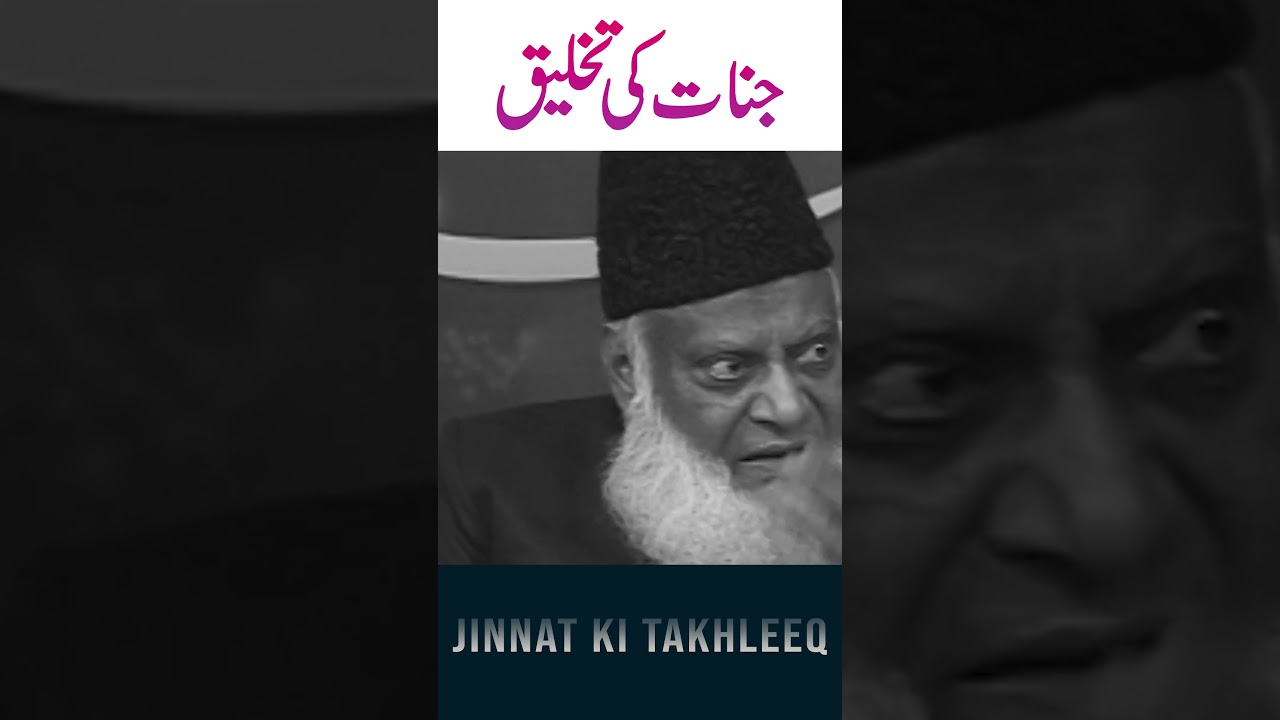
Dr. Israr Ahmad discusses the creation of Jinn and Adam, highlighting their distinct compositions and the source of their creation. He explains that Jinn were created from smokeless fire, while Adam was created from clay. This difference in origin accounts for the superiority of Adam, as he was imbued with the divine spirit (Ruh Muhammadi) that Jinn lacked. The lecture emphasizes that Adam’s creation involved a spiritual dimension absent in the Jinn, making him a more complete and worthy creation. The speaker argues that the Jinn's inferior nature stems from this lack of spiritual essence.
58
