Shorts
The text emphasizes that true life resides in the afterlife, not the material world. It critiques a materialistic focus, stating that people are lost in the pursuit of worldly possessions, mistakenly believing they are achieving something substantial. This pursuit leads to being lost in matter and consumed by materialism, exhausting all efforts within a limited scope. The core message is a rejection of prioritizing worldly gain over spiritual fulfillment and preparation for the afterlife.

40

The speaker discusses the erosion of fundamental human morality within the Muslim community of the Indian subcontinent, attributing it to roughly two centuries of colonial rule. This subjugation has diminished the inherent strength of character, leading to a prevalence of insincere promises and a lack of steadfastness. The speaker emphasizes that these core ethical principles are universal, present even among non-Muslims, yet historically lacking in certain tribal groups. A key point is the collective weakness in upholding commitments and demonstrating resilience.
68
This lecture emphasizes the importance of self-assessment and maximizing one’s potential. It asserts that individuals often underestimate their capabilities and fail to fully utilize their inherent talents. The speaker stresses that true potential cannot be determined without diligent effort and self-exploration. Responsibility for unrealized potential lies with the individual. While humans readily exert themselves for worldly pursuits, they frequently lack the same dedication to spiritual growth, resulting in a decline in faith. Genuine progress requires relentless effort and honesty with oneself; self-deception yields no benefit. The lecture calls for greater dedication to spiritual development than is given to material gains.
48
This lecture explores the connection between faith in God and the absence of fear and grief. It argues that true belief manifests as inner peace and confidence, even in the face of adversity. The speaker emphasizes that a troubled heart indicates a lack of complete trust in God’s sovereignty. Experiencing peace and freedom from anxiety are considered concrete proofs of genuine faith and a solidified connection with the Divine. The lecture highlights that reliance on God is the only path to overcoming these negative emotions and achieving true contentment.
57
Dr. Israr Ahmad strongly discourages involvement with astrology, palmistry, and similar predictive practices. He asserts that while these systems might contain partial truths, Muslims are explicitly commanded to abstain from them due to the lack of definitive evidence and their potential for misguidance. The lecture emphasizes adherence to established Islamic principles and reliance on divine guidance rather than speculative beliefs. This bayān clarifies the Islamic stance against seeking knowledge of the future through unverified means.
39
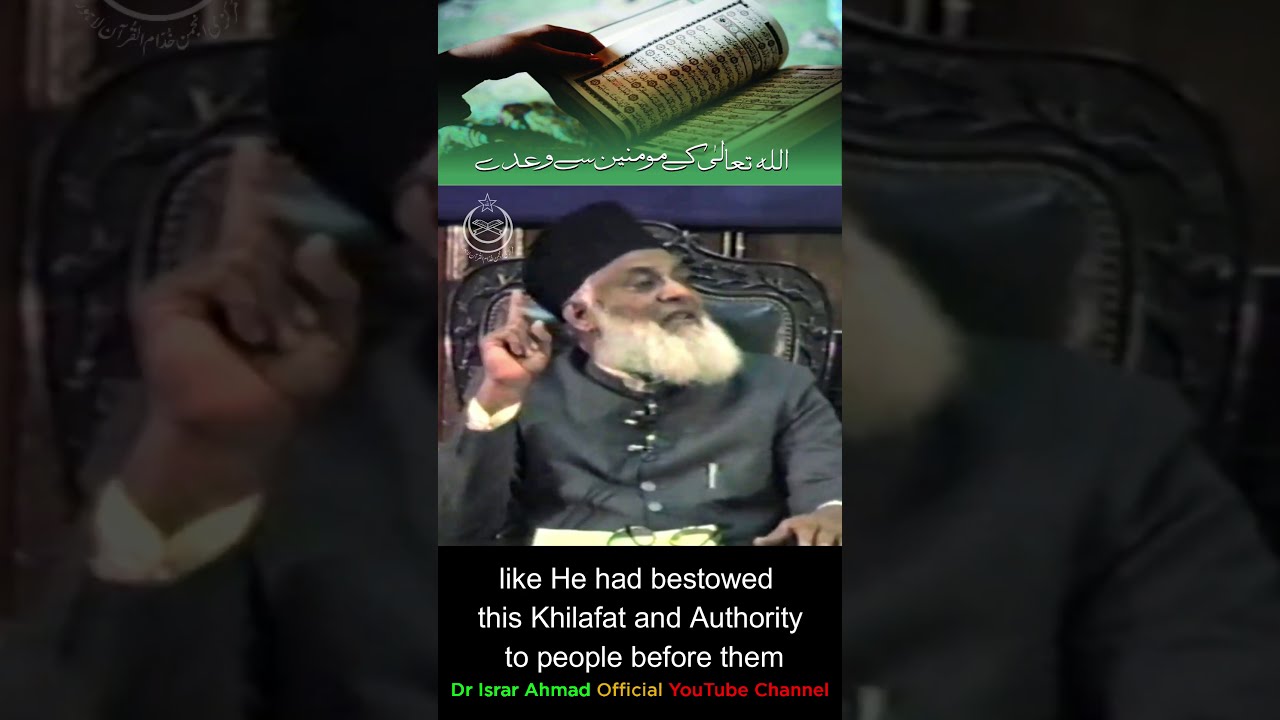
This lecture analyzes verse 55 of Surah Noor, explaining Allah’s promise to believers: establishing them as successors on Earth, granting dominance to their faith, and replacing their fear with security. The discussion highlights that true Tawhid (Oneness of God) is incomplete until the religion of Allah prevails. The verse connects political empowerment with spiritual fulfillment, asserting that genuine worship requires both faith and the ability to practice it without oppression. Dr. Israr Ahmad explains that the promise of governance is intrinsically linked to the establishment of Allah’s way of life and the eradication of fear among believers.
179
