Shorts
The observance of fasting on the 9th and 10th of Muharram is a recommended practice, not obligatory. This practice originated when the Prophet Muhammad learned that the Jews of Medina fasted on the 10th of Muharram to commemorate their deliverance from Pharaoh. The Prophet, affirming a greater connection to Moses, instructed his companions to fast for two days – the 9th and 10th – to distinguish the Muslim practice from that of the Jews. This two-day fast signifies a deliberate divergence from the Jewish tradition, while simultaneously honoring the historical event and recognizing the importance of Moses.

63
This lecture explains the concept of *tasbeeh* – the glorification of God – as inherent in the very fabric of creation. It clarifies that *tasbeeh* isn't limited to verbal recitation but encompasses the perfect and sustained existence of all things, free from imperfection or need. The lecture draws parallels between the act of floating or orbiting – maintaining a fixed course – and the continuous glorification of God by the universe. Every element, from planets to particles, testifies to the Creator’s perfection and power. The universe operates flawlessly, demonstrating divine knowledge, wisdom, and omnipotence. True *tasbeeh* is the silent testimony of creation to its perfect Creator, a being free from all flaws, weakness, and dependence.
64

Dr. Israr Ahmad discusses the proper disbursement of Zakat funds according to Hanafi jurisprudence. He emphasizes that Zakat should either be collected by the government or directly distributed to eligible recipients, ensuring they become the owners of the funds. He raises concerns about institutions receiving Zakat without direct ownership by the intended beneficiaries. He proposes that if the government allocates Zakat to hospitals, access to free services should be limited to those eligible for Zakat, with a fee structure in place for others. He also addresses the practice of government grants to madrassas, suggesting transparency in directing funds to eligible students. He requests understanding on this sensitive issue to avoid unnecessary controversy.
130
This lecture explores the unique relationship between Prophet Ibrahim (Abraham) and God, highlighting his status as a close friend (Khalil) of God as mentioned in the Quran. It details how God chose Ibrahim as an Imam (leader) for humanity and traces the lineage of prophets through his descendants, ultimately leading to Prophet Muhammad (peace be upon him). The lecture emphasizes the continuous chain of prophets spanning 1400 years, from Moses and Aaron through Jesus and John, culminating in the prophethood of Muhammad (peace be upon him). It underlines Ibrahim's pivotal role in the history of divine guidance.
72
This lecture critiques the societal trend of prioritizing worldly education and careers over religious knowledge and practice. It argues that every Muslim should be capable of performing essential religious duties like leading prayers and conducting marriage ceremonies. The speaker challenges the audience to self-reflect and examine their own commitment to Islamic principles rather than criticizing religious scholars. The lecture highlights a shift in priorities towards material success and away from spiritual development, questioning why individuals pursue professions that offer wealth and status while neglecting religious obligations. It emphasizes that true religious understanding comes from personal devotion and not solely from professional clerics.
64
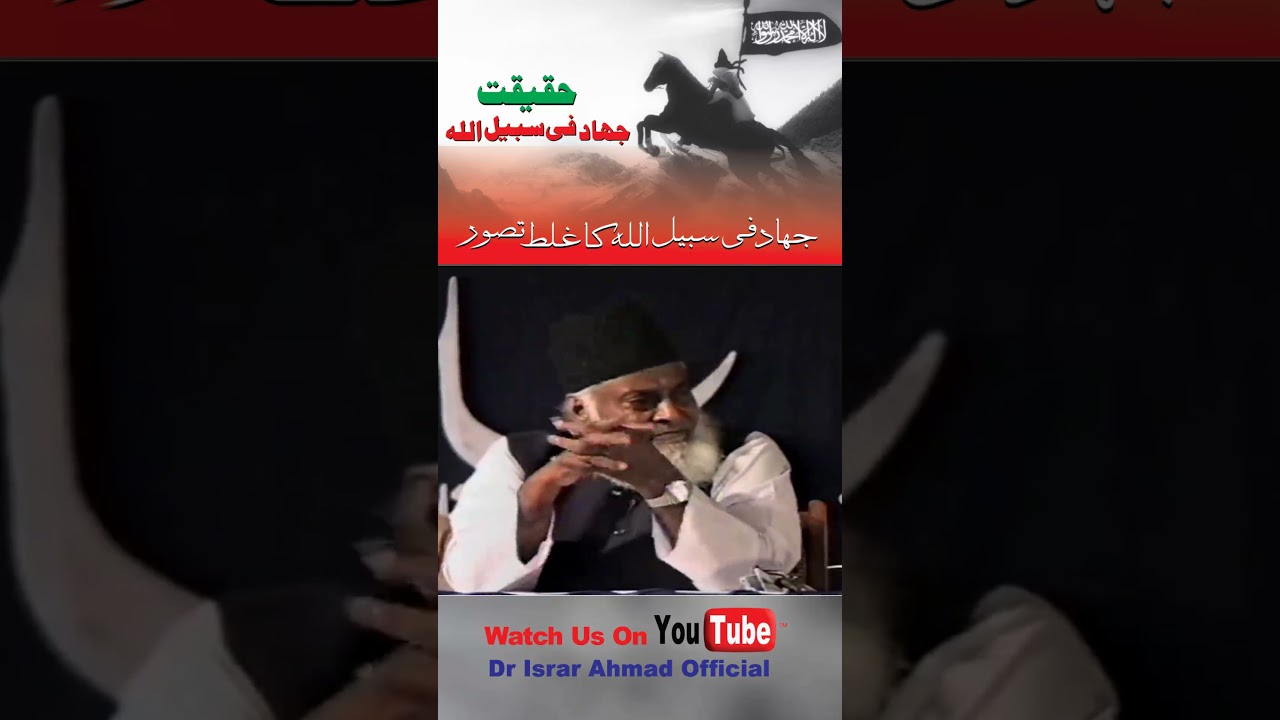
This lecture clarifies the true meaning of Jehad in Islam, dismissing its misuse for worldly gains like expanding empires, collecting wealth, or personal ambition. It emphasizes that genuine Jehad is solely for establishing the supremacy of God’s word and implementing a just Islamic system. Any other intention negates the sincerity of the act. The speaker refutes the notion that fighting for tribal feuds, personal bravery, or material benefits qualifies as Jehad. True Jehad aims to elevate God’s message and establish a righteous governance, making it a purely devotional act.
64
