Calção
The Quran describes a day of immense hardship, 'Yaum-e-Farar,' where individuals will prioritize self-preservation above all else. On this day, familial and societal bonds will dissolve as people flee from loved ones—siblings, parents, spouses, and children—driven by intense fear and a desperate desire for personal salvation. The text highlights the complete breakdown of relationships and the overwhelming self-interest that will characterize this day of reckoning, where individuals will solely focus on escaping divine punishment.

88
This lecture clarifies the permissibility of continuing to eat and drink until the white thread of dawn becomes distinctly separate from the black thread of night. It addresses excessive caution observed by some regarding the timing of *suhoor*, emphasizing that one can complete their meal even after the call to prayer. The speaker explains that the period of fasting begins at sunset and ends with the start of a new day, and that strict adherence to precise timing isn’t necessary, citing the Prophet’s allowance for finishing a drink even after the *azaan*. The emphasis is on the blessing in consuming the pre-dawn meal and avoiding unnecessary rigidity in its observance.
53
The Urdu language shares a profound connection with Arabic, extending beyond mere vocabulary. The script itself originates from Arabic, and numerous grammatical structures and lexical items are directly borrowed. This linguistic kinship makes learning Arabic particularly advantageous for Urdu speakers, facilitating a deeper understanding of religious texts like the Quran. Despite this inherent connection, sufficient effort hasn’t been directed towards mastering Arabic to directly grasp the Quran’s meaning. The speaker emphasizes the pervasive presence of Arabic-derived words in everyday Urdu speech, highlighting a missed opportunity for intellectual and spiritual enrichment.
53
This discourse emphasizes that truthfulness stems from aligning statements with the principles of the Quran. Justice is achieved through Quranic rulings, and reward is assured for those who act upon its teachings. The Quran itself guides, and those who call others to it are guaranteed guidance. The speaker prays for divine assistance in remaining steadfast on the straight path for themselves and the audience.
89
The lecture discusses the unreliability of weak narrations (riwayat) and their misuse in religious discourse. It emphasizes that many narrations circulating, attributed to sources like Bukhari, Muslim, Tirmidhi, and Ibn Majah, originate from books lacking proper authentication (isnad) like those by Khatib Baghdadi and Daylami. The speaker cautions against using narrations with broken chains of transmission – weak (za'if), unusual (shaz), or unsourced (mersal) – that cannot be traced back to Prophet Muhammad. The Quran is presented as the ultimate and most reliable source of guidance, surpassing all other narratives.
51
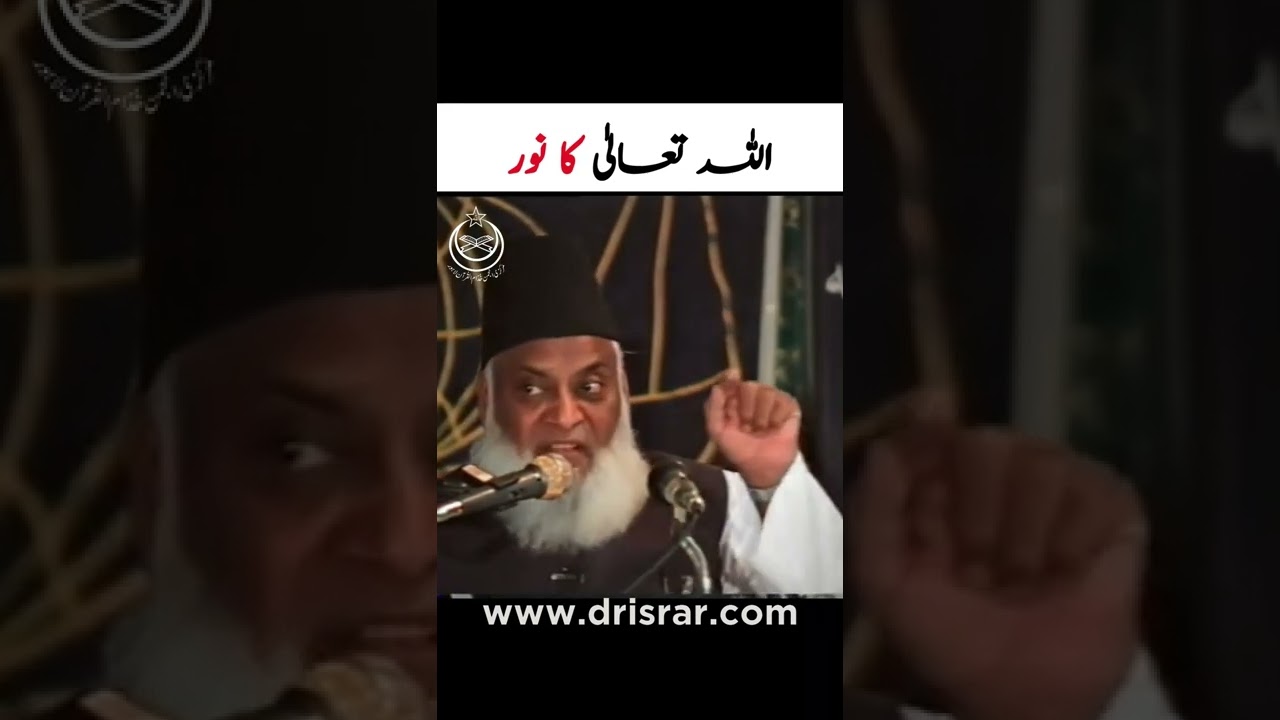
This lecture explores the concept that those who oppose divine guidance attempt to extinguish the light of God through baseless claims and actions. The speaker clarifies that this attempt is futile, as God will always perfect and sustain His light. The analogy of blowing out a lamp is used to illustrate the misguided effort to negate truth with falsehood, a concept beautifully expressed in a poetic verse by Maulana Zafar Ali Khan. The message emphasizes the invincibility of divine truth and the ultimate triumph of faith over opposition.
52
