Calção
The greatest act of gratitude is towards one’s parents, a concept emphasized five times in the Quran. Simply *looking* at the Kaaba with reverence is considered an act of worship. Similarly, looking at one’s parents with love and respect is also an act of worship. This act of reverence, even without verbal interaction, holds significant spiritual reward. The Quran highlights the immense importance of honoring and showing affection to parents.

70
This lecture explores the concept of divine uniqueness, emphasizing that God is free from any partners, progeny, or need for support. It highlights the attributes of God as the sole sovereign, creator, and sustainer of the universe, deserving of all praise and magnification. The discussion centers on the affirmation of God’s absolute oneness and transcendence, rejecting any form of association or limitation to His divine essence. It underscores the importance of recognizing God's perfect attributes and submitting to His will.
42
The lecture discusses the origins of Islam, emphasizing its initial state of being foreign and unfamiliar. It highlights how Allah granted Islam dominance and power, but warns of a potential return to its original state of isolation if individuals distance themselves from its principles. The speaker congratulates those who remain connected to Islam, despite facing potential alienation and lack of support from their surroundings. The message underscores the importance of remaining steadfast in faith to avoid becoming outcasts.
55
This lecture explores the concept of reward in relation to individual capacity and inherent difficulties. It highlights that a single act of goodness, achieved despite significant internal obstacles, can be more valuable in the eyes of God than numerous acts performed with ease. The lecture emphasizes that Divine assessment considers the effort and struggle behind an action, not merely its quantity. It suggests that genuine achievement lies in overcoming personal limitations to perform even a small good deed. The relative ease with which some individuals accomplish good deeds does not diminish the importance of striving for goodness despite personal challenges.
48
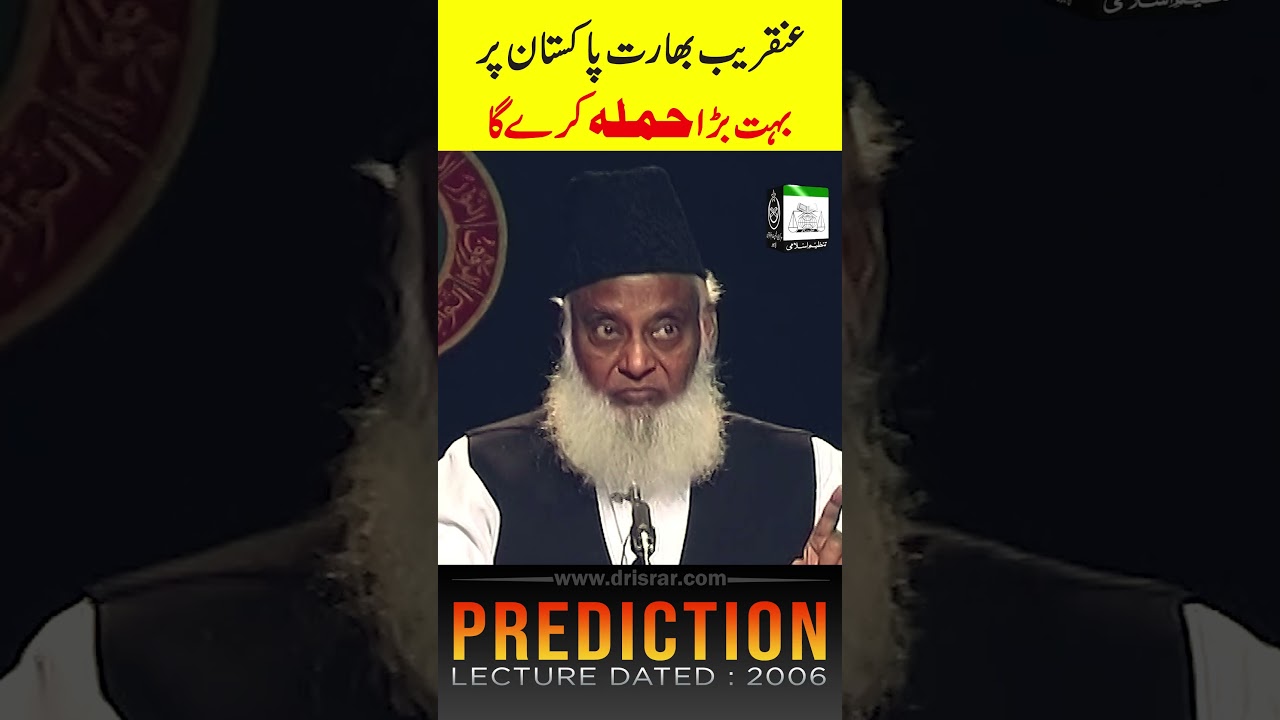
This lecture discusses a potential large-scale conflict between India and Pakistan if China and Pakistan strengthen their alliance. The speaker predicts a future Islamic revival originating from the region, even at a significant cost in lives. A key prophecy from Shah Aliullah Dehlavi foretells a time when the upper castes of India will predominantly convert to Islam. The lecture emphasizes the historical trajectory and inevitable changes occurring, acknowledging the inability to prevent these unfolding events.
60
Science and technology are rapidly advancing. This lecture addresses the permissibility of utilizing advancements, distinguishing between those aligned with Islamic principles (Kitab o Sunnat) and those that are neutral. It emphasizes that progress benefiting humanity should be embraced, while innovations contradicting core Islamic values should be rejected. The lecture posits that human progress is a collective inheritance, not the property of any individual, and should be guided by ethical considerations rooted in faith. Neutral advancements, permissible within an Islamic framework, can be adopted and integrated into society.
74
