Celana pendek

The speaker asserts that religious morality built upon a foundation lacking inherent ethical character is inherently weak and ineffective. He illustrates this with the example of a local businessman known as Haji Blackia, a wealthy sugar distributor known for his outward religious observance (leading prayers, having a long beard) but lacking genuine moral principles. The speaker argues that superficial religious practice without inner integrity is meaningless and ultimately futile. True religious morality must be rooted in solid ethical character.

66
This lecture details the events leading up to the creation of Pakistan. It highlights Jinnah’s initial stance of a ten-year unified India with three zones, the opposition from Gandhi who believed Pakistan’s formation depended solely on his consent, and the British government’s animosity towards Italy. The lecture also recounts Maulana Hussain Ahmed Madani’s prediction, made during Ramadan 1946, that the decision for Pakistan's establishment had been finalized within the Majlis-e-A'la. It emphasizes the historical context and key figures involved in the Pakistan Movement.
67
The Prophet Muhammad (peace be upon him) emphasized that fulfilling Zakat is not merely about giving a fixed portion of wealth. It is an acknowledgement that Allah has a right in our possessions beyond just the obligatory Zakat. The Quran highlights spending on relatives, orphans, the needy, travelers, and freeing slaves as acts of righteousness. Zakat is a pillar of Islam, akin to prayer in strengthening faith. The ability to spend in the path of Allah is sustained through the practice of Zakat as an act of worship. It is not simply about wealth redistribution, but about purifying one's soul and fostering spiritual growth.
112
The lecture discusses the diminishing spiritual impact of ritualistic worship, despite the continuation of practices like prayer, fasting, sacrifice, and pilgrimage. It argues that simply performing these acts does not guarantee societal change or personal transformation. The speaker emphasizes that a significant number of pilgrims return from Hajj without exhibiting any noticeable positive impact on their communities or themselves, and some even become more self-assured in their past wrongdoings, feeling free from accountability. The core message is that true worship must lead to genuine inner change and positive societal contribution.
70
A lack of trust between spouses erodes the foundation of marriage and family. If a husband doubts his wife's fidelity or vice versa, it distracts from their connection and weakens their bond. Similarly, paternity concerns destabilize the entire family unit. Maintaining strong sexual attraction within the marriage—focused solely between husband and wife—is crucial for reinforcing this fundamental institution and ensuring its stability. This lecture emphasizes the vital role of mutual trust and focused intimacy in preserving the family structure.
57
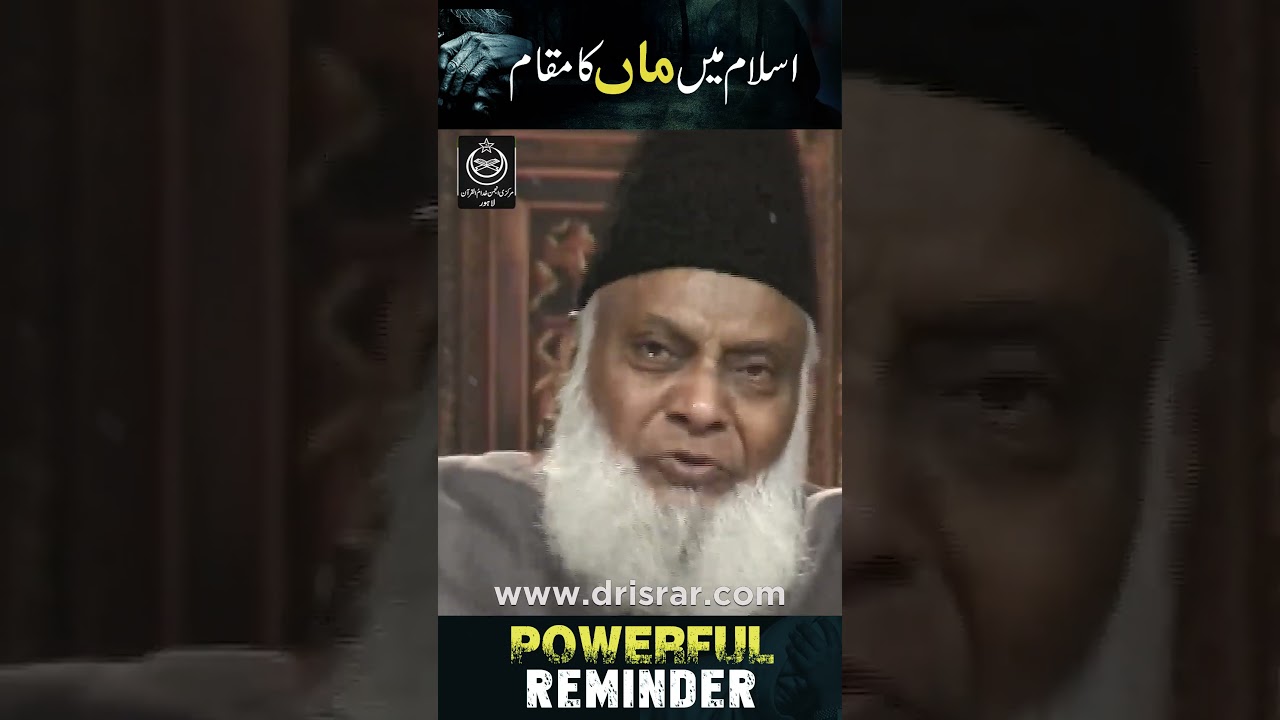
Islamic teachings emphasize prioritizing the rights of parents after those owed to God. The rights of mothers are three times greater than those of fathers due to the immense physical and emotional burden they bear during pregnancy, childbirth, and raising children. While fathers provide financially and are essential, mothers endure unique hardships that necessitate a higher degree of respect and care. This lecture details the importance of recognizing and fulfilling these parental rights in Islam.
81
