短裤

The speaker asserts that religious morality built upon a foundation lacking inherent ethical character is inherently weak and ineffective. He illustrates this with the example of a local businessman known as Haji Blackia, a wealthy sugar distributor known for his outward religious observance (leading prayers, having a long beard) but lacking genuine moral principles. The speaker argues that superficial religious practice without inner integrity is meaningless and ultimately futile. True religious morality must be rooted in solid ethical character.

66
Everything in the heavens and the earth glorifies Allah. While praising Allah is essential – as even inanimate objects and plants do – humanity, granted stewardship of the earth and divine favor, is obligated to do more. True faith demands action: actively striving to establish divine guidance and elevate the word of God. Simply reciting praise is insufficient; believers must demonstrate their commitment through dedicated effort and sacrifice to make God’s will prevail. The core requirement of faith in God is not just glorification, but actively working to establish His dominion and uplift His message.
58
This lecture explores the incomplete nature of the Prophet Muhammad’s mission, asserting that the complete prevalence of the Divine religion across the entire world is a prerequisite for the Day of Judgement. It details how, while significant portions of Arabia were illuminated by the light of monotheism during the Rashidun Caliphate, vast regions including China, India, Europe, and much of Africa remained untouched. The speaker emphasizes that until the entirety of the earth embraces the Divine message, the Prophet’s ultimate objective remains unrealized, highlighting the continuous need for striving and dedication towards its completion.
56
This lecture explores the life of Hazrat Fatima, the daughter of Prophet Muhammad (peace be upon him), highlighting her sacrifices, devotion, and the hardships she endured. It delves into her relationship with her father, her role as a mother, and the challenges faced by the early Muslims. The speaker emphasizes Fatima’s piety, patience, and her exemplary character as a role model for all believers. The discussion also touches upon the material possessions and worldly comforts, contrasting them with spiritual values and the importance of remembrance of Allah after every prayer.
93
The speaker asserts that Pakistan remains systemically and politically subservient to non-Islamic forces, questioning the validity of celebrating independence in such circumstances. He contrasts true Islamic observances – Eid al-Fitr and Eid al-Adha – with celebrations he deems extraneous. He emphasizes that freedom is a significant blessing, yet one that has been largely unappreciated. The speaker urges repentance, seeking forgiveness, and dedicating one’s life to establishing Islam within Pakistan as a genuine expression of gratitude to God for the gift of independence.
71
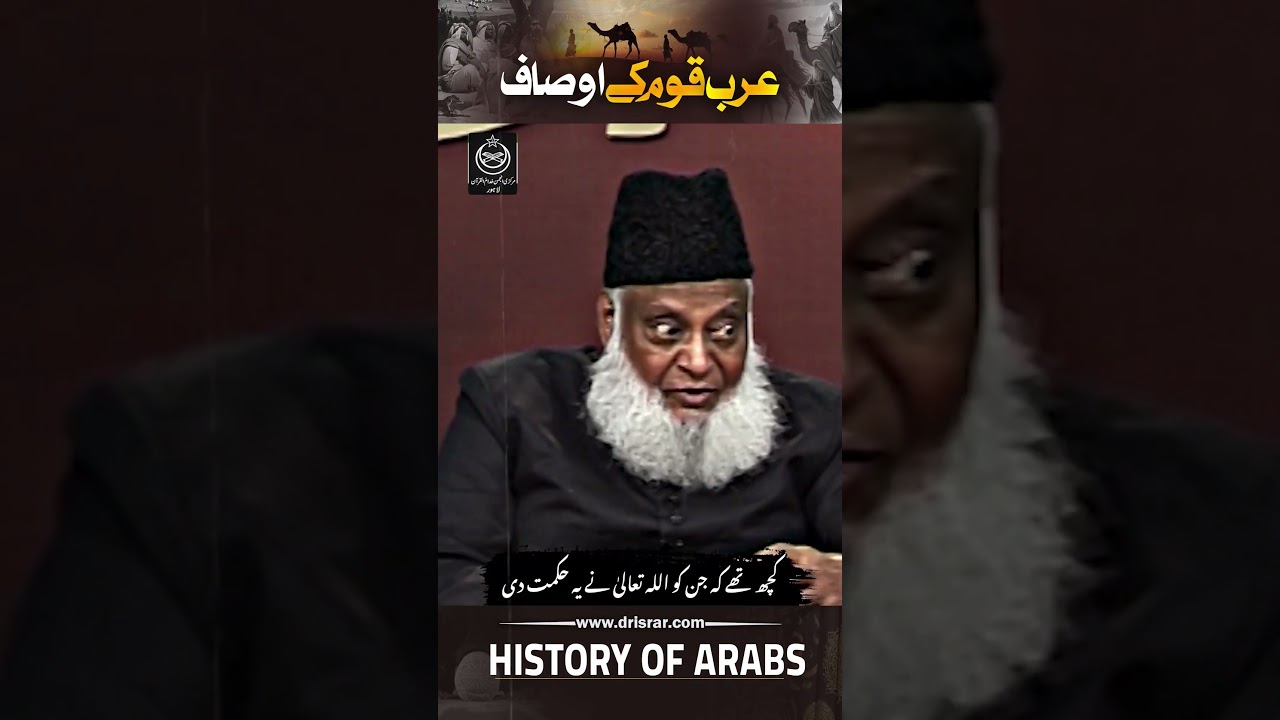
Dr. Israr Ahmad discusses the inherent character of different nations – Arabs, Persians, Greeks, Indians, and Chinese – and how these traits influenced their reception of Islam. He highlights the Arab inclination towards action and fulfilling commitments, contrasted with the philosophical and logical strengths of Iranian, Greek, and Indian scholars. He explains that while Arabs were naturally inclined towards practical commitment, other nations brought intellectual and philosophical depth to the early Muslim community. The lecture emphasizes how these diverse characteristics contributed to the spread and understanding of Islamic teachings.
58
