السراويل القصيرة

The Prophet Muhammad (peace be upon him) observed a group discussing the Quran, not in a formal lecture, but in a lively exchange. He inquired if they bore witness to the truth of the declaration: ‘There is no god but Allah, and I am His Messenger, and this Quran is from Allah.’ They affirmed their testimony. The Prophet then instructed them to rejoice, for the Quran is a treasure both in their hands and with Allah.

55

This lecture clarifies the distinction between cooperation and organizational commitment within the context of establishing religious practice. Cooperation allows for individual discretion; participants can choose when and how to contribute. However, joining an organization, specifically Tanzeem-e-Islami, requires a pledge of allegiance, or *ba’it*, relinquishing personal autonomy to adhere to the organization’s discipline and fulfill its collective objectives. This commitment is foundational to the organization’s structure and its effectiveness in fulfilling its religious mission. The lecture emphasizes that true dedication to establishing faith necessitates joining an organized structure through a formal commitment.
55

This lecture emphasizes the transient nature of worldly life and the importance of preparing for the afterlife. It highlights that life in this world is merely a temporary diversion, like a game or play, and true life resides in the hereafter. The speaker stresses that the passage of time feels incredibly swift, akin to a few hours when viewed from the perspective of eternity. A firm belief in this reality should empower individuals to face trials and tribulations with resilience, knowing that death is an inevitable journey toward union with the Beloved – Allah. The lecture encourages a joyful acceptance of death as the lifting of a veil separating us from our ultimate home and true happiness.
63

The presence of photographs within a home prevents angels from entering. This impacts the spiritual well-being of all inhabitants, hindering their worship. While angels of mercy refrain from entering homes displaying images, recording angels remain present. The prohibition stems from a divine disapproval of pictorial representations, serving as an expression of displeasure. The issue is one of religious preference, not a strict legal matter. Displaying pictures is discouraged, but not considered a fatal flaw in faith.
86

This lecture explores the concept of aligning one’s life entirely with the will of God. It emphasizes that true devotion involves surrendering all aspects of existence – prayer, sacrifice, life, and death – to the divine. The speaker argues that when life is dedicated to God, it transcends earthly pursuits and becomes a source of spiritual strength. Material means and worldly endeavors should become secondary to this divine connection, and individuals should strive for a life of complete submission and purpose. The ultimate goal is to have one's heart filled with reverence for God.
51
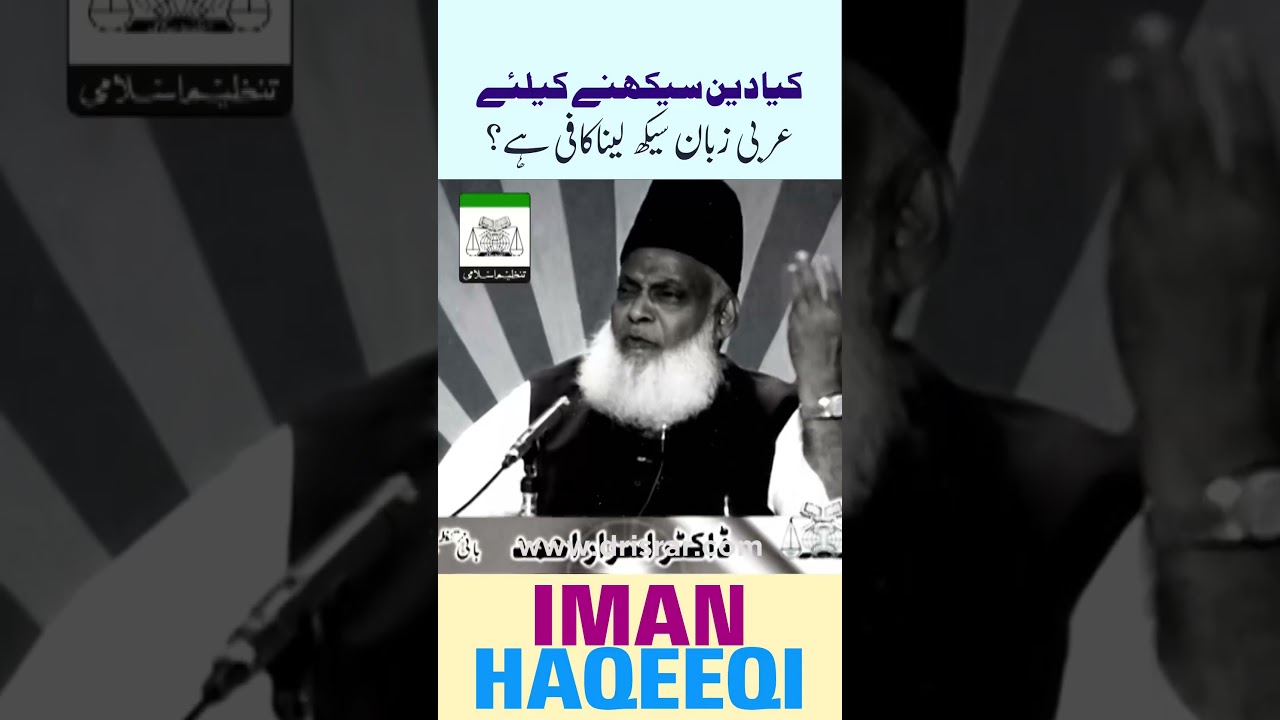
This lecture explores the profound meaning of ‘La Ilaha Illallah’ (There is no god but Allah) and its connection to genuine faith. It clarifies that merely reciting Arabic phrases is insufficient; true belief originates from a deep, internal conviction. The speaker emphasizes that imitating ancestral practices without understanding is a form of superficiality. Real faith, the lecture asserts, is a personal affirmation arising from the heart, encompassing belief in Allah, the Messenger, the Quran, Gabriel, and the Day of Judgement. This internal validation is the foundation of genuine Iman.
87
