Korte broek

The Prophet Muhammad (peace be upon him) stated that some individuals, despite lacking worldly access or social standing, hold a high status in the eyes of God. Even a casual oath uttered by them is honored by Allah. The Prophet (peace be upon him) highlighted the exceptional status of companions like Abu Huraira and Abu Dharr, equating observing Abu Dharr with witnessing the arrival of Jesus (peace be upon him). These individuals represent the truly successful and blessed.

73

This lecture explores the profound connection between the call to prayer (azan) at birth and the funeral prayer (janaza) at death. It posits that life is an interval akin to the time between the azan and iqamat, and the subsequent prayer. The speaker draws parallels between these ritualistic acts, suggesting that birth and death are bookends to a temporary existence. The lecture highlights the transient nature of worldly life, framing it as a brief pause between two states of being, emphasizing the importance of reflection and spiritual awareness.
71

The Quran is presented as the direct connection, or ‘rope,’ between Allah and humanity. It’s the primary means of achieving nearness to Allah. This connection is twofold: one end is within our grasp, allowing us to act upon its guidance, while the other end is held by Allah, signifying divine support and blessing. The lecture emphasizes that the Quran is not merely a book, but a living pathway to spiritual closeness with Allah, offering guidance and facilitating a deep, personal relationship with the Divine.
135
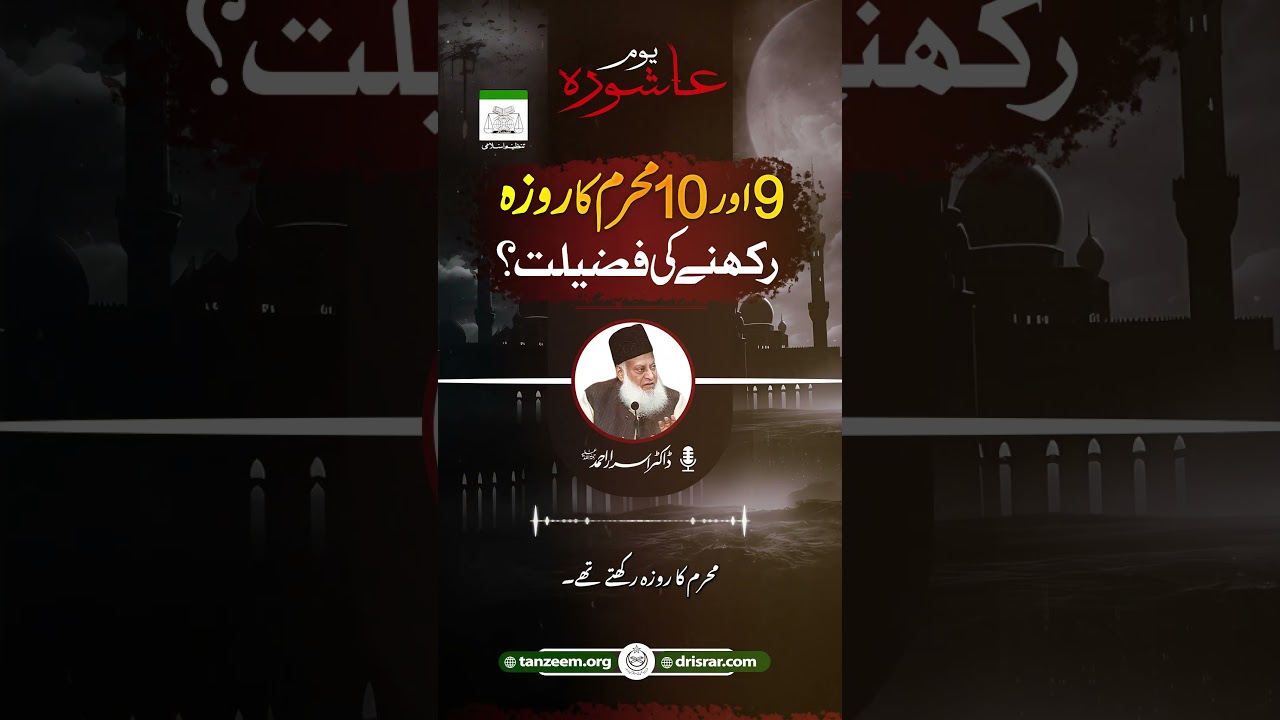
The observance of fasting on the 9th and 10th of Muharram is a recommended practice. It originated from the Prophet Muhammad’s desire to distinguish the Muslims from the Jewish community of Medina, who fasted on the 10th of Muharram commemorating their liberation from Pharaoh. The Prophet, acknowledging a stronger connection to Moses, instructed his companions to fast for two days – the 9th and 10th – instead of one. While not obligatory, this practice holds significance as a voluntary act of worship and a demonstration of the Muslim community's unique identity.
95
This lecture explores a specific supplication frequently recited by the Prophet Muhammad (peace be upon him) during his Tahajjud prayers. The core message centers on affirming the truth of Muhammad, the Quran, and Prophethood itself. The speaker emphasizes that repeatedly internalizing these truths is essential for strengthening one’s faith. Genuine belief isn't merely intellectual assent but a deeply ingrained conviction within the heart, forming the very foundation of true faith. The lecture stresses that this consistent affirmation cultivates a robust and unwavering certainty.
83

This lecture emphasizes the importance of humility and righteous actions as essential components of faith. True believers do not boast or consider themselves superior. Instead, they recognize themselves as part of the larger Muslim community and maintain a humble disposition. Just as a fruit-laden branch bends low, those blessed with good deeds should exhibit modesty. Condescension towards others negates the impact of one's message. The speaker advocates for hating sin, not the sinner, recognizing that individuals struggling with wrongdoing are in need of compassion and treatment, not condemnation. True believers show empathy and understanding towards those who err, understanding them as patients in need of care.
54
