Shorts
This reflection contemplates the human condition, questioning the meaning of existence beyond mere biological survival. It explores the stages of life – childhood, adolescence, youth, and old age – and asserts that true life transcends this temporary physical realm. The speaker posits that our earthly existence is a brief, evaluative period—a test—within a larger, eternal reality. This life is not the entirety of being, but a small segment, a temporary pause before returning to a perpetual, youthful existence. The core message is that the purpose of life lies beyond this transient world, within a spiritual and enduring context.

65

This lecture addresses the complex situation when parental demands conflict with divine commands in Islam. It clarifies that while parents hold a significant position of respect and obedience immediately after God, God’s commands take precedence. The speaker emphasizes that a son or daughter should respectfully but firmly explain their limitations, drawing parallels to the example of Prophet Ibrahim (Abraham), and avoid yielding to demands that involve disobedience to God. Maintaining respectful communication and soft persuasion are encouraged, but unwavering adherence to God’s commands is paramount.
59
Despite over fourteen centuries of diverse interpretations and the geographical spread of Muslims from Indonesia to Mauritania, the fundamental structure of prayer remains consistent. Differences exist in the interpretation of specific details like the number of rak'ahs, the precise pronunciation of words, and whether to say ‘ameen’ aloud or silently. However, the core ritual – standing, bowing, prostrating, and returning to standing – is universally observed. This unity across various schools of thought – including Shia, Sunni, Barelvi, Deobandi, and Kharijites – demonstrates the blessings of following the Sunnah, ensuring that the congregation remains unbroken despite differences in practice.
51
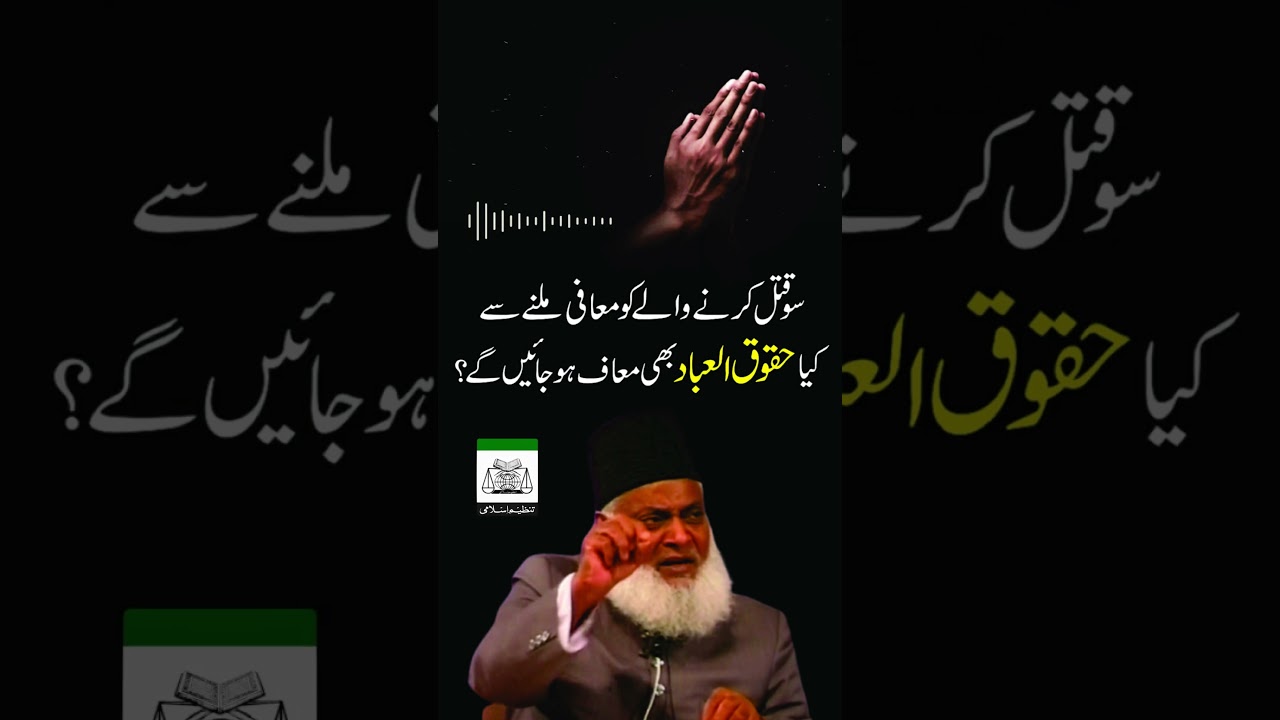
This lecture addresses the question of whether sincere repentance absolves a murderer of all consequences, both in this life and the afterlife. It clarifies that while Allah is merciful and can forgive, the rights of the victim ('diya') must be addressed. Repentance does not negate worldly justice; the perpetrator still faces legal consequences. True repentance stems from the depths of the heart and leads to divine forgiveness. Allah will compensate the victims in the hereafter from His vast treasures. The lecture emphasizes that repentance is a process, not a mere declaration, and does not exempt one from accountability for their actions.
79

This lecture discusses the inevitability of trials and tribulations in the lives of believers, referencing historical hardships faced by early Muslims, particularly during times of famine and war. It emphasizes that these tests are not punishments, but opportunities to demonstrate patience and faith. The speaker recounts instances of extreme hunger experienced by companions of the Prophet Muhammad (peace be upon him), highlighting their resilience and sharing of limited resources. The core message is that enduring hardship with patience brings divine reward and strengthens one’s connection with God.
62
The Prophet Muhammad (peace be upon him) relayed a divine tradition: every act of worship benefits the individual, except fasting. Fasting is exclusively for God, and He alone will reward it directly. This emphasizes the unique nature of fasting as an act of devotion solely directed towards God, differing from other acts of worship where benefits are also reaped by the worshipper. It highlights the direct connection between the fasting person and God, and the certainty of divine recompense. The core message focuses on revitalizing the human spirit and strengthening its connection with the Divine.
54
