শর্টস
This reflection contemplates the human condition, questioning the meaning of existence beyond mere biological survival. It explores the stages of life – childhood, adolescence, youth, and old age – and asserts that true life transcends this temporary physical realm. The speaker posits that our earthly existence is a brief, evaluative period—a test—within a larger, eternal reality. This life is not the entirety of being, but a small segment, a temporary pause before returning to a perpetual, youthful existence. The core message is that the purpose of life lies beyond this transient world, within a spiritual and enduring context.

65
The Kaaba’s origins trace back to Prophet Adam, who was its first architect. The initial structure was destroyed by floods, leaving only its foundations. Prophet Ibrahim, guided by divine instruction, rebuilt the Kaaba upon those original foundations, with the help of his son Ismail. Thus, Ibrahim became the second architect of the Kaaba, restoring it as a place of worship. The lecture details the historical and spiritual significance of the Kaaba's construction and the roles of both Adam and Ibrahim in its creation.
60

This lecture details the life of Abu Bakr Siddique, focusing on his successful business prior to embracing Islam. It highlights how his dedication shifted from commerce to the propagation of the faith after accepting Islam. The lecture emphasizes Abu Bakr’s pivotal role in early Islamic outreach, specifically detailing how his efforts led six individuals from the 'Ashra Mubashara' (ten blessed companions) to accept Islam and join the Prophet's cause. The discussion underscores the transformation from worldly pursuits to devotion to religious work, and the sacrifices made for the sake of Islam.
47
Hares Ahshari reports that the Messenger of Allah commanded Muslims to adhere to five principles: maintaining unity and cohesion within the community, obedience to leadership, migration for the sake of faith, and striving in the path of God. This directive, relayed by the Prophet, is not of his own volition but a direct command from God. These principles are essential for the strength and progress of the Muslim community, ensuring collective action and spiritual advancement. The report emphasizes that these are divine instructions, communicated through the Prophet, and should be followed diligently.
60
This lecture discusses the common human tendency to idealize those we love and demonize those we dislike. It emphasizes the importance of overlooking the flaws of elders out of respect, even when disagreeing with their views. The speaker shares a personal example regarding Allama Iqbal, acknowledging his respect while maintaining independent thought. The lecture cautions against the habit of criticizing those with whom one has fallen out, urging viewers to avoid blind condemnation and prioritize constructive engagement. It promotes a balanced approach of respecting elders while also maintaining intellectual honesty.
63
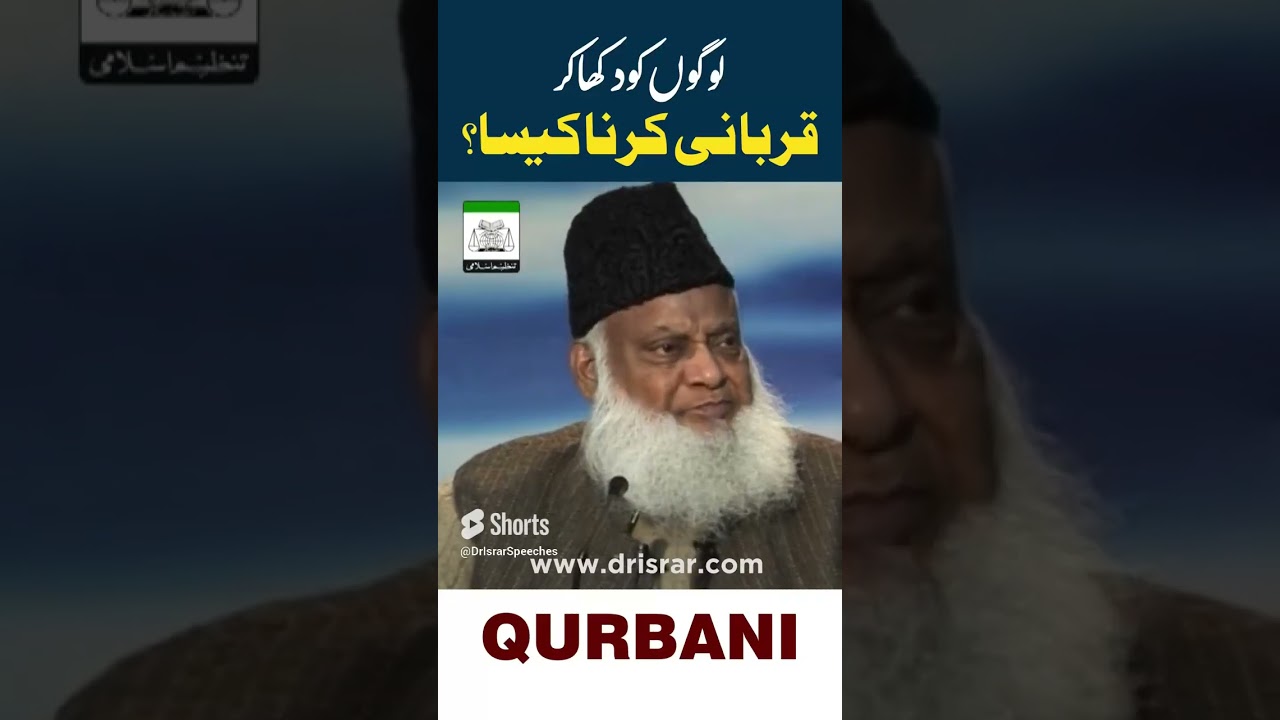
The lecture discusses the practice of adorning sacrificial animals with silk cloths and parading them, deeming it a display of wealth rather than a spiritually meaningful act. True sacrifice, it emphasizes, should stem from inner piety and submission to God. The speaker highlights that genuine devotion lies in humility and sincere worship, referencing the verse encouraging the Prophet to give glad tidings to those who are humble before God. The focus is on the internal state of the worshiper, not outward show.
60
