السراويل القصيرة

Expanding one’s intellect through the study of science, philosophy, and logic is crucial for comprehending the wisdom within the Quran. True benefit lies not only in acquiring this knowledge but also in sharing it with others. The greatest wealth is the ability to disseminate this understanding, and the greatest service to humanity is to guide others toward divine direction. This pursuit of knowledge, and its subsequent sharing, is the highest form of generosity and selfless service.

60

This narrative recounts the brutal torture inflicted upon Hazrat Samia and Hazrat Yasir, early converts to Islam, by Abu Jahl. Despite relentless physical abuse, including being tied to pillars and subjected to intense pain, they refused to renounce their faith. Abu Jahl offered to spare Hazrat Samia's life if she acknowledged the divinity of an idol, but she spat at it, intensifying his wrath. The account highlights their unwavering commitment to Islam in the face of extreme adversity and the prophetic announcement of their eventual reward in paradise, delivered by the Prophet Muhammad (peace be upon him).
62

God revealed that He would bestow the guidance, delivered through revelation, as mentioned in the final verses of Surah Al-Baqarah. This guidance was initially communicated to Adam, informing him of his role as the vicegerent on Earth and the temporary nature of his existence in Paradise. The message conveyed that all future guidance for prophets would follow this same path. Adherence to this divine guidance guarantees security and salvation, while rejection leads to the fires of Hell.
64

This discourse elucidates the core tenets of the true religion (Deen-e-Qayyimah), emphasizing the absolute Oneness of God (Tawhid) as the foundation of faith. It highlights that humanity was commanded solely to worship God sincerely and exclusively, maintaining a pure and unwavering devotion. The lecture further stresses the importance of establishing prayer (Salat) and fulfilling the obligation of Zakat as fundamental pillars of this worship. These acts, when performed with sincerity, constitute the essence of a life lived in submission to God. The discussion establishes prayer and Zakat as the most critical components of worship, alongside the pilgrimage, emphasizing their role in achieving spiritual fulfillment.
59

Hazrat Ubada ibn Samit relate that they pledged allegiance to the Prophet Muhammad, peace be upon him, agreeing to listen and obey in times of ease and hardship, willingly and even under duress. They committed to prioritizing others over themselves, accepting the leadership of appointed authorities without dissent, and speaking the truth openly, regardless of criticism or consequences. This pledge encompassed a complete submission to divine guidance and a dedication to upholding justice and righteousness.
55
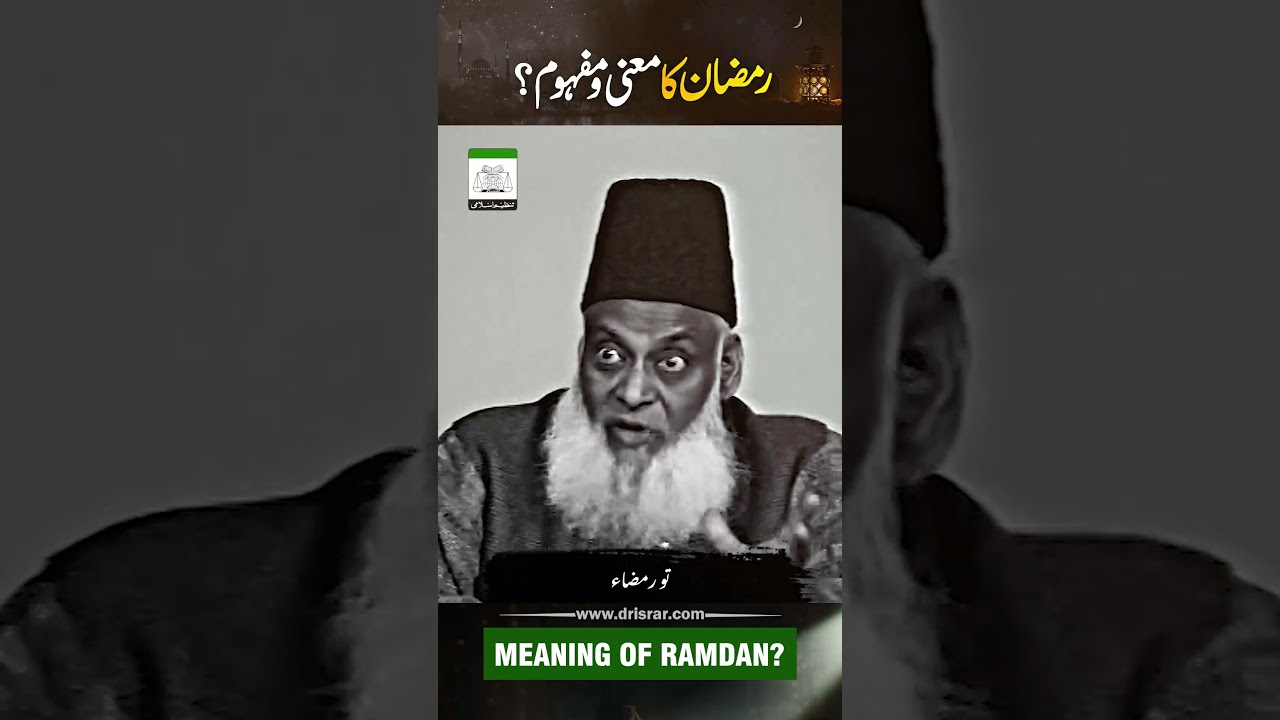
The name Ramadan originates from the intense heat that once prevailed in Arabia, causing hardship and even death. People perceived this time as one where purification occurred naturally. The month of Ramadan was thus associated with cleansing and seen as a period where accumulated impurities within the human body were naturally eliminated. The practice of fasting was ordained by God to facilitate this process. Another interpretation connects the name Ramadan to one of God’s names, signifying ‘the month of God.’ This is supported by a tradition of the Prophet Muhammad, who identified Sha’ban as his month and Ramadan as God’s month.
65
