Shorts

The Prophet Muhammad is presented as the greatest benefactor of humanity, enduring significant hardships throughout his life. The text emphasizes that offering prayers (salutations) upon him is a means of acknowledging his virtues and receiving divine reward. It highlights the importance of recognizing his exemplary character and the blessings associated with remembering him.

256
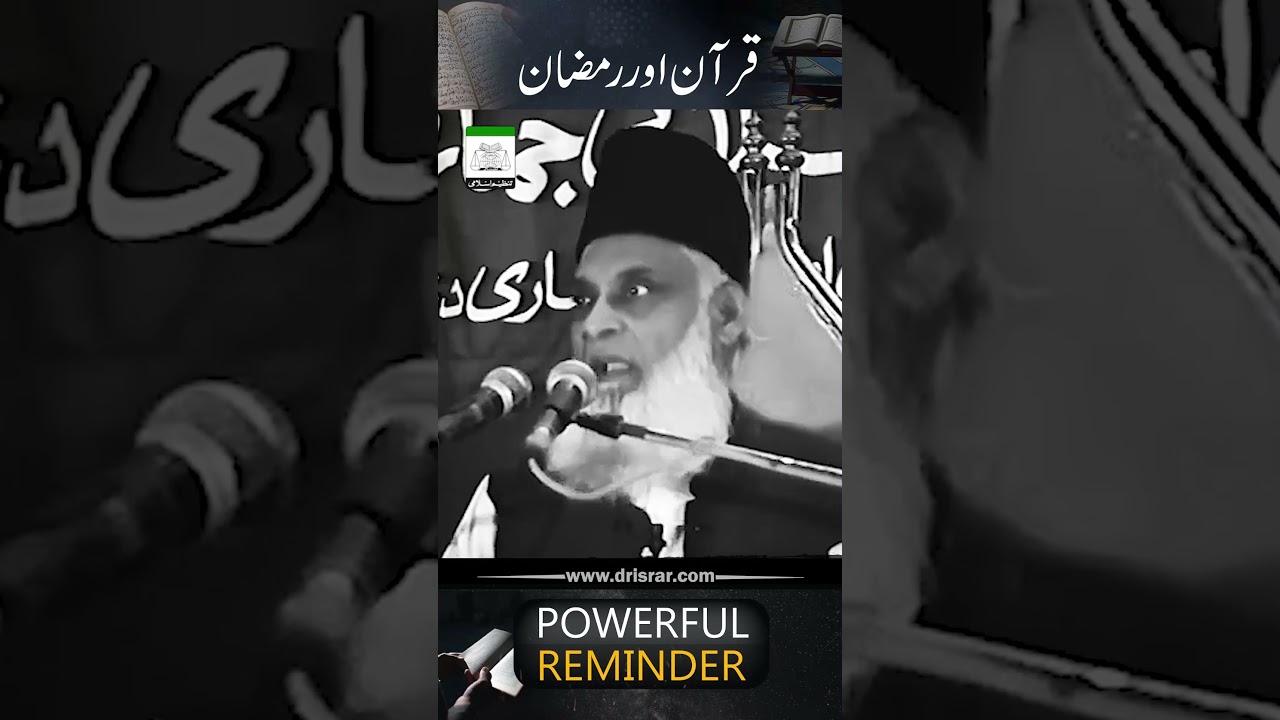
This lecture emphasizes the importance of reciting the Quran correctly and consistently, both day and night, and actively sharing its message with others. The speaker urges listeners to disseminate knowledge of the Quran to the best of their ability, ensuring no one is deprived of its guidance. Every individual is encouraged to teach what they’ve learned, recite what they’ve memorized, and explain what they understand, transforming this into a widespread movement dedicated to returning to the Quran. This is a call to prioritize and propagate the teachings of the Quran in all aspects of life.
60

This lecture emphasizes the importance of recognizing truth and excellence wherever it exists, regardless of sectarian or group affiliation. It critiques the insularity of religious circles, which often limit perspectives to a single school of thought, hindering intellectual growth and unity. The speaker advocates for open-mindedness, studying diverse perspectives, and acknowledging the contributions of scholars from all backgrounds to foster understanding and strengthen the collective pursuit of faith. Recognizing shared values and learning from the past is essential for progress and overcoming narrow-mindedness.
85

This video recounts an incident where Hazrat Ali’s armor was stolen and recovered from a Jewish man. Hazrat Ali, despite being the Caliph, appeared before the judge as a plaintiff. He corrected the judge for addressing him by his kunya (nickname) instead of his name, emphasizing that he was present as an ordinary litigant seeking justice, not as a figure of honor. When the Jewish man failed to produce valid witnesses beyond his son and slave, Hazrat Ali requested other witnesses. Upon failing to do so, the case was dismissed, leading the Jewish man to confess the theft. This highlights Hazrat Ali's commitment to justice and fairness, even when personally involved.
62

The speaker discusses a decline in ethical standards within society, moving beyond mere indecency to a fundamental erosion of basic human morals. This manifests as a lack of integrity – saying things one doesn’t mean and failing to uphold promises. Historically, even non-believers maintained a directness lacking in current society; they were either openly hostile or adhered to their word. The speaker draws a parallel to the historical figures of Medina and Mecca, noting the presence of hypocrisy and deceitful behavior in Medina, while Mecca generally upheld a more straightforward code of conduct. The speaker asserts a general decline in societal capacity for integrity and principled action.
60

Life is a continuous test of both human nature and intellect. Recognizing God is the initial trial, followed by steadfastness in obedience. True belief necessitates complete adherence to divine commands and abstinence from prohibitions, even in the face of adversity. This principle of unwavering commitment has been a constant throughout history, exemplified by the trials faced by prophets like Ibrahim. God consistently tests those who come before us, and remembering these trials offers guidance and strength.
57
