Corti
The Prophet Muhammad is presented as the greatest benefactor of humanity, enduring significant hardships throughout his life. The text emphasizes that offering prayers (salutations) upon him is a means of acknowledging his virtues and receiving divine reward. It highlights the importance of recognizing his exemplary character and the blessings associated with remembering him.

256
Dr. Israr Ahmad discusses the stark contrast between the beauty of the Quran and the current state of the Muslim community. He highlights the internal contradictions that hinder Islam’s appeal and advocates for reclaiming lost members of the Muslim *ummah* before attempting to proselytize others. He emphasizes the need for self-correction and internal reform, arguing that a focus on reviving the faith within the community is paramount. The lecture questions whether the current portrayal of Muslims attracts people to Islam or repels them, and stresses the importance of addressing internal issues before outward propagation.
66
The Quran’s compilation involved both a chronological (نزولی) and the current (مصحف) arrangement. The earliest verses revealed were from Surah Al-Alaq, followed by Surah Al-Qalam, parts of Surah Al-Muzzammil, Surah Al-Mudaththir, and then Surah Al-Fatiha. The current arrangement begins with Surah Al-Fatiha, followed by Surah Al-Baqarah, revealed in Medina. The Prophet Muhammad (peace be upon him) guided the scribes in arranging the verses as they were revealed, ensuring the final compilation was also divinely guided. This process of arrangement and compilation was a divine act, directed by God through His Messenger.
86
This lecture explores the perspective of M.N. Roy, a prominent communist revolutionary, on the historical significance of Islam. Roy, a key figure in the Comintern, recognized the revolution initiated by Muhammad as one of the greatest in human history. He detailed this view in his book, *The Historical Role of Islam*, acknowledging its profound impact on global events. Dr. Israr Ahmad analyzes Roy’s analysis and provides insightful commentary on the topic.
68
True goodness isn't merely external ritual; it’s an internal transformation affecting the entire being. The essence of worship, like prayer, lies not in its technicalities, but in achieving a spiritual presence with God. Genuine prayer evokes a heartfelt connection, a sense of joy, and a direct communion with the Divine. The experience should be one of complete surrender and humility before God. Without this spiritual depth, the act remains incomplete.
45
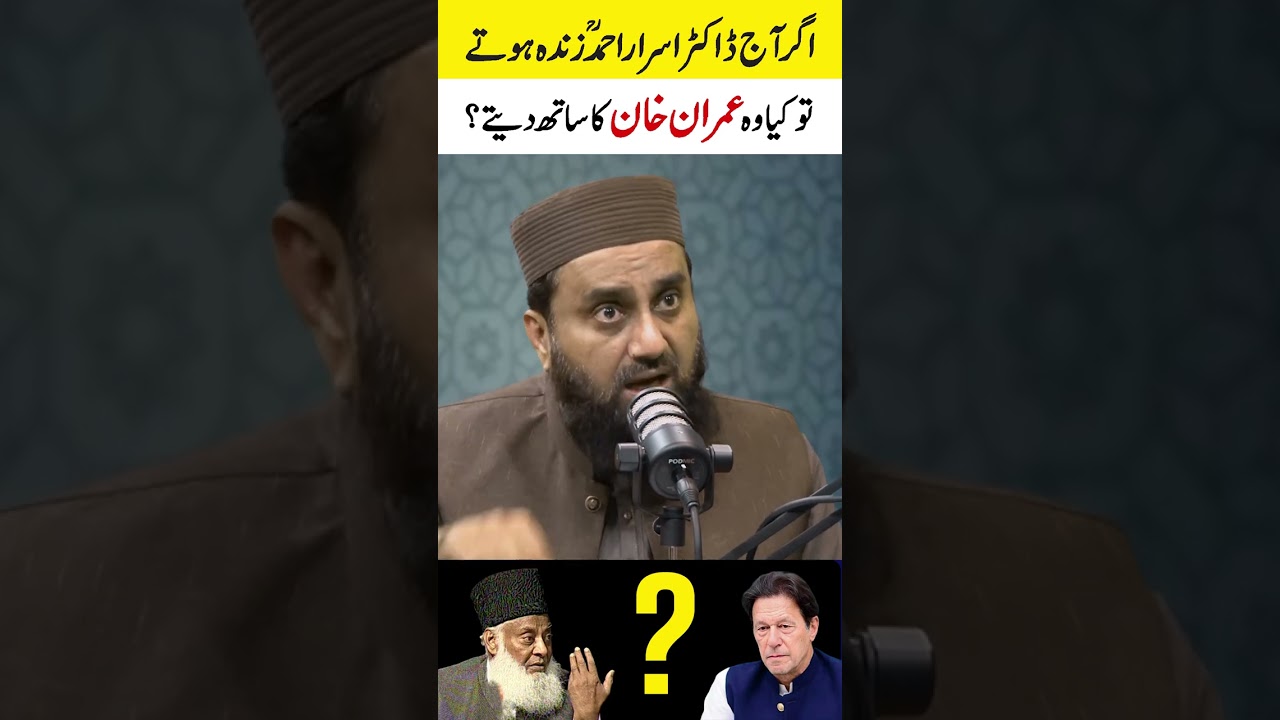
Dr. Israr Ahmad discusses the concept of a 'State of Medina' and its moral foundations, criticizing the hypocrisy of those who invoke its principles while failing to embody its ethical standards. He emphasizes the importance of upholding justice, promoting good, and preventing evil, and warns against inconsistency between professed ideals and actual conduct. He stresses the need for genuine piety and righteousness in all aspects of life, particularly within political spheres. He further clarifies that offering constructive advice to those in power is a continuous responsibility, driven by a desire for societal betterment.
67
