Şort
This lecture discusses the proper timing for ending the daily fast (iftar) according to different Islamic schools of thought. It clarifies the disagreement between Shia and Sunni perspectives, with Shia scholars advocating for waiting until complete darkness and Sunni scholars linking it to sunset. The discussion extends to the importance of avoiding extremes – neither rushing the pre-dawn meal (sehri) nor excessively delaying iftar. It emphasizes adhering to established timings and completing the fast correctly, without unnecessary hardship or innovation. The lecture stresses the need for practical application of religious principles and cautions against unnecessary complications in observing religious rituals.

83
It is a universally acknowledged truth that among all books claiming divine origin or containing the word of the universe’s creator, only the Quran maintains complete textual integrity. No other scripture has remained fully preserved in its original form. All other claimed divine texts have undergone alterations or lack complete historical corroboration of their original content. This lecture details the unique preservation of the Quran.
61
This lecture clarifies the position of a prophet (Nabi) in Islam. It distinguishes a prophet from other pious individuals by highlighting the unique role of divine revelation (wahy). A prophet's assignment isn't to enforce belief through threats, but to convey the message due to an inherent natural compulsion. The lecture draws a parallel to a civil servant passing an exam and awaiting appointment, explaining that authority and responsibility come with official designation, similar to how a prophet’s role is defined by divine appointment. The core message is that a prophet is primarily a messenger of God, and his guidance is based on conveying the message, not coercion.
60
The observance of fasting on the 9th and 10th of Muharram is a recommended practice, not obligatory. This practice originated when the Prophet Muhammad learned that the Jews of Medina fasted on the 10th of Muharram to commemorate their deliverance from Pharaoh. The Prophet, affirming a greater connection to Moses, instructed his companions to fast for two days – the 9th and 10th – to distinguish the Muslim practice from that of the Jews. This two-day fast signifies a deliberate divergence from the Jewish tradition, while simultaneously honoring the historical event and recognizing the importance of Moses.
63
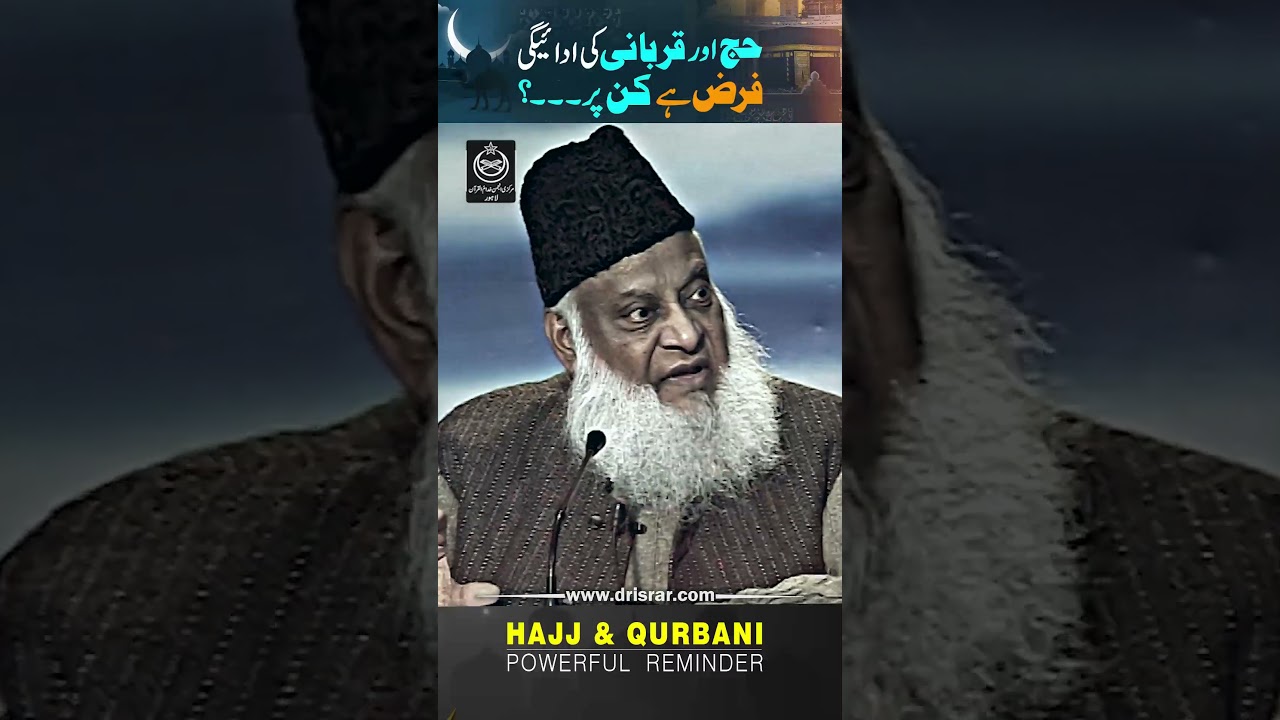
This lecture clarifies the obligation of Hajj for those who possess the means. It explains that Hajj is a debt owed to God, becoming obligatory when one has the physical and financial capacity to perform it, including provisions for travel, accommodation, and sustenance. Delaying Hajj after fulfilling these conditions constitutes a significant sin. The discussion emphasizes fulfilling the rituals and offering sacrifice as integral parts of the pilgrimage.
61
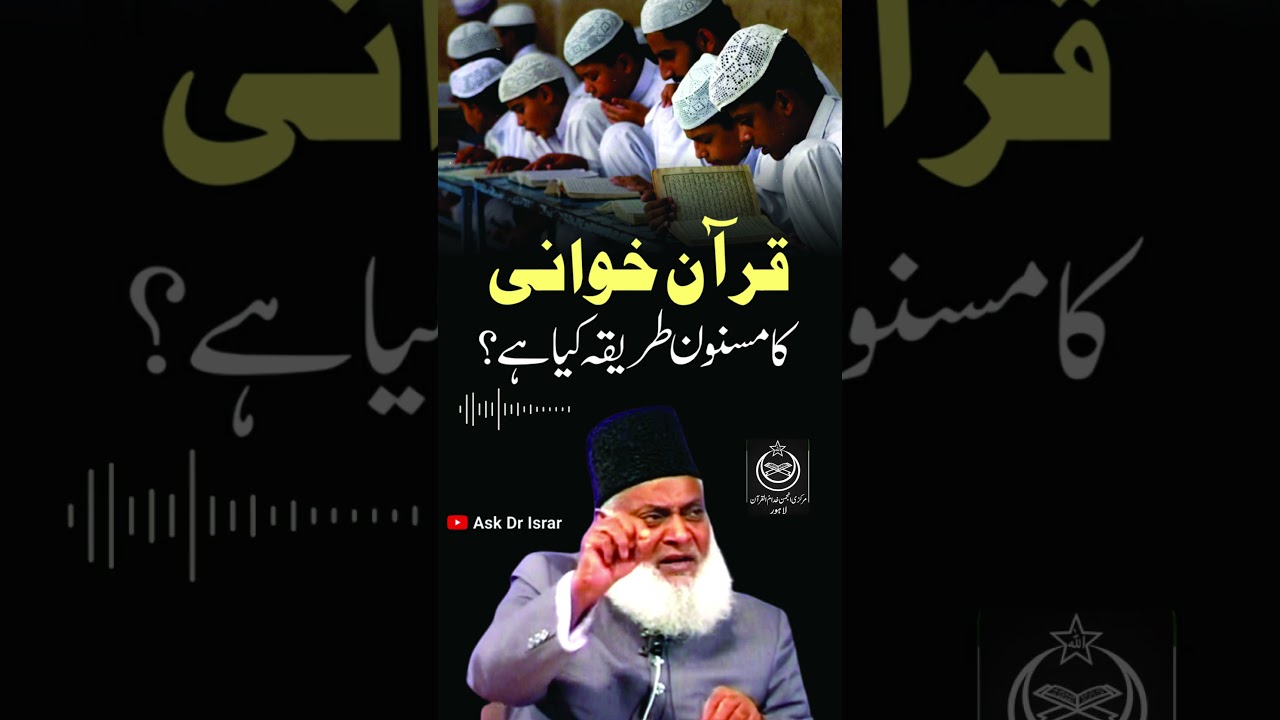
Dr. Israr Ahmad clarifies that the practice of collective Quran recitation for reward (sawab) is an innovation not found in Islamic tradition. True Quran recitation involves individual or attentive listening to a skilled reciter. He condemns the practice of dividing the Quran amongst multiple people to read portions as disrespectful and a form of mockery towards the scripture. The proper way to engage with the Quran is through personal recitation and focused, reverent listening.
73
