Shorts
This lecture discusses the proper timing for ending the daily fast (iftar) according to different Islamic schools of thought. It clarifies the disagreement between Shia and Sunni perspectives, with Shia scholars advocating for waiting until complete darkness and Sunni scholars linking it to sunset. The discussion extends to the importance of avoiding extremes – neither rushing the pre-dawn meal (sehri) nor excessively delaying iftar. It emphasizes adhering to established timings and completing the fast correctly, without unnecessary hardship or innovation. The lecture stresses the need for practical application of religious principles and cautions against unnecessary complications in observing religious rituals.

83
This lecture asserts that establishing human rule over others constitutes the greatest form of associating partners with God (shirk) in the history of humankind. It argues that contemporary society, in its collective assertion of self-governance, has replaced God as its ultimate authority. The speaker contends that true devotion will only be possible when a system of governance based on divine law is established, replacing current systems that operate independently of God's commands. This involves rejecting secular courts and parliaments, and instead submitting to a system where justice is derived solely from God’s decree. The current practice of worship combined with obedience to man-made laws is considered a form of hypocrisy and rebellion.
67
The month of Rabi ul Awwal holds deep significance in the life of the Prophet Muhammad (peace be upon him). His birth and death both occurred in this blessed month, though the exact date of his birth is debated, with many scholars suggesting the 9th of Rabi ul Awwal. Historically, the 12th of Rabi ul Awwal was observed as a day of remembrance of his passing, involving charitable acts. Over time, this has evolved into a celebratory event. While the original Islamic festivals have diminished in prominence, new observances like Mawlid al-Nabi and Pakistan Independence Day have gained greater visibility. The Prophet’s arrival in Medina also occurred in Rabi ul Awwal. Focusing on the life and teachings of the Prophet during this month, without fixating on specific dates, encourages reflection, practical application, and emulation of his example, potentially offering solutions to contemporary problems.
49
The Prophet Muhammad (peace be upon him) emphasized that fulfilling Zakat is not merely about giving a fixed portion of wealth. It is an acknowledgement that Allah has a right in our possessions beyond just the obligatory Zakat. The Quran highlights spending on relatives, orphans, the needy, travelers, and freeing slaves as acts of righteousness. Zakat is a pillar of Islam, akin to prayer in strengthening faith. The ability to spend in the path of Allah is sustained through the practice of Zakat as an act of worship. It is not simply about wealth redistribution, but about purifying one's soul and fostering spiritual growth.
112
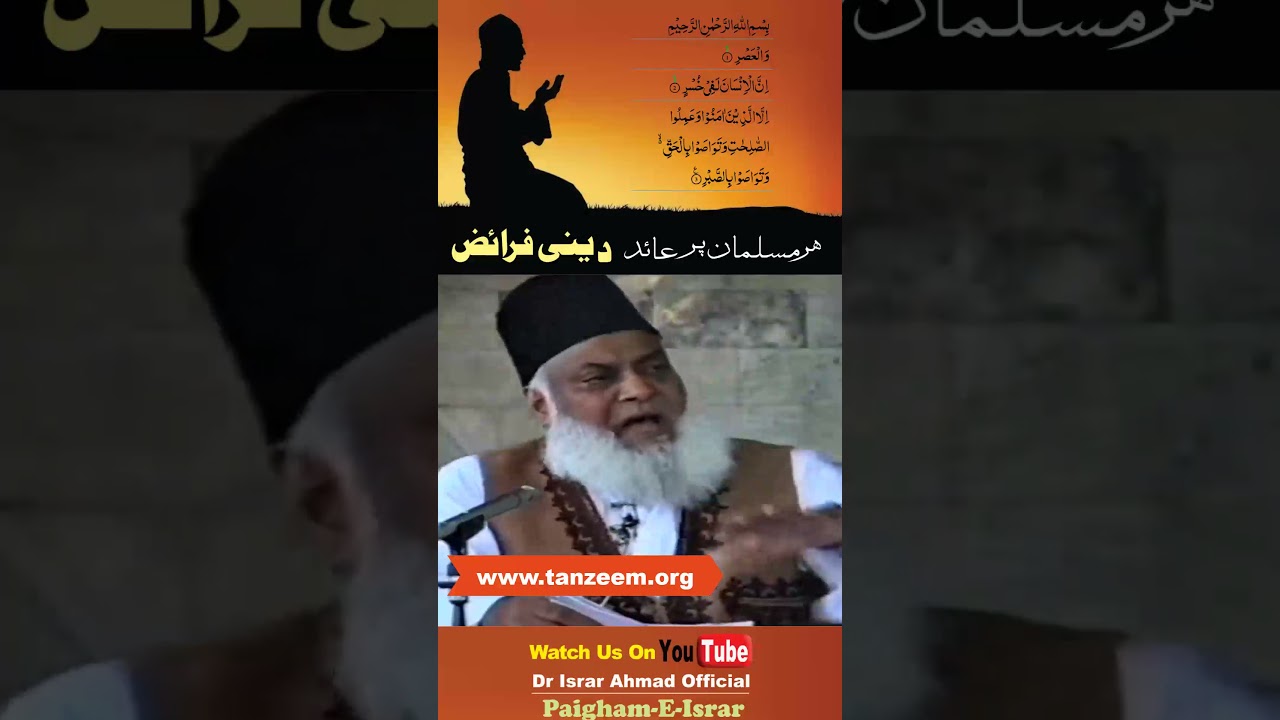
Every Muslim, regardless of location or majority/minority status, has fundamental duties transcending time and space. These encompass complete devotion and obedience to God, fueled by love. Beyond personal worship, believers are obligated to actively invite others to the faith, promoting good and forbidding evil. The highest level of responsibility is establishing religion as a complete system of life, fostering a just and righteous society. This lecture details the levels of religious obligation for every believer.
86
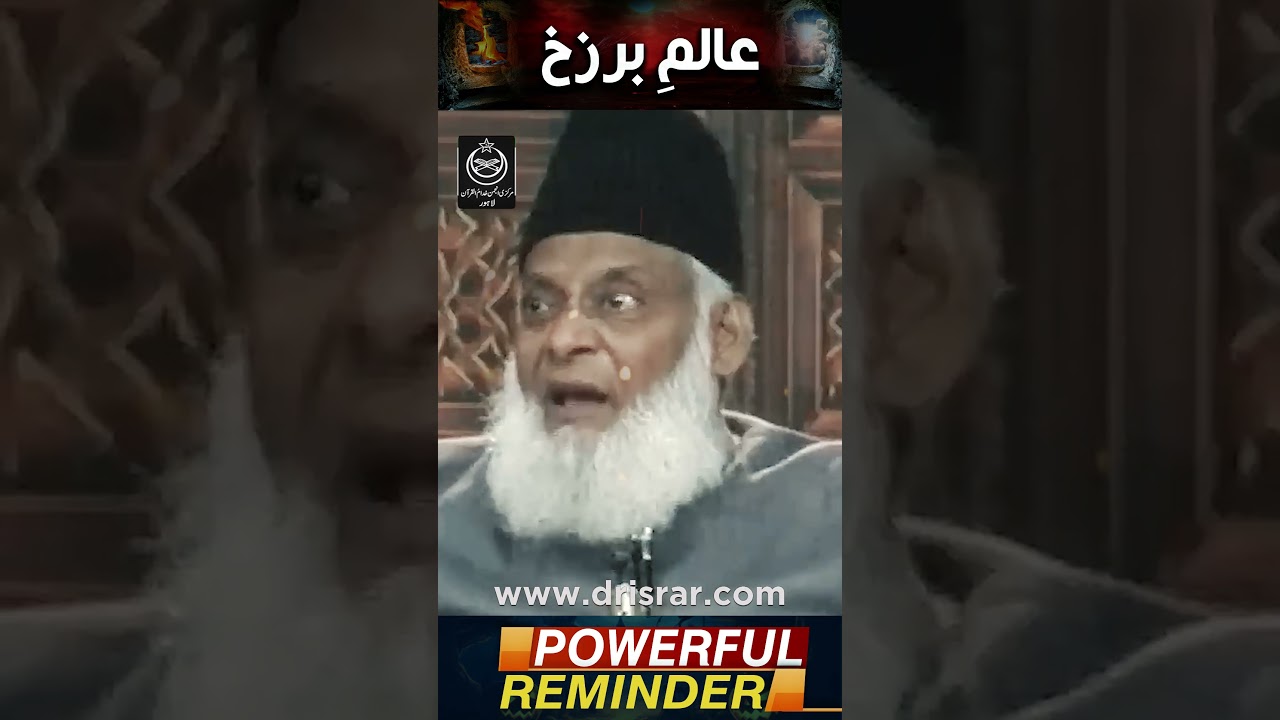
This lecture explores the limits of human understanding regarding the unseen world (Ghaib) and the afterlife. It emphasizes that certain aspects of these realms, such as the exact nature of punishment or what occurs after death, are beyond our complete comprehension. The speaker stresses the importance of accepting what has been revealed in the Quran and Sunnah regarding these matters through faith, rather than attempting to delve into details that are intentionally concealed. The lecture clarifies that belief in the unseen is a condition for benefiting from the guidance of the Quran, and highlights the experience of the deceased hearing the sounds of those departing after burial, as mentioned in Hadith. True understanding will only be revealed in the afterlife.
56
