短裤
This lecture analyzes the French and Russian Revolutions, highlighting their incomplete nature. Both revolutions primarily altered the political structure while leaving core beliefs, social systems, values, and economic institutions largely unchanged. The Bolshevik Revolution uniquely transformed the economic framework by abolishing private ownership and nationalizing resources, yet it did not affect the fundamental beliefs or social values. This discussion emphasizes how revolutions often fail to achieve comprehensive societal change, focusing instead on specific structural adjustments.

68
This lecture clarifies the true meaning of righteousness (nichat) in Islam. It emphasizes that outward displays of devotion, like facing east and west, are insufficient. Genuine righteousness stems from sincere faith in God, the Day of Judgment, angels, scriptures, and the prophets. The Quran defines this inner faith and commitment as the core of true piety and virtue.
50
This lecture explores the Prophet Muhammad’s (peace be upon him) acknowledgement of uncertainty regarding the timing of divine victory. The Quranic verses cited reveal that even the Prophet did not know whether the promised events were imminent or distant. This highlights a crucial understanding: knowledge of the unseen rests solely with God. The lecture emphasizes that such knowledge is not granted to even the most revered messengers, and that uncertainty about the future is a natural human condition. The verses also suggest that trials and tribulations may be part of the divine plan, serving as both tests and opportunities for growth. The core message is acceptance of divine will and a focus on present action rather than speculation about the future.
39
The text addresses the question of resurrection and the origin of life, arguing that if a creator initially fashioned existence from humble beginnings, replicating that creation is demonstrably easier the second time. It posits that the initial act of creation is the most challenging, while subsequent iterations are simplified. The argument extends to all of creation—from scientists like Einstein and Newton to prophets and saints—all originating from the same source and thus potentially recreatable.
44

The speaker expresses a belief in Pakistan's destined role in the revival of Islam, despite current disillusionment with religious leadership and societal apathy. He anticipates a period of national upheaval that will ultimately cleanse existing problems and ignite a dormant spiritual fervor. This transformation will position Pakistan as a cradle of Islam and a launching pad for the global resurgence of Islamic values and principles. The speaker emphasizes that despite present difficulties, a powerful spiritual awakening is imminent.
33
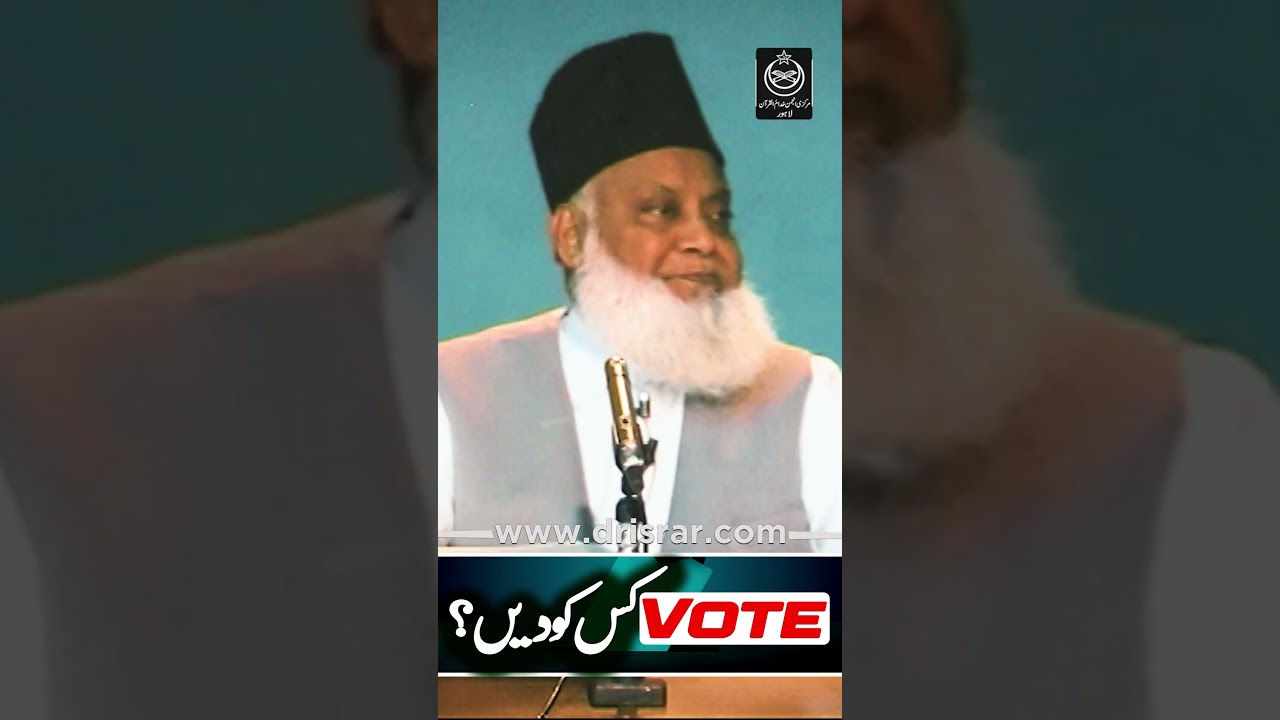
This lecture emphasizes that voting is an act of entrusting responsibility, akin to appointing a trustworthy advisor. Voters should prioritize competence, integrity, and suitability when selecting representatives at all levels—from local officials to national leaders. The speaker cautions against prioritizing personal connections, nepotism, or self-interest. The selection process must ensure that chosen individuals are truly capable of serving the nation, community, and wider collective, upholding principles of justice and competence in governance. The ultimate goal is to establish an organization built on merit and dedicated to selfless service.
48
