短裤
This lecture emphasizes that worldly life is a cultivation for the afterlife. Every moment presents an opportunity to sow seeds for eternal rewards. Actions in this world directly impact one’s destiny in the hereafter. The speaker urges viewers to recognize the immense value of each moment and to diligently work and strive in this life to reap a bountiful harvest in the next. It’s a call to mindful living and purposeful action, framing life as an investment in eternal success.

75

Companions of the Prophet Muhammad (peace be upon him) expressed their distress regarding increasing hardships. The Prophet (peace be upon him) reminded them that previous followers of Islam faced even greater trials, including being burned alive, buried alive, and dismembered. He emphasized the importance of patience and perseverance, stating that trials are a test from God and that relief will come in due time. He cautioned against impatience and assured them that enduring hardship is a characteristic of true believers.
84
This lecture discusses the Islamic perspective on charitable giving and the rights of heirs. A companion of the Prophet Muhammad (peace be upon him) inquired about donating all his wealth for the sake of Allah. The Prophet advised against leaving heirs destitute, emphasizing their rightful share. The companion then proposed donating half, then a third, with the Prophet accepting the one-third contribution as appropriate. This highlights a balanced approach to charity, respecting both the act of giving and the welfare of one’s family.
66
This lecture clarifies that humanity’s fundamental need is not material wealth or political power, but divine guidance. Humans are inherently equipped with the capacity to discern between right and wrong, good and evil, through the innate knowledge instilled within their souls. While individuals possess the ability to self-assess and find answers within their own hearts, external factors like forgetfulness, personal desires, and spiritual rust can obscure this innate knowledge. This lecture emphasizes the importance of seeking and maintaining a connection with this inner guidance.
54
Khilafat, at its core, represents the implementation of oneness (tauheed) at a governmental level. It signifies the elimination of shirk (polytheism) in all its forms. Shirk manifests not only in belief but also subtly through hypocrisy and impure intentions. The most significant form of shirk, however, is the assertion of authority by anyone other than Allah. Sovereignty and the right to govern belong exclusively to Allah. Establishing a Khilafat system, therefore, is to implement tauheed in governance, rejecting any claim to authority outside of divine decree.
79
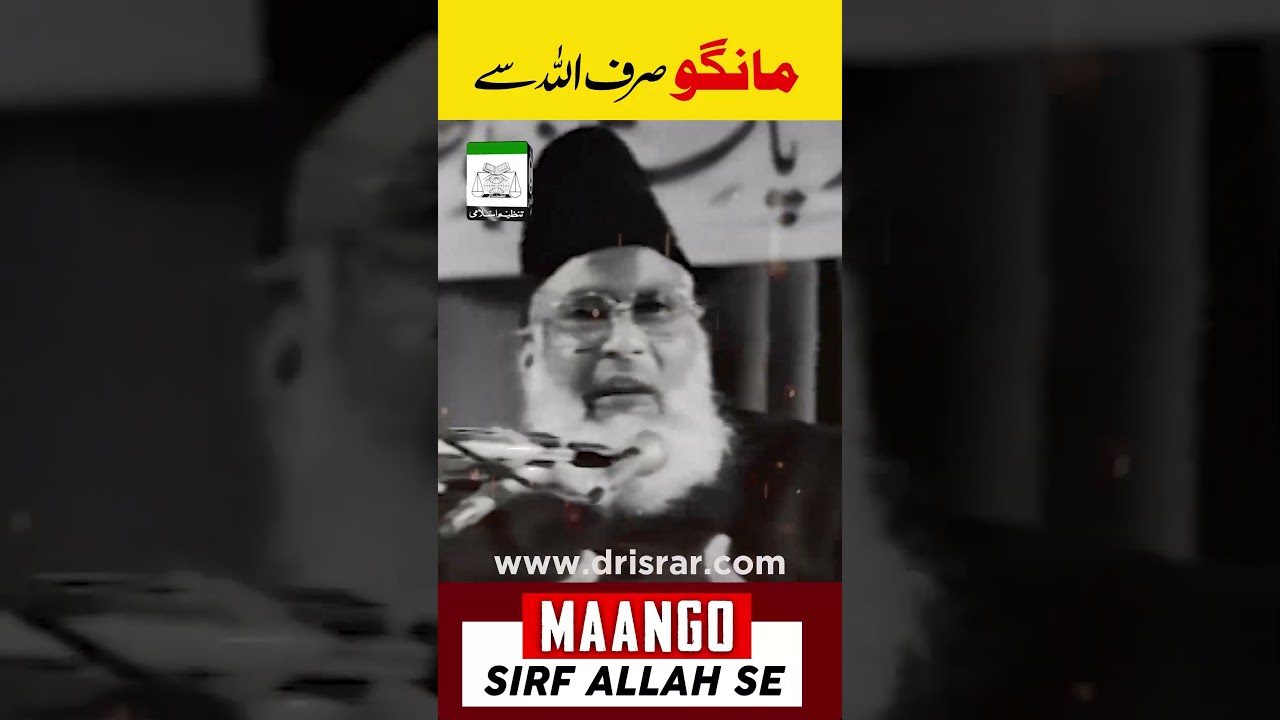
This lecture emphasizes solely relying on Allah for assistance and rejecting the practice of seeking help from spiritual entities or intermediaries. It asserts that Allah possesses the power to alleviate suffering directly, without requiring the intervention of spirits or angels. The speaker stresses that true solace and resolution come from turning to Allah alone with sincere prayer and supplication, and that Allah can grant relief through any means He chooses, independent of any external agent. The core message is a firm rejection of practices involving seeking help from anything other than the Divine.
63
