निकर
The speaker discusses the decline of spiritual understanding within Islamic practice. While rituals like prayer, fasting, sacrifice, and pilgrimage remain prevalent, the underlying philosophical depth and transformative effect have diminished. The speaker argues that the sheer number of people performing these rituals – millions undertaking the Hajj – does not translate into societal impact or personal change. The focus has shifted from inner transformation to mere external observance, resulting in a disconnect between practice and genuine spiritual growth.

75
This lecture emphasizes the twin virtues of patience (sabr) and reliance on God (tawakkul) as fundamental principles for navigating life’s challenges. It stresses complete surrender to divine will, rejecting self-reliance on personal abilities, intelligence, or qualifications. True strength lies in enduring hardship with patience and placing unwavering trust in God’s plan. The core message advocates for abandoning dependence on one’s own efforts and instead, cultivating a complete and absolute trust in Allah for all outcomes.
83
Every conscious human being has a purpose, an ideal, or an inspiration in life. They strive to achieve this ideal through effort and perseverance. A person without purpose is akin to an animal, living solely on instinct and fulfilling basic needs like eating and reproduction. Animals exist based on instinct, lacking a higher purpose. Such a life is considered base. The Quran emphasizes that a life devoid of purpose is animalistic. True humanity lies in having a defined goal and striving towards it.
121
This lecture clarifies the rulings regarding making up missed fasts (qaza) and paying compensation (fidyah) during Ramadan. It explains that while the apparent command of fidyah seems rescinded, the Prophet Muhammad (peace be upon him) maintained it for specific cases: those whose health would be severely endangered by fasting, such as the elderly, chronically ill, or those with no hope of recovery. Healthy individuals capable of fasting are obligated to make up missed fasts. The lecture details who is exempt and when fidyah is permissible, emphasizing the importance of fulfilling religious obligations when physically able.
44
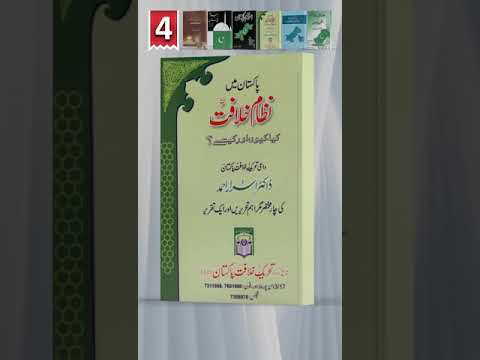
This collection of lectures by Dr. Israr Ahmad addresses critical questions about Pakistan’s history, ideology, and future. Topics include the legacy of the founder of Tanzeem-e-Islami, the viability of a caliphate system, the historical and political context of Islam in Pakistan, the factors contributing to Pakistan’s instability, and the reality of the Pakistan Ideology. The set also features Dr. Ahmad's analysis of Pakistan's political landscape from 1977 to 1987. Available for ₨1200 (originally ₨1900) from Maktaba Khuddam-ul-Quran, Lahore. Home delivery is free with cash on delivery. Order online at www.maktaba.com.pk or WhatsApp at 0301-1115348.
62
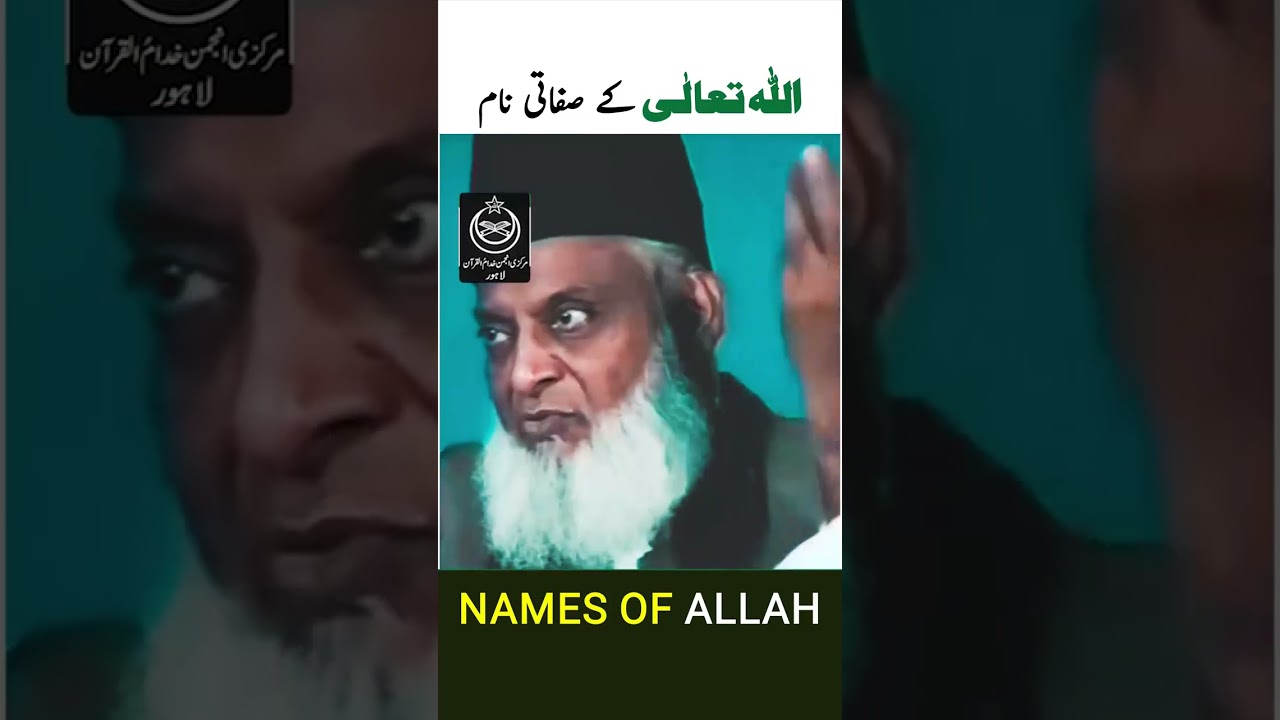
This lecture clarifies the distinction between Allah’s personal name and His attributes. It explains that ‘Allah’ is the sole proper name, while all other names found in the Quran represent divine attributes. By removing the definite article and adding *tanween*, names transform into descriptive qualities. For example, ‘Al-Qadir’ is a name, but ‘Qadir’ or ‘Qadeer’ is an attribute. Similarly, ‘Al-‘Alim’ is a name, while ‘Alim’ or ‘‘Aleem’ is a quality. Essentially, names serve as indicators of a being, and Allah's personal name is unique.
67
