Celana pendek

This lecture explores the astronomical significance of stars and galaxies, specifically addressing their eventual decline and disappearance. It posits that the setting of stars isn't merely a physical event but a profound cosmic process. The passage highlights the vastness of space and the eventual fate of even massive galaxies, suggesting a cyclical pattern of creation and destruction. It emphasizes the immensity of the universe and the eventual disappearance of galaxies, not just stars. This is a deep exploration of cosmic phenomena and their philosophical implications.

74

This lecture clarifies the distinction between trials (imtihan) and consequences (sada). It explains that both may appear similar externally, but the heart discerns their origin. Trials befall those striving on the righteous path, serving as tests from God. Consequences, however, stem from one’s actions. The heart will reveal whether a difficulty is a trial designed to elevate one’s status or a consequence requiring atonement. Recognizing this difference is crucial for spiritual growth and understanding divine justice.
62
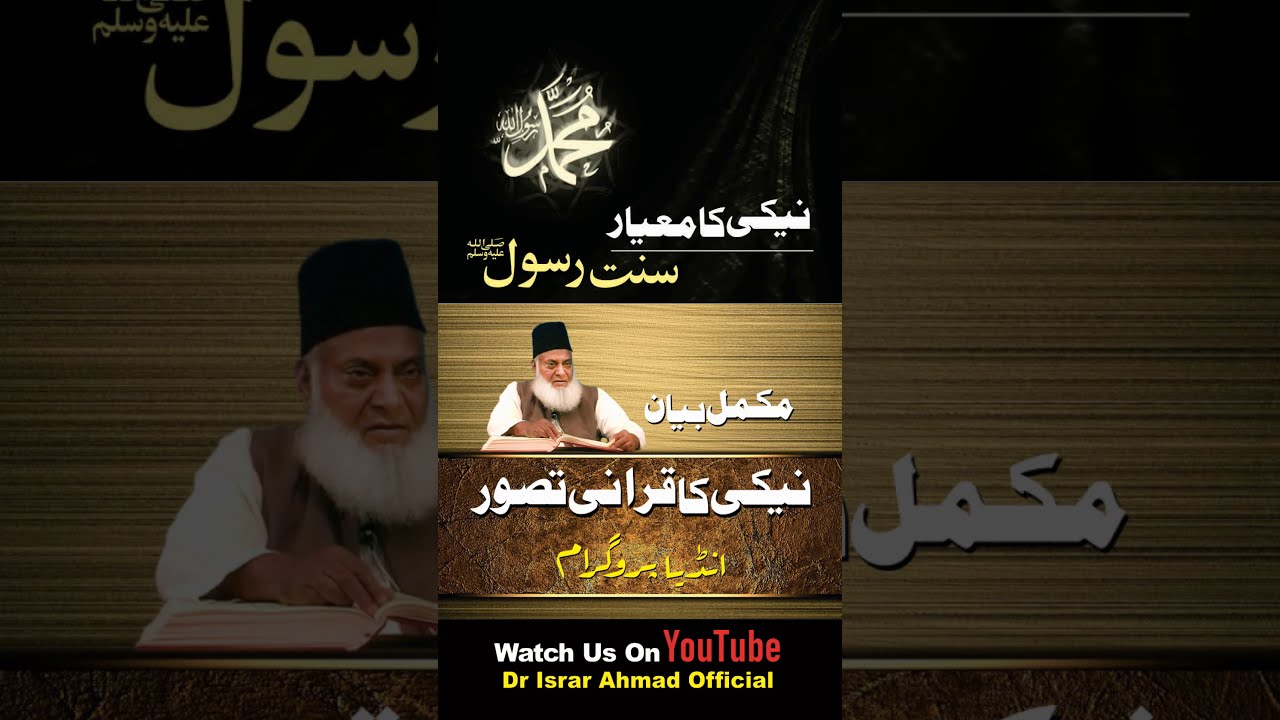
This lecture details a conversation where individuals express extreme devotion through perpetual worship, fasting, and abstinence from marriage. The Prophet Muhammad (peace be upon him) responds, asserting his own piety and emphasizing that true faith lies in following his teachings and sunnah. He clarifies that deviation from his sunnah signifies exclusion from his followers. The lecture underscores the importance of balance and adhering to the Prophet’s guidance in religious practice.
148

Dr. Israr Ahmad explains that a prayer is not accepted if the individual’s sustenance, clothing, and even physical being are derived from unlawful sources. He emphasizes that prayers offered while burdened with sin and sustained by illicit means will not reach God. The lecture details how a person’s entire existence must be purified and aligned with righteousness for their supplications to be answered. The speaker highlights the importance of earning lawful livelihood and abstaining from unlawful sources to ensure the acceptance of prayers.
61

True piety (taqwa) isn't about outward appearances or rituals, but an internal state of consciousness and unwavering faith. It’s a complete immersion of one's personality in the principles of divine guidance. Genuine piety manifests as a consistent effort to please God and avoid disobedience, permeating the entire being with a distinct spiritual color. It resides in the heart and is intrinsically linked to faith. The Prophet Muhammad (peace be upon him) repeatedly pointed to his chest to emphasize that piety dwells within the heart, not in external displays.
44

This lecture clarifies the distinction between cooperation and organizational commitment within the context of establishing religious practice. Cooperation allows for individual discretion; participants can choose when and how to contribute. However, joining an organization, specifically Tanzeem-e-Islami, requires a pledge of allegiance, or *ba’it*, relinquishing personal autonomy to adhere to the organization’s discipline and fulfill its collective objectives. This commitment is foundational to the organization’s structure and its effectiveness in fulfilling its religious mission. The lecture emphasizes that true dedication to establishing faith necessitates joining an organized structure through a formal commitment.
55
