Shorts
The lecture discusses the diminishing spiritual impact of ritualistic worship, despite the continuation of practices like prayer, fasting, sacrifice, and pilgrimage. It argues that simply performing these acts does not guarantee societal change or personal transformation. The speaker emphasizes that a significant number of pilgrims return from Hajj without exhibiting any noticeable positive impact on their communities or themselves, and some even become more self-assured in their past wrongdoings, feeling free from accountability. The core message is that true worship must lead to genuine inner change and positive societal contribution.

70
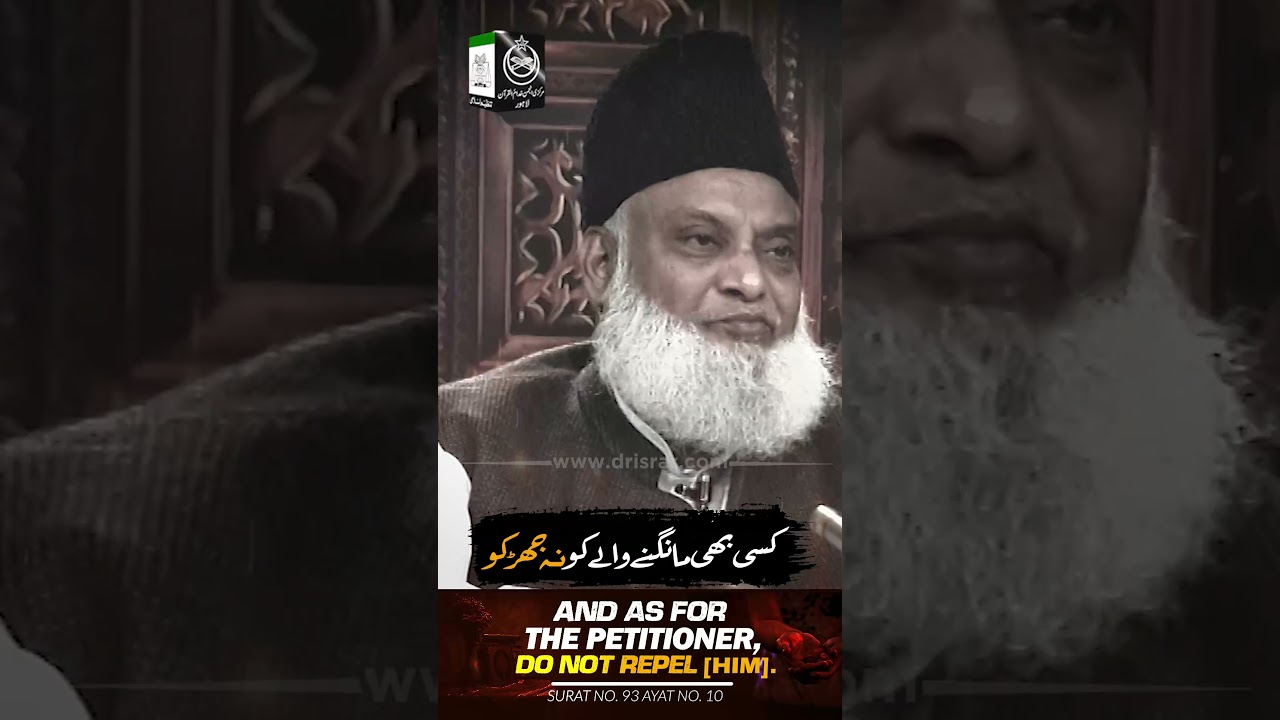
This lecture emphasizes the importance of respectful interaction with those in need, based on the final verses of Surah Ad-Duha. It clarifies that rebuking or harshly responding to a petitioner is prohibited in Islam. The verses instruct believers to avoid dismissive behavior and instead respond with kindness, even if politely declining to fulfill the request. The lecture highlights the significance of empathy and good manners when dealing with those who ask for help, advocating for a gentle and considerate approach.
60
The speaker discusses the decline of spiritual understanding within Islamic practice. While rituals like prayer, fasting, sacrifice, and pilgrimage remain prevalent, the underlying philosophical depth and transformative effect have diminished. The speaker argues that the sheer number of people performing these rituals – millions undertaking the Hajj – does not translate into societal impact or personal change. The focus has shifted from inner transformation to mere external observance, resulting in a disconnect between practice and genuine spiritual growth.
75
The soul is the center of our existence, distinct from the body. While the body originates from the earth, remains for a time, and ultimately returns to it, the soul is eternal and originates from, and returns to, God. Death involves the separation of the soul from the body; the soul itself does not die but transitions. The act of ‘ قبض’ (taking/receiving) relates to the body, not the soul. The soul’s journey is one of return to its divine source, a concept encapsulated in the phrase ‘Inna lillahi wa ilayhi raji’un.’
67
The title ‘Siddeeq’ is reserved for those who unequivocally affirmed the truth of the Prophet Muhammad (peace be upon him). Abu Bakr stood out as unique; unlike others who hesitated or pondered before accepting the message, he affirmed it instantly and without a moment’s doubt. This immediate and complete acceptance earned him the title ‘Siddeeq-e-Akbar’ – the greatest of the truthful.
75
Human life begins with a unique creation, possessing inherent vitality from conception. Even before fertilization, both sperm and ovum exhibit life. All characteristics of life are present in the developing embryo. The embryo is a living organism, not an inanimate object. A crucial stage arrives approximately 120 days after conception. Prior to this, the creation is linked to four specific elements detailed in religious texts. The spirit, or soul, is infused into the embryo after this 120-day period, encompassing and permeating its very being.
65
