निकर
Dr. Israr Ahmad explains the true meaning of poverty (miskin) in Islam. It isn’t merely a lack of wealth, but rather the failure to fulfill obligations to others. A person may perform many acts of worship – prayers, fasting, pilgrimage – yet be considered bankrupt on the Day of Judgment if they have wronged people by depriving them of their rightful inheritance, slandering them, or otherwise violating their rights. Their good deeds will be distributed to those they harmed, leaving them with nothing but the weight of their sins and ultimately destined for Hell. This lecture clarifies that true poverty lies in spiritual bankruptcy, not material lack.

68
The Quran is presented as the primary miracle of the Prophet Muhammad (peace be upon him). Its greatest miracle in the modern world is its power to instigate a monumental revolution in human history, establishing a just system. This transformation occurred entirely through the message of the Quran, and its continued invitation is through its verses.
94
This lecture clarifies the path to salvation through unwavering faith in God and His Messenger, coupled with dedicated struggle in the way of God – investing both wealth and life for His cause. It emphasizes that true success lies not in worldly gains, but in securing protection from the severe punishment of the hereafter. The ultimate trade is to dedicate oneself to Allah and strive in His path, offering both material possessions and personal sacrifice.
39

The Prophet Muhammad (peace be upon him) observed Tarawih prayers individually for only three nights, leading an eight-rak’ah congregation. He performed these prayers after the Tahajjud prayers. The practice of offering twenty rak’ahs in congregation did not exist during the Prophet’s era or the caliphate of Abu Bakr. It began during the caliphate of Umar ibn al-Khattab, who standardized the practice after observing fragmented congregations in the mosque. He instituted a system of twenty rak’ahs to be performed immediately after Isha, led by a single imam.
80
This lecture addresses the hypocrisy of requesting guidance from the Quran while simultaneously rejecting its comprehensive system of life. The speaker argues that simply reciting the Quran or making supplications based on its verses is insufficient if one isn’t prepared to fully embrace its principles and implement them in all aspects of life. True acceptance of the Quran as a guide, or *Imam*, requires a commitment to establishing its complete framework, not merely selective adherence. Prayers offered without this genuine commitment are deemed ineffective and ultimately rejected.
106
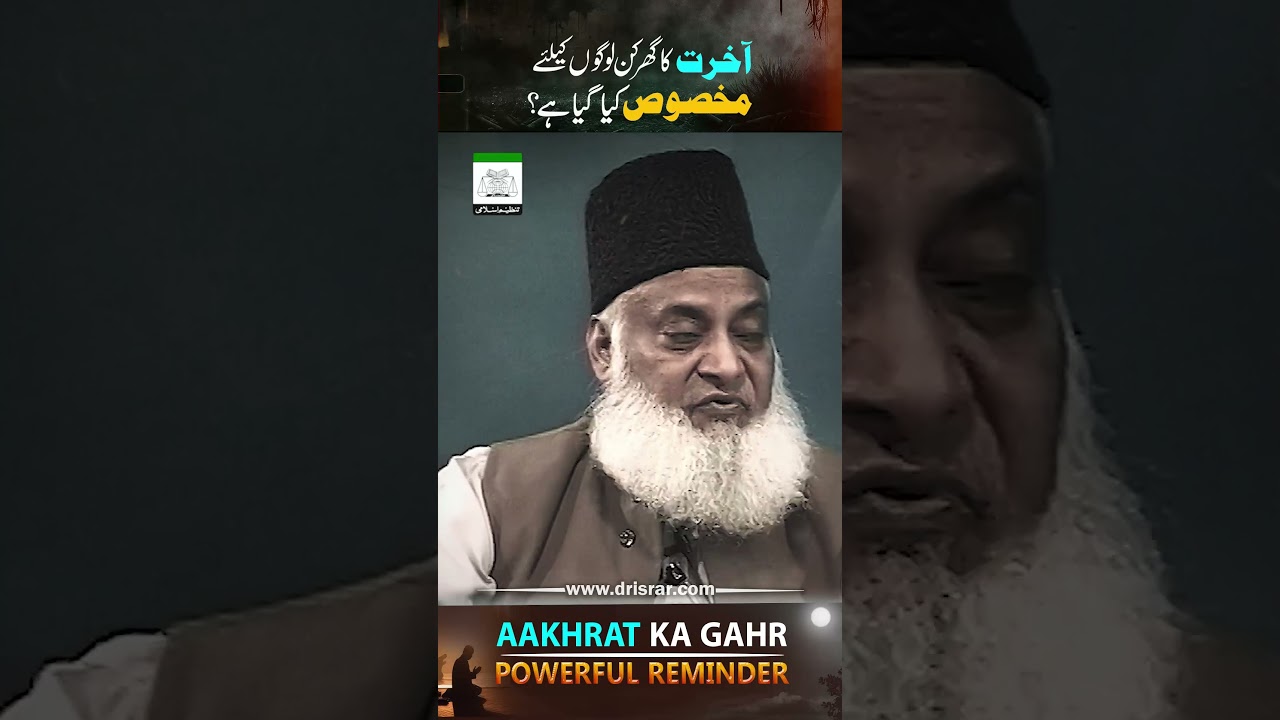
This lecture clarifies that the ultimate abode, the Hereafter, is reserved for those who abstain from seeking power, dominance, or creating corruption in the world. It emphasizes that this eternal reward is specifically for the righteous – those who prioritize piety and refrain from worldly ambitions. The final outcome and ultimate success are assuredly for the God-conscious, and Allah has exclusively designated its blessings, joys, and comforts for His devout servants.
52
