Korte broek
This lecture emphasizes the importance of fulfilling obligations to God and humanity. It stresses standing firm for justice and truth, and adhering to divine guidance as outlined in the Quran and previous scriptures. The speaker highlights the interconnectedness of rights – those owed to God, the Prophet, and fellow human beings. A crucial aspect is the responsibility to understand and reflect upon the scriptures received, particularly the Quran, Torah, and Gospel, and to act upon their teachings. The message underscores that true communication with God requires commitment to justice and adherence to revealed knowledge.

72
Partial obedience is unacceptable; complete submission to divine commands is required. Selectively following religious dictates, driven by personal inclination, renders all obedience void. The Quran warns against accepting some scriptures while rejecting others, leading to disgrace in this life and severe punishment in the hereafter. Allah sees beyond superficial displays of piety and judges intentions. True devotion requires sincere faith and righteous actions, not merely outward rituals performed with ill-gotten gains. This lecture emphasizes the importance of wholehearted commitment to faith and the consequences of hypocrisy.
53
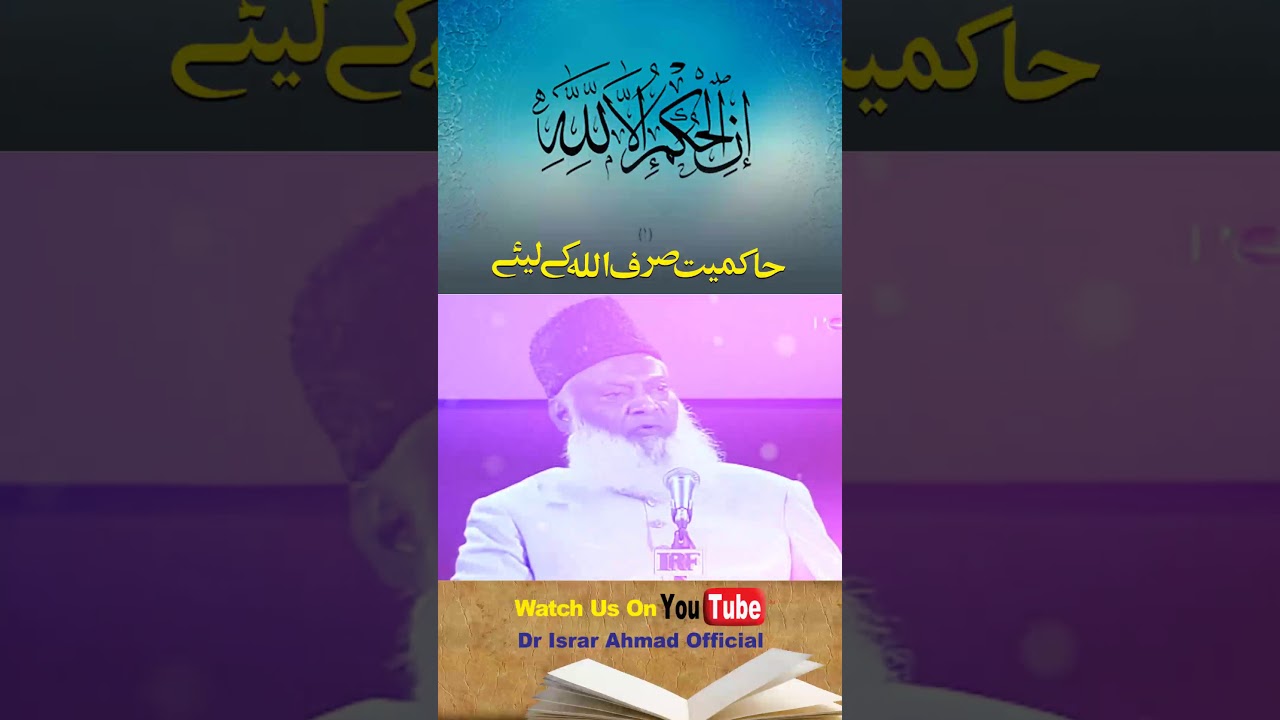
This lecture emphasizes that ultimate authority and governance rest solely with God. It asserts that God does not share His power with any individual, ruler, nation, or humanity as a whole. The universe and the earth belong to God, and His will must prevail. This principle of divine sovereignty is absolute and unwavering, rejecting any form of shared authority or human intervention in matters of governance.
335

The text highlights a unique distinction granted to Prophet Muhammad (peace be upon him). The Quran uses specific phrasing – “Rasool Allah” – exclusively for him, while other prophets are described with various roles like witness, herald, example, caller, messenger, teacher, trainer, and helper. This emphasizes his singular status as the final messenger of God.
107
The vast majority of Muslims today lack true faith, with only a small fraction embodying genuine belief. This lecture highlights a pervasive disconnect between professed belief and actual practice, particularly regarding adherence to Quranic principles. Many prioritize worldly concerns and are fixated on death without acknowledging the reality of the afterlife as the true life. The speaker emphasizes a critical contradiction: professing belief in the Quran while simultaneously engaging in prohibited practices like usury, demonstrating a lack of genuine faith in divine commandments.
74
The observance of fasting on the 9th and 10th of Muharram is a recommended practice, not obligatory. This practice originated when the Prophet Muhammad learned that the Jews of Medina fasted on the 10th of Muharram to commemorate their deliverance from Pharaoh. The Prophet stated that the Muslims have a greater right to Moses than the Jews, and thus instructed his companions to fast on the 9th and 10th of Muharram instead, to differentiate their practice. This was done even before Ramadan fasting was made obligatory. The intention was to establish a distinct practice, fasting for two days instead of one.
74
