Shorts
This lecture discusses the foundational principles of Pakistan’s political system, highlighting its historical roots in British parliamentary democracy. It emphasizes the concept of a shared national identity encompassing both Muslims and non-Muslims, established during the creation of Pakistan. The speaker points out that despite establishing Pakistan with a different vision, the country largely retained the British parliamentary system. The lecture examines the perception that this system was considered divinely ordained, leaving little room for alternative models and solidifying its place as the established political norm.

79
This lecture emphasizes the importance of verifying hadith before accepting them as truth. It advises against outright rejection but encourages pausing for research to confirm authenticity. The speaker highlights the immense effort undertaken by scholars in hadith compilation and stresses that dismissing hadith based on personal opinion is against established beliefs. The lecture advocates for careful consideration, investigation, and confirmation that a hadith is sound and conforms to established principles before acceptance. It cautions against hasty judgments and encourages a scholarly approach to understanding religious narrations.
77
The Prophet Muhammad (peace be upon him) emphasized that fulfilling Zakat is not merely about giving a fixed portion of wealth. It is an acknowledgement that Allah has a right in our possessions beyond just the obligatory Zakat. The Quran highlights spending on relatives, orphans, the needy, travelers, and freeing slaves as acts of righteousness. Zakat is a pillar of Islam, akin to prayer in strengthening faith. The ability to spend in the path of Allah is sustained through the practice of Zakat as an act of worship. It is not simply about wealth redistribution, but about purifying one's soul and fostering spiritual growth.
112
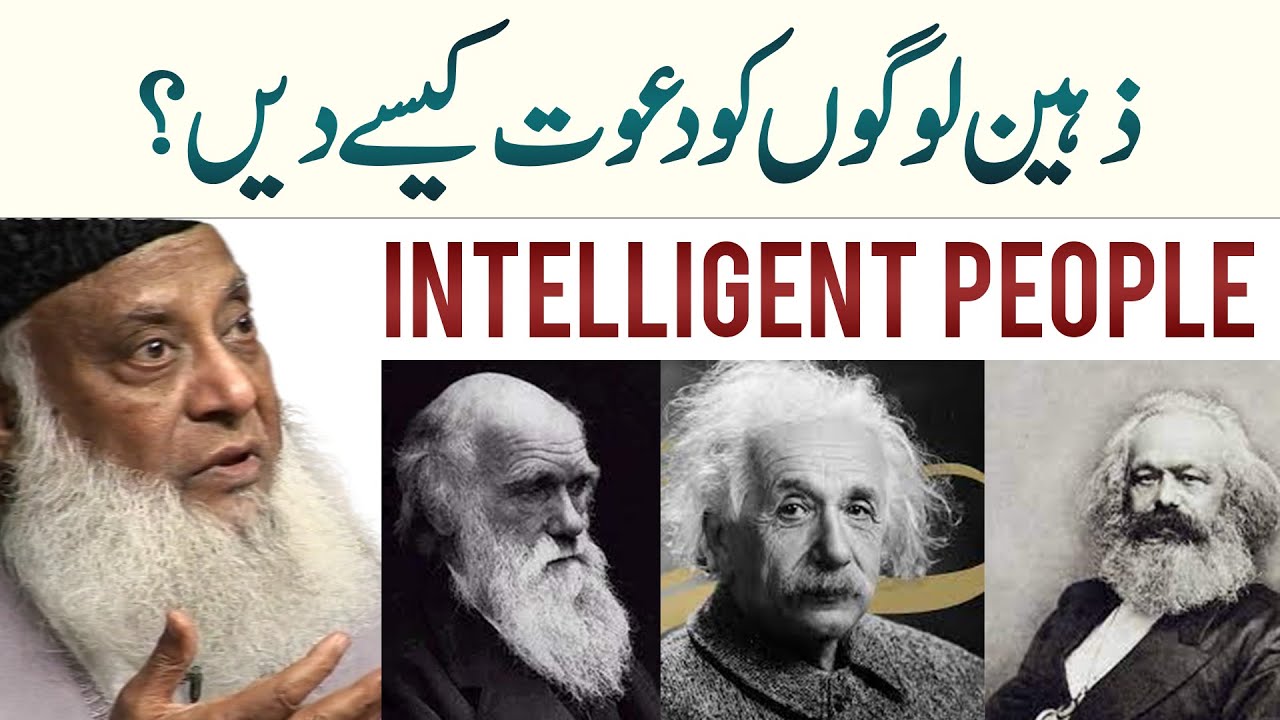
The lecture addresses the necessity of clearing the mind of conflicting ideologies, specifically Darwinian evolution and other Western philosophies, before accepting Islamic teachings. The speaker emphasizes that preconceived notions and intellectual impurities act as barriers to true understanding of religious concepts like the story of Adam and Iblis. He critiques the influence of thinkers such as Darwin, Freud, Marx, Adler, Bertrand Russell, and Sartre on contemporary thought, asserting that these philosophies obstruct a clear reception of Islamic principles. The speaker highlights the importance of intellectual purification to facilitate genuine faith and understanding.
60
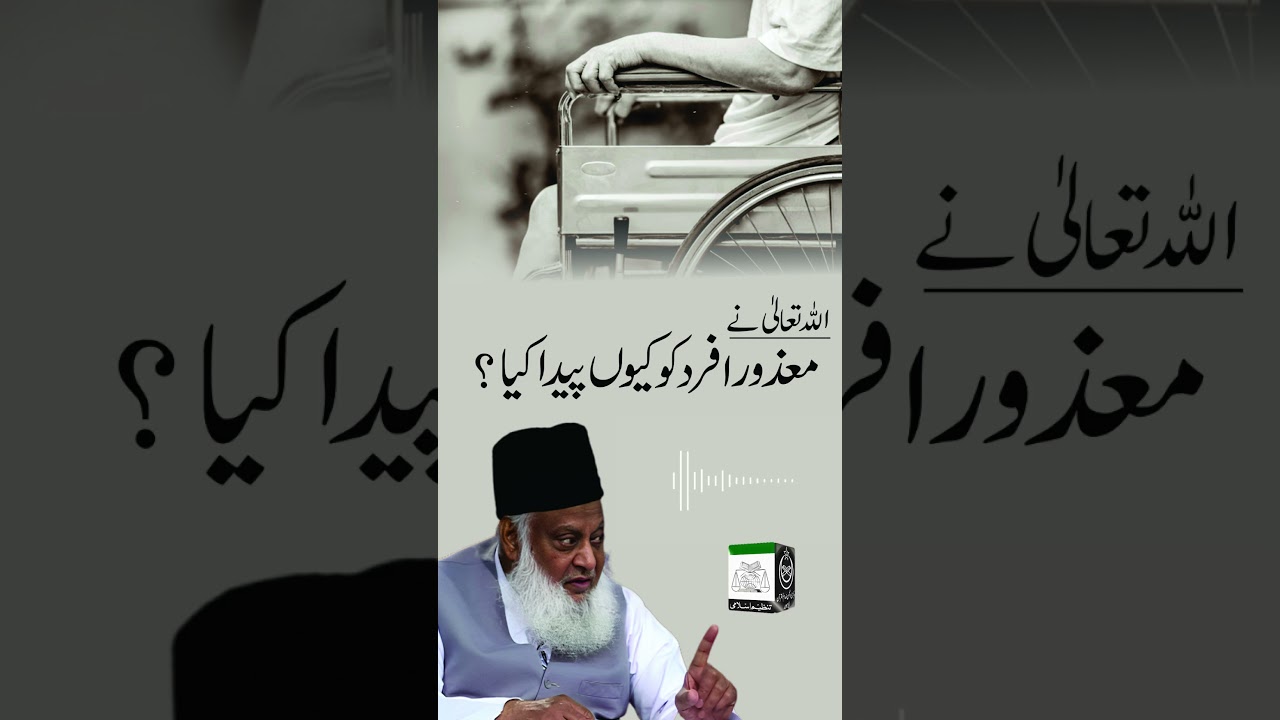
This lecture addresses the challenges faced by individuals with disabilities, specifically blindness, and offers a theological perspective on hardship and divine justice. It posits that life's difficulties are not punishments but tests, and that full compensation will be provided in the afterlife. The speaker argues that limitations do not negate success, as individuals will be judged based on their capacity and effort. The focus shifts from worldly outcomes to the eternal reward, framing current struggles as a temporary phase within a larger, eternal context. Success isn't measured by worldly achievements but by striving within one's limitations. The speaker emphasizes that the true life exists in the hereafter.
55
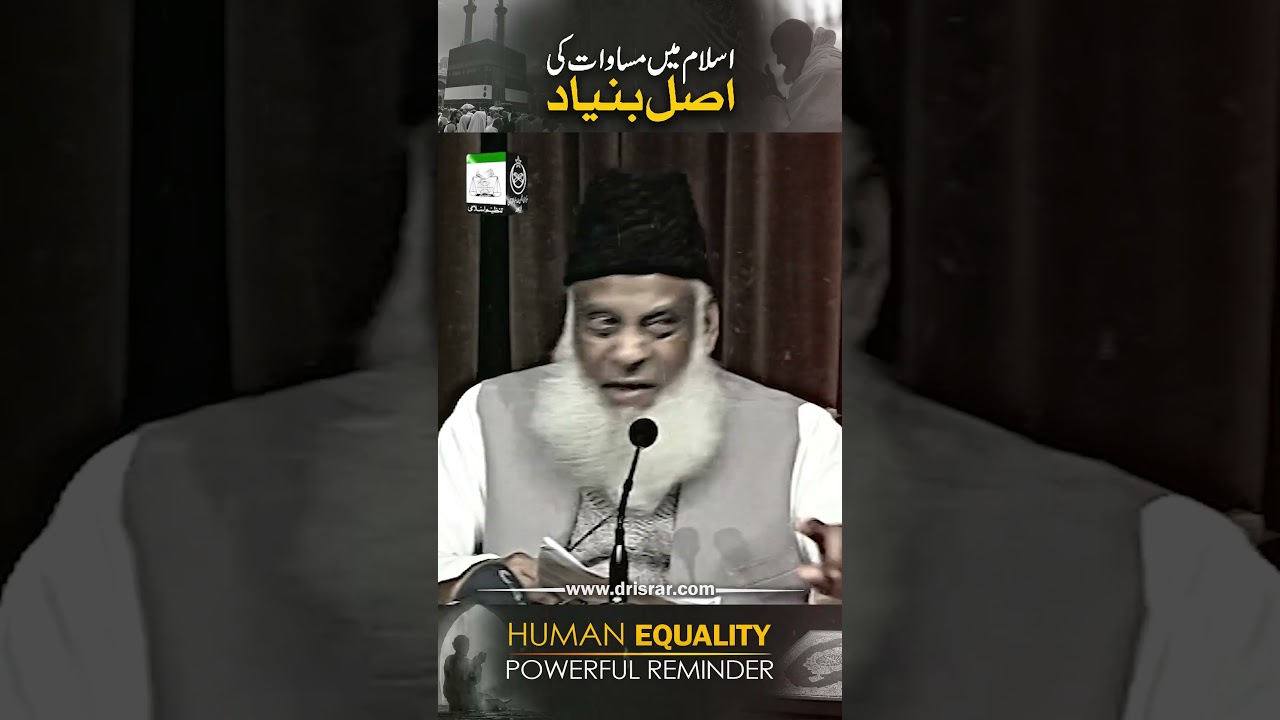
Humans are born equal, possessing inherent dignity regardless of race, ethnicity, gender, or social status. This equality is a fundamental principle, as highlighted by Allama Iqbal. Differences in status arise from acquired qualities like knowledge and piety, not from birth. True honor stems from devotion to God and righteous conduct, not from inherited characteristics. The Quran emphasizes that superiority is based on *taqwa* (piety), not on arbitrary distinctions like race or lineage. This concept rejects all forms of discrimination and promotes a society based on justice and merit.
69
