Pantalones cortos

This lecture details the Prophet Muhammad’s (peace be upon him) exceptional character, particularly his modesty and self-reliance. The narrative recounts how the Prophet never asked anyone for personal favors, even during the challenging time of migration to Medina. It highlights his foresight in preparing for the journey with the help of Hazrat Abu Bakr, ensuring swift transportation. The account further illustrates the Prophet’s humility, demonstrated by his willingness to perform even the simplest tasks himself, refusing to ask others for assistance. The lecture concludes with a powerful affirmation of support from his companions, declaring themselves ‘Ansarullah’ – helpers of God.

72

Many misconceptions exist regarding remembrance of Allah. A primary error is conflating *zikr* itself with the *means* of remembrance. *Zikr* is the presence of Allah in the heart – maintaining awareness, love, and connection with Him. Reciting phrases like “Subhan Allah” is a *means* to *zikr*, but not *zikr* itself. If one’s mind is preoccupied with worldly problems while reciting, the *means* is employed, but the true *zikr* – the presence of Allah in the heart – is not achieved. Similarly, prayer is a *means* to *zikr*; the ultimate goal is the presence of Allah within the heart.
100

Dr. Israr Ahmad discusses the enigmatic figure of Zul-Qarnain mentioned in the Quran. He explores the possibility that Zul-Qarnain may be connected to the historical figure of Gautama Buddha, noting the lack of detailed information about Zul-Qarnain in both the Quran and Hadith. He suggests a link based on geographical references within Surah Al-Kahf and the story of a prince from Kapilavastu. Dr. Ahmad acknowledges the potential for later interpretations and additions to Buddha’s teachings, similar to those surrounding Jesus Christ, while also pointing out a possible consistency between the core principles of all prophets of God. He emphasizes the need for critical analysis and understanding of historical and religious figures.
68

This lecture explores the destructive nature of greed (bakhili) and the dangerous state of self-sufficiency (istighna). It contrasts those who are mindful of others’ feelings and seek forgiveness with those who are indifferent and act without regard for consequences. The speaker emphasizes that a lack of empathy leads to spiritual ruin, ultimately culminating in the severe consequences of the afterlife. The discourse highlights the importance of humility, consideration for others, and seeking repentance to avoid the path of destruction.
54
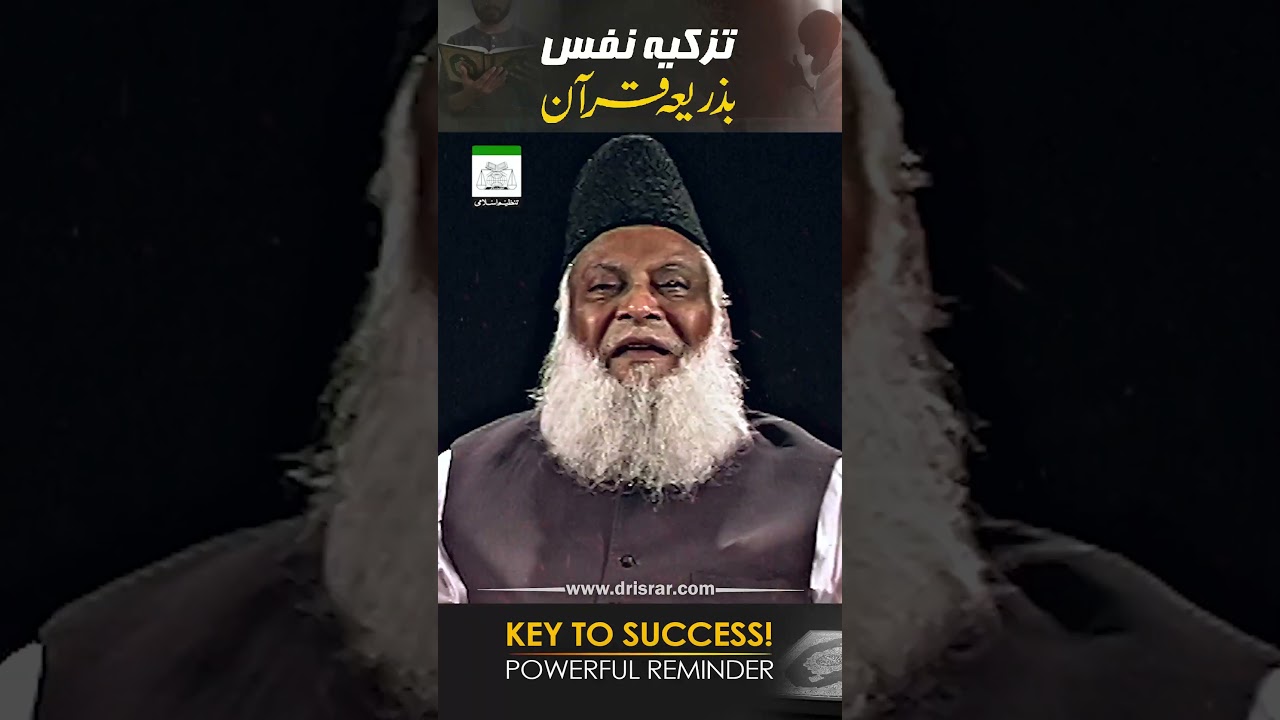
The process of self-purification involves internalizing the Quran – understanding it with your intellect, reflecting upon it in your thoughts, and illuminating your heart with its guidance. This inner illumination dispels darkness and washes away impurities, much like leaves falling from trees in autumn. Faith, once established, generates an inner light that permeates the entire being. This requires controlling base instincts, detaching from worldly desires like wealth and power, and purifying one’s character from vices. The Quran is the primary source for achieving this purification.
78

This lecture discusses the subtle forms of *shirk* (associating partners with God) that arise from prioritizing personal desires (*nafs*) over divine guidance. It explains how attachment to wealth and material possessions can become a form of idolatry, even while outwardly professing faith. The speaker emphasizes that true *tawheed* (monotheism) demands complete submission and obedience to God alone, rejecting any form of worship or devotion directed towards worldly things. The dangers of prioritizing wealth over ethical boundaries are highlighted, comparing this to the idolatry found in other religions. The core message is a call to purify worship and ensure that all actions are solely for the pleasure of God.
60
