短裤
This lecture details the Prophet Muhammad’s (peace be upon him) exceptional character, particularly his modesty and self-reliance. The narrative recounts how the Prophet never asked anyone for personal favors, even during the challenging time of migration to Medina. It highlights his foresight in preparing for the journey with the help of Hazrat Abu Bakr, ensuring swift transportation. The account further illustrates the Prophet’s humility, demonstrated by his willingness to perform even the simplest tasks himself, refusing to ask others for assistance. The lecture concludes with a powerful affirmation of support from his companions, declaring themselves ‘Ansarullah’ – helpers of God.

72
This lecture emphasizes the importance of fulfilling one’s obligations to relatives, particularly widows and orphaned children. It stresses prioritizing the rights of those most deserving, especially when dealing with family disputes and potential grievances. The speaker advocates for giving with sincerity, solely for the pleasure of God, and acting justly towards all, even those who may be antagonistic. Prioritizing divine acceptance over personal vengeance is central to the message. It calls for fulfilling obligations and addressing the needs of those deprived of support.
51
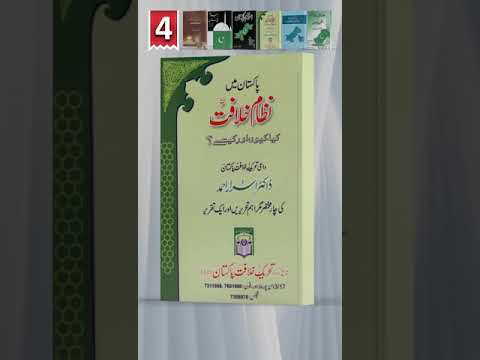
This collection of lectures by Dr. Israr Ahmad addresses critical questions about Pakistan’s history, ideology, and future. Topics include the legacy of the founder of Tanzeem-e-Islami, the viability of a caliphate system, the historical and political context of Islam in Pakistan, the factors contributing to Pakistan’s instability, and the reality of the Pakistan Ideology. The set also features Dr. Ahmad's analysis of Pakistan's political landscape from 1977 to 1987. Available for ₨1200 (originally ₨1900) from Maktaba Khuddam-ul-Quran, Lahore. Home delivery is free with cash on delivery. Order online at www.maktaba.com.pk or WhatsApp at 0301-1115348.
62
This excerpt emphasizes the Quran as a profound blessing and healing from Allah. It highlights the Quran as a source of guidance, mercy, and a testament to Allah’s grace. The text stresses that true joy should stem from possessing this divine gift, as it surpasses all worldly possessions. It’s a reminder to cherish and internalize the Quran's message for lasting happiness and spiritual fulfillment.
63
This lecture clarifies the distinction between Allah’s personal name and His attributes. It explains that ‘Allah’ is the sole proper name, while all other names found in the Quran represent divine attributes. By removing the definite article and adding *tanween*, names transform into descriptive qualities. For example, ‘Al-Qadir’ is a name, but ‘Qadir’ or ‘Qadeer’ is an attribute. Similarly, ‘Al-‘Alim’ is a name, while ‘Alim’ or ‘‘Aleem’ is a quality. Essentially, names serve as indicators of a being, and Allah's personal name is unique.
67
This lecture addresses the question of accountability for unintentional involvement with interest (riba). It clarifies that if someone unknowingly consumes something containing interest, they are not exempt from sin. However, the speaker proposes that sincere effort dedicated to establishing and strengthening religious practice can serve as expiation. The analogy of involuntary inhalation of dust is drawn; just as one cleanses their lungs, striving for faith cleanses the soul. The lecture emphasizes that consistent, dedicated work for the cause of religion is a valid form of atonement for unintentional transgressions.
68
