Korte broek

This lecture addresses the dangers of linguistic and cultural biases, clarifying that regional, ethnic, and linguistic identities are not inherently sinful. It emphasizes that every culture and language has a right to flourish, provided any elements conflicting with Islamic teachings are removed. The lecture highlights the unique status of the Arabic language not due to its speakers, but because it is the language of the Quran and the sayings of the Prophet Muhammad, making its study essential for direct understanding of religious texts. It cautions against exclusionary attitudes based on language or culture, likening such behavior to a useless tool.

63
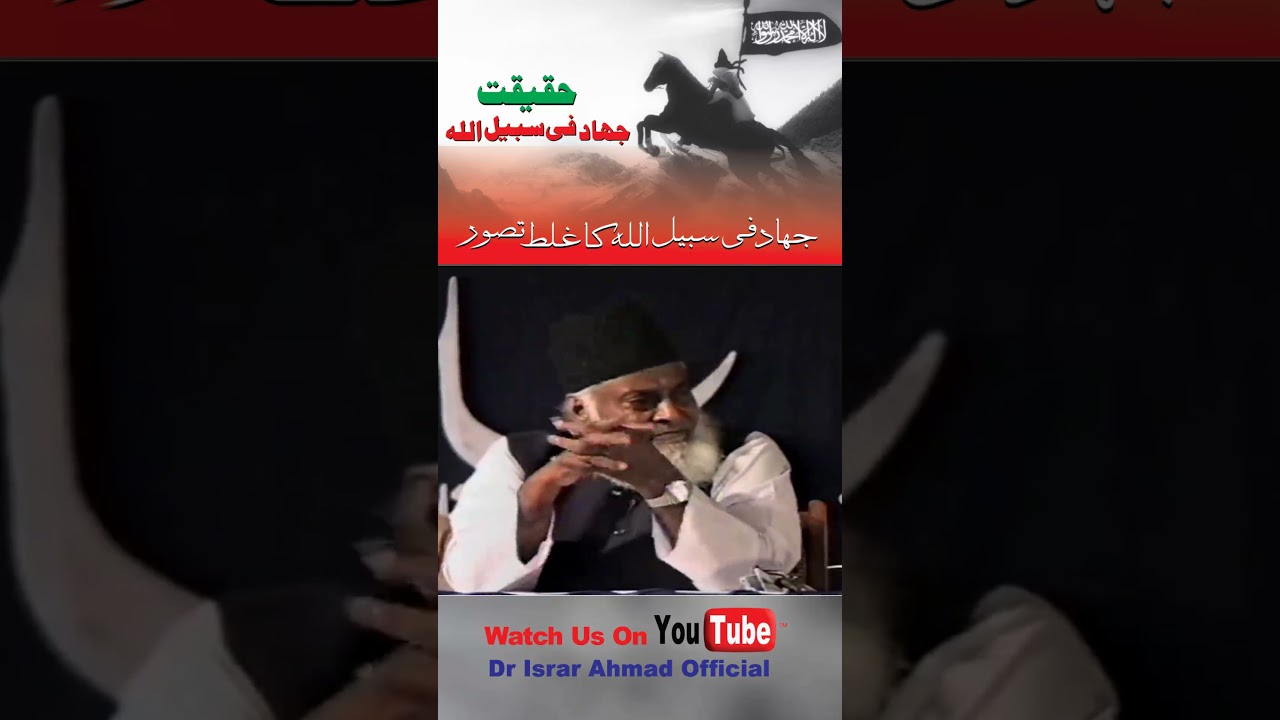
This lecture clarifies the true meaning of Jehad in Islam, dismissing its misuse for worldly gains like expanding empires, collecting wealth, or personal ambition. It emphasizes that genuine Jehad is solely for establishing the supremacy of God’s word and implementing a just Islamic system. Any other intention negates the sincerity of the act. The speaker refutes the notion that fighting for tribal feuds, personal bravery, or material benefits qualifies as Jehad. True Jehad aims to elevate God’s message and establish a righteous governance, making it a purely devotional act.
52

The history of Islam and Muslims reveals a pattern of rise and decline. Initially unified, Islam flourished during the Rashidun Caliphate. Post-Caliphate, while Islam experienced decline, Muslim power continued to ascend, reaching its peak. Subsequently, Muslims also faced decline, followed by a resurgence. The Tartars, despite inflicting immense casualties on Muslims, ultimately converted to Islam and became its champions. Successive Turkic dynasties—Timurids in India, Safavids in Iran, Seljuks in the Middle East, and Ottomans—led Islamic power for centuries. The Ottoman Caliphate held prominence for four hundred years, before ultimately declining after World War I.
60

Abdullah ibn Haris narrates that the Prophet Muhammad (peace be upon him) indicated forces would emerge from the east, establishing a system within an eastern region before launching campaigns. This eastern region encompasses areas like Iran, Afghanistan, Pakistan, and potentially India. A caliphate will be established within this area, sending forces to support the establishment of the Mahdi’s government in the Arabian Peninsula. This lecture explores the geographical indicators associated with the advent of the Mahdi and the preceding conditions for his arrival.
107

This lecture details three categories of people whose prayers are not accepted by God. These include a man who remains with a wife of bad character but refuses divorce, an individual who entrusts wealth to a foolish person despite divine prohibition, and a person who has a debt outstanding but did not establish proper witnesses. God will not answer the prayers of such individuals.
46

The Prophet Muhammad (peace be upon him) stated that honoring someone who promotes innovation (bid'ah) is equivalent to undermining the foundations of Islam. He further warned that supporting a corrupt individual strengthens their wrongdoing and invites divine displeasure, even causing the divine throne to tremble. These teachings emphasize the importance of adhering to authentic Islamic principles and rejecting deviations.
54
