شلوار کوتاه
A traveler in the desert loses his camel, carrying all his provisions and means of transport. After a desperate search, he encounters death itself. Overwhelmed with relief, he proclaims gratitude to God for this encounter, recognizing his own insignificance and God’s grace. This parable illustrates the immense joy God feels when a sinful servant repents, exceeding even the joy experienced by the traveler at finding ‘death’.

64
This lecture discusses the importance of prioritizing the afterlife over worldly pursuits. It emphasizes that those solely focused on immediate gains neglect the true purpose of life. The speaker highlights that fulfilling parental duties, like maintaining their graves, is commendable but ultimately secondary to striving for eternal reward. The core message centers on verses from Surah Bani Israel, detailing the swift provision of worldly desires for those who seek them, contrasted with the enduring reward promised to those who dedicate themselves to the hereafter and consistently strive for it. The lecture underscores the difference between immediate gratification and lasting spiritual fulfillment.
42
This lecture analyzes the concept of democracy, arguing that current systems, particularly in America, are not true representations of popular will but rather disguised forms of dictatorship controlled by capital. The speaker contends that true democracy can only exist when economic justice is established, allowing citizens to make informed decisions free from the influence of wealth. The current electoral process is likened to a mere formality, a ‘slip’ of paper in the hands of the common man, manipulated by powerful financial interests. The lecture emphasizes that genuine democracy requires equitable economic opportunities for all citizens, empowering them to exercise their political agency meaningfully.
65
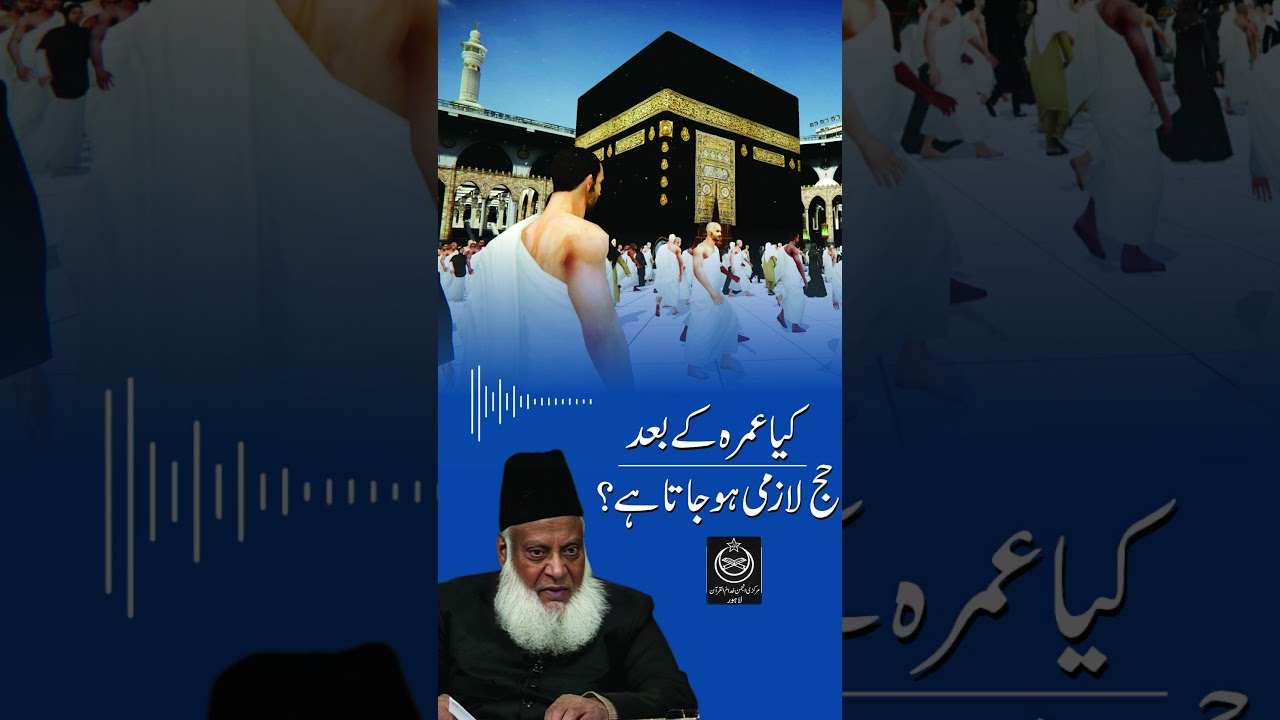
This lecture clarifies whether performing Umrah necessitates performing Hajj. It addresses the scenario of someone performing Umrah while on official government travel, funded by the state, and lacking the financial means for Hajj. The core point is that Umrah itself does not automatically make Hajj obligatory. However, if an individual possesses the financial capability, they should prioritize fulfilling the obligatory Hajj pilgrimage. The lecture emphasizes that if someone can afford to perform Hajj, it becomes an obligation upon them.
85
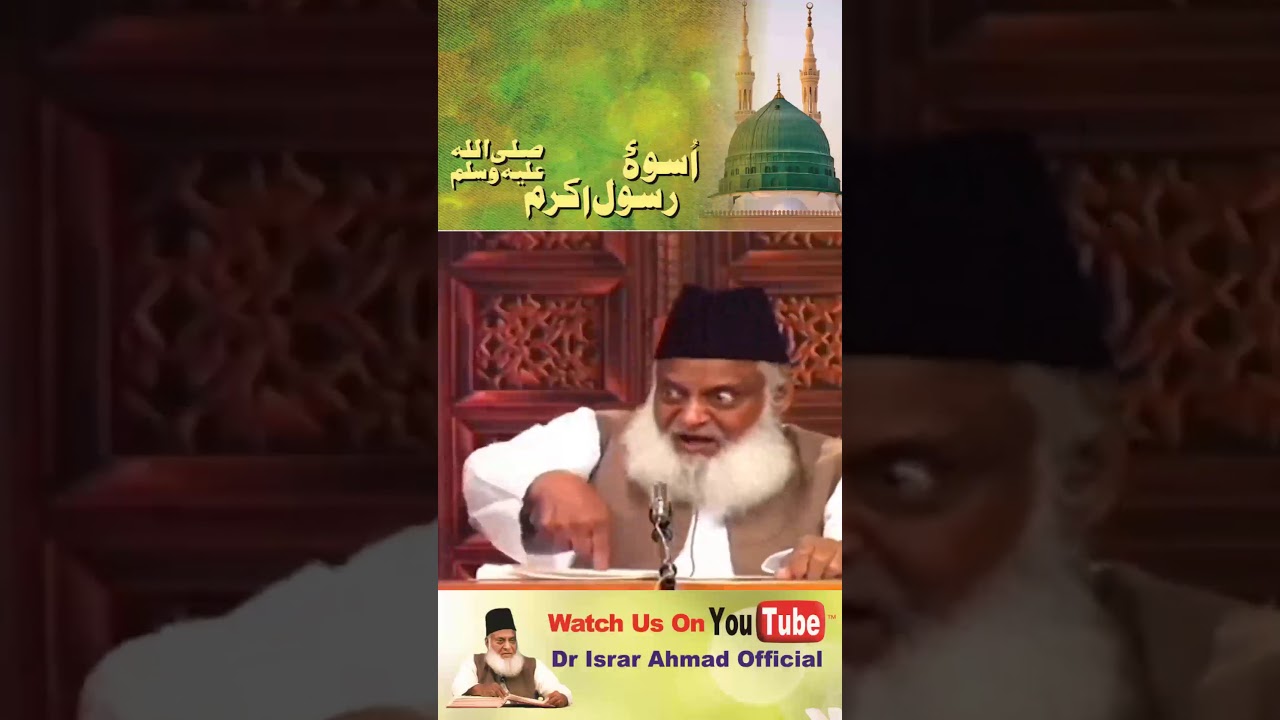
This lecture clarifies the true meaning of ‘Uswa-e-Hasana’ (the excellent example) as revealed in the Quran, specifically during the Battle of the Trenches. It moves beyond superficial interpretations like simply growing one's beard or raising trousers above the ankles. The core of the prophetic example lies in actively confronting falsehood, even at the cost of life and possessions. True adherence to the Prophet's way is demonstrated through unwavering struggle against evil, not merely through ritualistic observance of religious practices while remaining complacent in the face of injustice. It challenges the notion of a comfortable faith and emphasizes the proactive struggle against falsehood as the essence of the prophetic example.
107
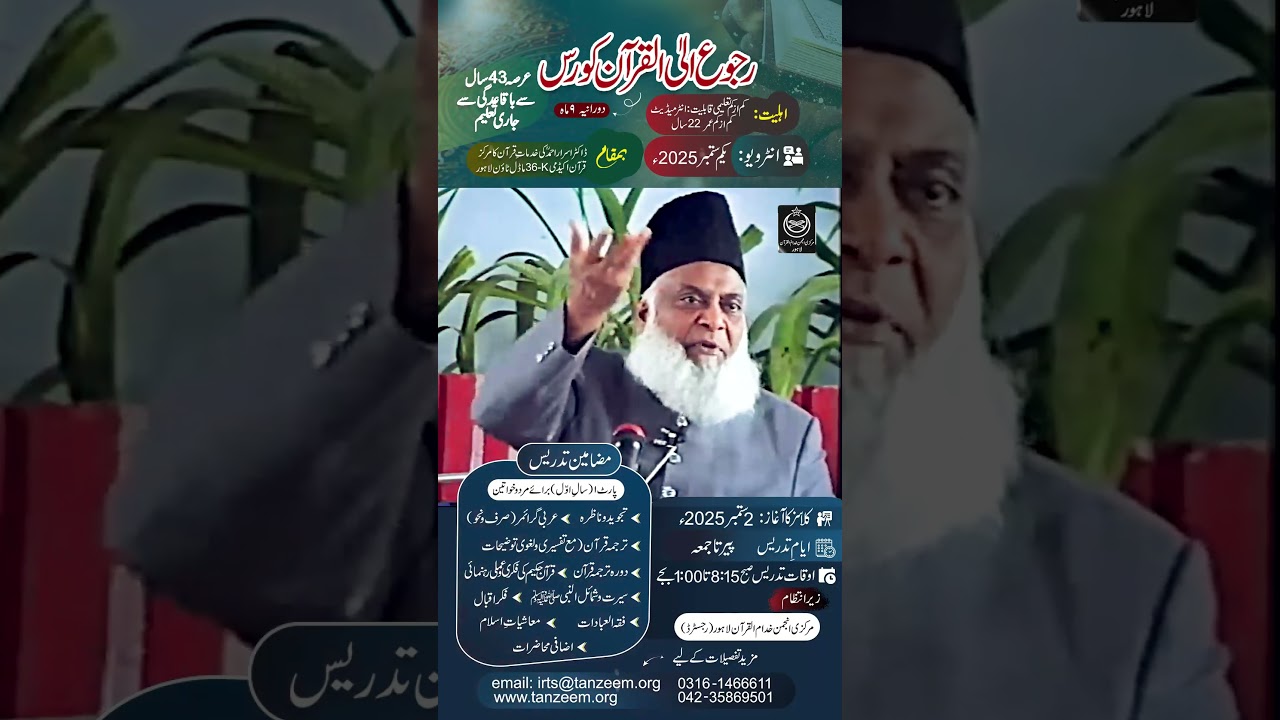
This lecture emphasizes the necessity of personal repentance (tawbah) and its expansion into a collective movement. It urges listeners to prioritize learning Arabic to properly understand and convey the Quran, as the primary medium for inviting others to the faith. The speaker stresses the urgency of life, the potential for unforeseen circumstances, and the importance of dedicating time to religious education and the preparation of a dedicated group (da'i) committed to spreading the message of Islam. He shares his life's dedication to Quranic study, teaching, and the organization of a committed group, viewing this as a vital struggle for the faith. The ultimate goal is the growth of a movement devoted to upholding and propagating Islamic principles.
63
