Shorts
This lecture categorizes people into three groups based on their relationship with faith and worldly desires. The first group possesses genuine faith, pure intentions, and benefits from divine guidance. The second group is consumed by materialism, devoid of true spirituality or meaningful good deeds, and spends wealth solely on personal indulgence. The third group occupies an intermediate position, performing good deeds motivated by ego, reputation, or worldly gain rather than sincere faith. Their actions are likened to a mirage, lacking genuine spiritual value. The lecture emphasizes the distinction between actions performed for the sake of Allah and those driven by self-interest.

65
Pre-Islamic Arabs practiced forms of worship that mirrored some Islamic rituals. While distorted, practices resembling prayer (salat) existed, although expressed through clapping and whistling. The pilgrimage to the Kaaba (hajj) was also common, though the Quraish limited their participation to Mina instead of Arafat. Animal sacrifice (qurbani) was routinely performed, and the core phrases of the pilgrim’s chant (talbiyah) remained largely unchanged. These practices demonstrate a pre-existing spiritual inclination among the Arabs, which Islam later refined and perfected.
59

This lecture emphasizes unwavering faith in Allah's support and power. It asserts that no harm can befall a believer except what is decreed by Allah, and no benefit can be achieved without His will. The core message is that true peace and security come from complete reliance on Allah, knowing He is always present and capable of overcoming all obstacles. The speaker highlights that collective human efforts cannot alter Allah’s plan, reinforcing the importance of trusting in His divine decree and finding strength in His companionship.
54
This lecture clarifies that true success isn't measured by wealth, possessions, or business expansion. Instead, it's achieved through four core principles: faith (iman), righteous deeds (amal-e-saleh), encouraging truthfulness (tawasib-ul-haq), and patience (tawasib-e-sabr). The speaker argues that conventional definitions of success are fundamentally flawed and that these four elements are the genuine determinants of a fulfilling life. This lecture highlights a contrast between worldly perceptions of success and the Islamic perspective, offering a pathway to genuine achievement.
54
This narrative recounts an instance where the Prophet Muhammad (PBUH) requested to use an camel owned by Hazrat Abu Bakr. Hazrat Abu Bakr, overjoyed, offered the camel as a gift, having prepared it specifically for the journey. The Prophet insisted on paying for it. Hazrat Abu Bakr, moved to tears, expressed that his life and possessions were already dedicated to the Prophet, and offering the camel without payment was a matter of honor. This demonstrates the Prophet’s integrity and Hazrat Abu Bakr’s profound devotion and generosity.
49
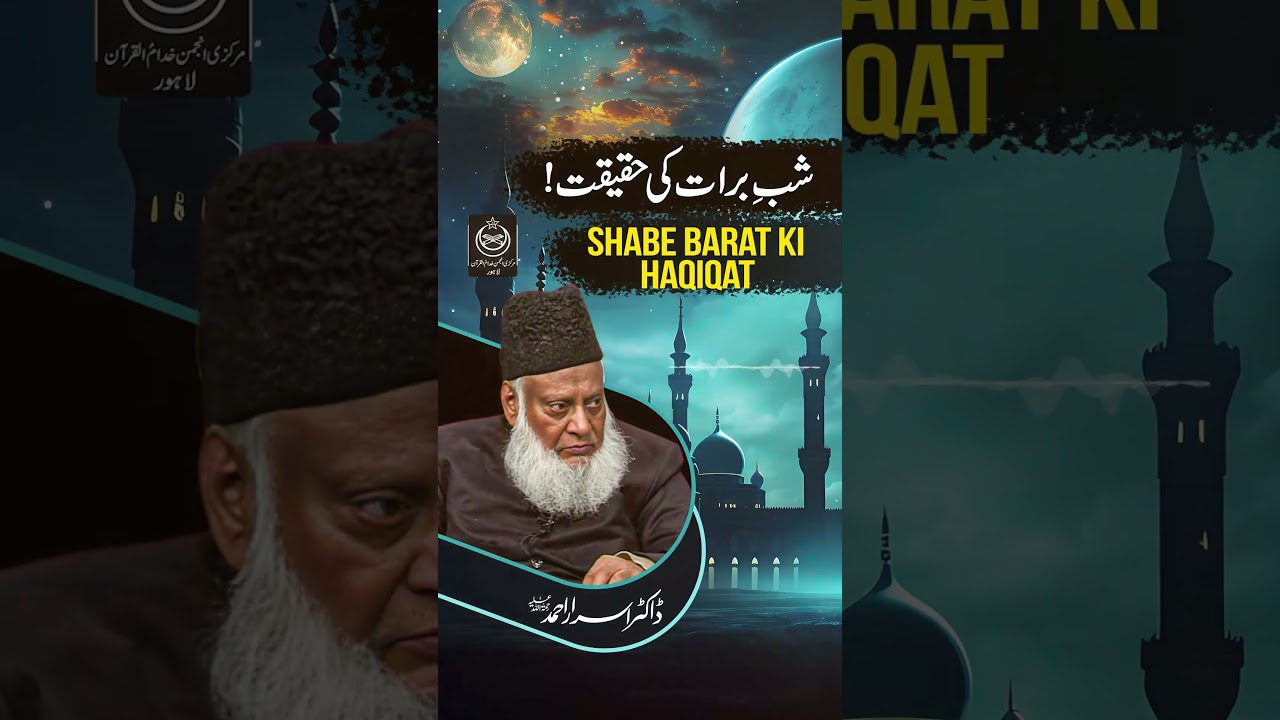
This lecture clarifies the significance of Shab-e-Barat based on authentic hadith. It explains that the Prophet Muhammad (peace be upon him) would visit the Baqi graveyard to seek forgiveness for the deceased. The speaker emphasizes that while night-long worship is virtuous, celebrating with fireworks and imitating Diwali practices are not part of Islamic tradition. Fasting on the 15th of Sha'ban is also discussed, linking it to the Prophet’s regular practice of fasting on the 13th, 14th, and 15th of each lunar month. The core message is to focus on sincere worship, seeking forgiveness, and remembering the deceased.
85
