Corti
This lecture emphasizes true repentance (tawbah) as requiring a complete removal of un-Islamic practices from one’s life, family, and economic activities. Superficial displays of religious observance, such as multiple pilgrimages or verbal expressions of regret, are insufficient without genuine behavioral change. The speaker criticizes hypocrisy, particularly continuing interest-based transactions after performing Hajj. True repentance demands a willingness to sacrifice even personal comfort or face hardship rather than compromise on Islamic principles. The lecture also addresses the decline of modesty and the erosion of Islamic values in Pakistan, lamenting the failure to establish a society grounded in Islamic ethics.

96

The door of repentance remains open for a considerable time, allowing individuals years to seek forgiveness. This opportunity continues until the setting of the sun from the west—a major sign of the approaching Day of Judgement. The Quran states that Allah will accept the repentance of those who turn to Him before this sign appears. Once the sun begins to rise from the west, the door of repentance will be closed, and any subsequent repentance will not be accepted. This emphasizes the urgency of seeking forgiveness while time remains.
70
This lecture explores the perspective of M.N. Roy, a prominent communist revolutionary, on the historical significance of Islam. Roy, a key figure in the Comintern, recognized the revolution initiated by Muhammad as one of the greatest in human history. He detailed this view in his book, *The Historical Role of Islam*, acknowledging its profound impact on global events. Dr. Israr Ahmad analyzes Roy’s analysis and provides insightful commentary on the topic.
68
Parents deserve kindness and respect as a natural obligation for their nurturing, especially a mother’s sacrifices. However, obedience to parents does not extend to accepting commands that contradict faith or morality. While good conduct, service, and respect are essential, adherence should be to the path of righteousness, not blind obedience. The core principle is honoring parents while remaining steadfast in one’s faith and ethical principles. True respect lies in guiding them towards the right path, not following them into wrongdoing.
63
This lecture details the performance of Eid al-Fitr prayers, specifically the additional *takbirat* (proclamations of greatness). The Hanafi school of thought prescribes six additional *takbirat*, while the Ahl-e-Hadith observe twelve. The speaker emphasizes performing these *takbirat* both on the way to and from the Eid prayer location, ideally using different routes to maximize the resonance of the divine proclamation throughout the community. The core message is a call to establish and defend the true faith through dedicated effort, sacrifice, and struggle, demonstrating gratitude for divine guidance. The lecture urges listeners to proclaim and uphold God’s sovereignty.
83
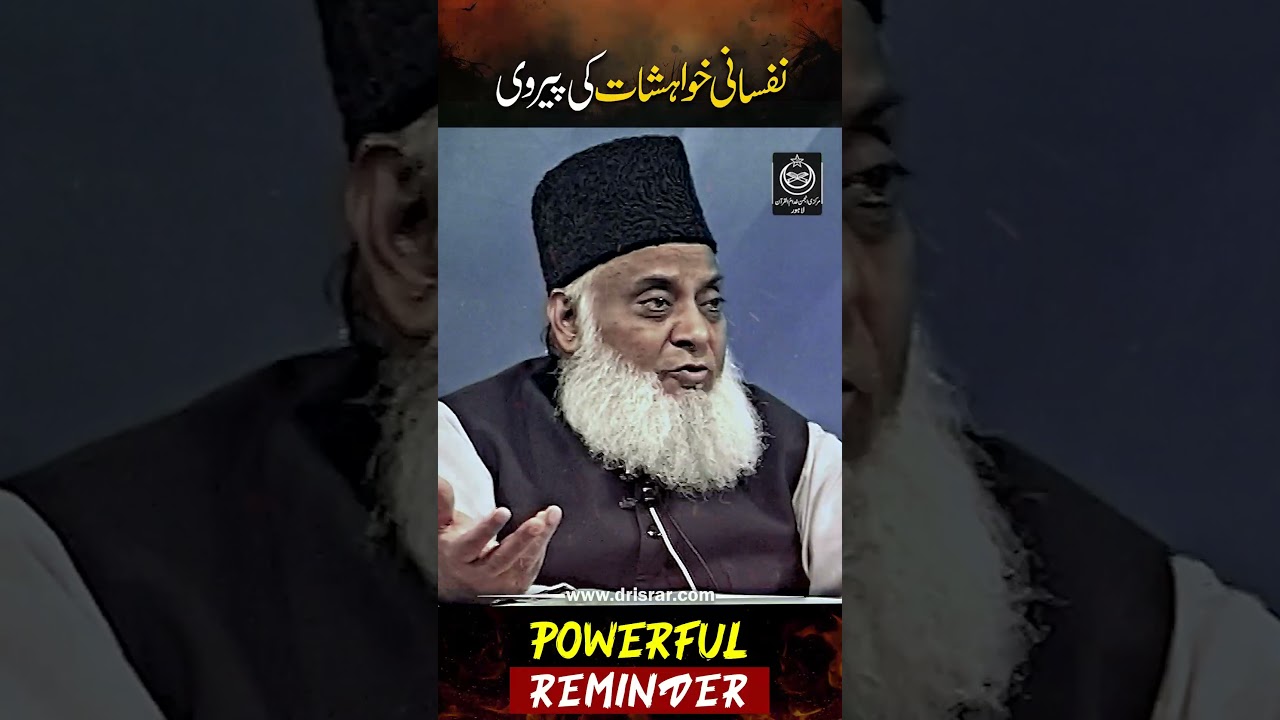
This lecture explores the concept of *nafs* (the self) becoming a false deity. It argues that prioritizing personal desires over divine commands elevates the self to a position of worship. The speaker explains that obedience to *nafs* equates to servitude to a false god, illustrated by the example of Pharaoh who demanded worship from his people. Acting upon the desires of *nafs*, even when those desires involve forbidden acts, confirms its status as one’s true deity. True faith requires submission to God’s commands, not the dictates of the ego.
87
