Şort
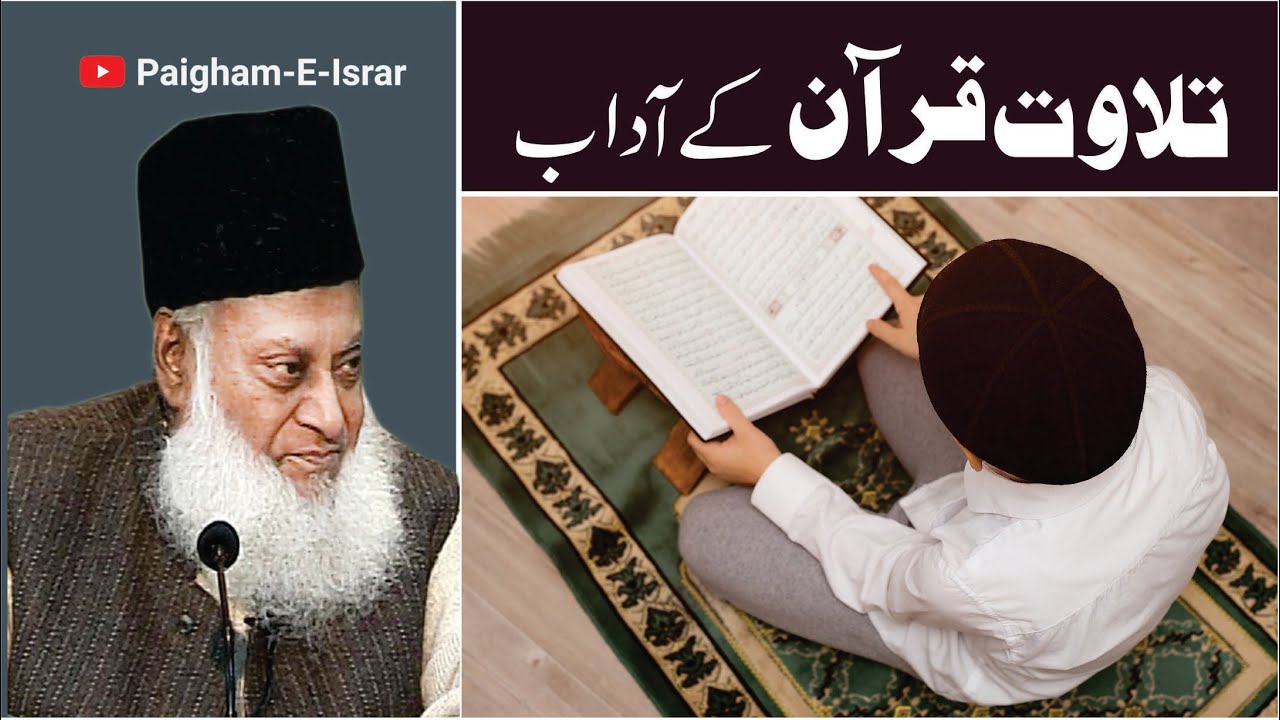
Dr. Israr Ahmad discusses the proper method of Quran recitation, emphasizing the importance of correct pronunciation (tajweed), understanding the meaning, and avoiding superficial artistic displays. He contrasts true Quranic recitation with competitive performances, highlighting that the Quran should enter the heart, not just be a vocal exercise. He warns against reciting Quran while engaging in sinful activities, and stresses that a sincere connection with the Quran strengthens faith and resilience. He also clarifies the difference between *tilawat* (recitation) and *tartil* (rhythmic, meaningful recitation). He cautions against relying solely on eloquent recitation without comprehension, and advocates for learning from qualified teachers to ensure accurate pronunciation and understanding.

129

This lecture explores the concept of commitment and its manifestation in various agreements, from simple employer-employee contracts to the complex social contract of marriage. It emphasizes that upholding one's commitments isn't contingent on external oversight, but stems from internal integrity and adherence to the terms agreed upon. The speaker highlights the responsibilities within marriage – the husband’s provision of sustenance, shelter, and the wife’s corresponding duties – framing marriage as a solemn social agreement demanding mutual respect and fulfillment of obligations.
47
The Quran refers to Allah as 'Mawla'. Some people address respected scholars as 'Maulana' as a sign of reverence. This lecture clarifies that using the term 'Maulana' is not shirk (associating partners with God). The word 'Mawla' has multiple meanings: master, helper, and even a freed slave. It’s a term of respect, similar to addressing someone as 'my master', and its use is permissible. Both 'Maulana' (plural) and 'Maulvi' (singular) convey the same meaning: ‘our master.’ Showing respect to others is not an act of shirk.
67

This lecture explores the concept of attaining spiritual proximity to God through the practice of *nawafil* (voluntary prayers). It details how consistent devotion can lead to a state where the devotee experiences God’s presence in their senses—seeing with God’s sight, hearing with God’s hearing, acting with God’s hands, and walking with God’s feet. This concept, supported by a *hadith qudsi*, signifies a profound level of spiritual union and is acknowledged even by those who may not traditionally align with Sufi interpretations. The discussion emphasizes the transformative power of sincere worship and its capacity to elevate one's spiritual experience.
76
This lecture explores the concept of aligning one’s life entirely with the will of God. It emphasizes that true devotion involves surrendering all aspects of existence – prayer, sacrifice, life, and death – to the divine. The speaker argues that when life is dedicated to God, it transcends earthly pursuits and becomes a source of spiritual strength. Material means and worldly endeavors should become secondary to this divine connection, and individuals should strive for a life of complete submission and purpose. The ultimate goal is to have one's heart filled with reverence for God.
51
Dr. Israr Ahmad explains the profound wisdom behind the Prophet Muhammad's (peace be upon him) decision to refrain from accepting charity (sadqa) or Zakat for himself and his household. This ensured that the benefits reached those truly in need – the poor and deserving. He emphasizes that wealth carries obligations beyond just Zakat, encouraging additional support for those less fortunate. The speaker repeatedly highlights that wealth carries responsibilities beyond the obligatory Zakat and encourages providing aid beyond it.
113
