Quần short

This lecture emphasizes the importance of respectful communication. It cautions against raising voices above the Prophet Muhammad’s, discourages boisterous or disrespectful dialogue, and warns that a lack of decorum can lead to the complete loss of influence and effectiveness, leaving one unaware of the damage caused. Maintaining respectful speech is crucial for preserving dignity and achieving positive outcomes in all interactions.

69

The verse from Surah Ma'idah highlights Satan’s primary tactic: sowing discord and animosity between people. This disruption extends to fracturing familial and marital bonds, leading to the disintegration of entire social structures. A hadith recounts Satan praising a demon for successfully creating strife between a husband and wife, recognizing its devastating impact on the family unit and, consequently, society. The creation of enmity and discord is presented as Satan's most effective weapon against humanity and its social cohesion.
77

This lecture explores the critical importance of trustworthiness and fulfilling promises in Islam, drawing from a hadith narrated by Hazrat Anas bin Malik. The Prophet Muhammad (peace be upon him) emphasized that a person lacking trustworthiness and commitment to their word lacks both faith and religion. The discussion highlights that upholding promises is a fundamental pillar of a believer's character and a crucial component of a strong moral foundation. The lecture underscores the severe consequences of dishonesty and the rewards of being a person of one's word.
58

This lecture explores the divine promise of acceptance for those who sincerely call upon God. It emphasizes that God actively encourages supplication and responds to the needs of His creation. The speaker clarifies that reluctance to ask from God evokes His displeasure, while persistent supplication, especially during the last third of the night, is met with response. However, arrogance and pride in worship are cautioned as barriers to divine acceptance, leading to the consequences of hellfire. The core message is about humility in prayer and the power of sincere supplication.
63
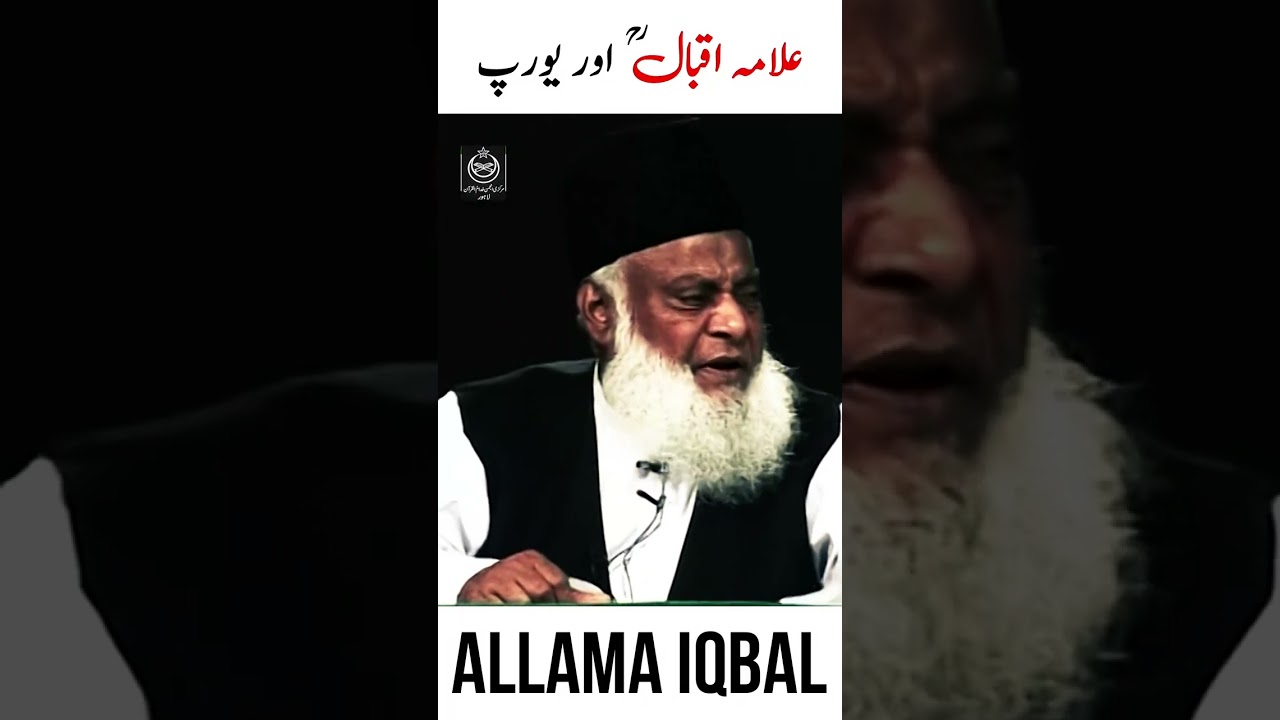
Allama Iqbal’s journey to Europe marked a significant intensification of his Islamic faith. His upbringing, deeply rooted in religious values through his devout mother and Sufi father, provided a strong foundation. While initially religious, his experiences in England proved transformative. He describes a feeling of being ‘tested’ through exposure to Western philosophy and thought, likening it to the trial of Abraham. This period of intellectual and spiritual challenge forged a deeper, more resilient faith within him. He portrays this period as a trial by fire, a process of purification and strengthening of his religious convictions.
35
This lecture addresses the societal shift where religious practice has become a profession, particularly within certain communities. The speaker argues that Islam does not endorse professionalizing faith or creating hierarchies based on religious knowledge. He criticizes the practice of making religious scholars a closed class and highlights the irony that those who benefit from this system often criticize the scholars themselves. The core argument centers on the idea that Islam is a faith for all, not a vocation limited to a select few, and that the current system of professionalizing religion is a deviation from its original intent. He contrasts this with the historical practice where religious knowledge was freely accessible and emphasizes that making it a profession creates jealousy and division.
100
