السراويل القصيرة
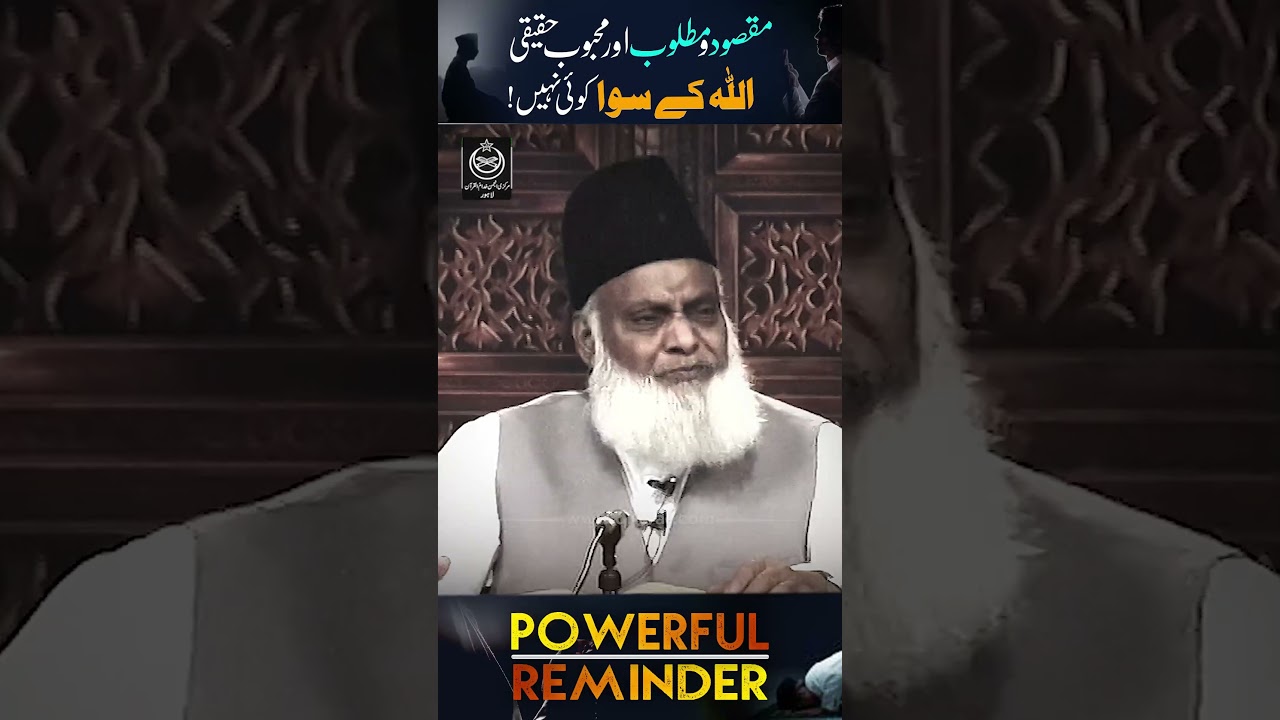
The core concept of *La Ilaha Illallah* is the absolute Oneness of God. It signifies that there is no deity worthy of worship except Allah. This declaration demands complete devotion and the recognition of Allah as the sole object of love, desire, and worship. True *Tawhid* (Oneness of God) necessitates that all other loves and desires are subordinate to the love of Allah, leaving no independent beloved except Him. The essence of *Tawhid* lies in recognizing Allah as the only true and ultimate beloved, stripping away all other competing affections.

79
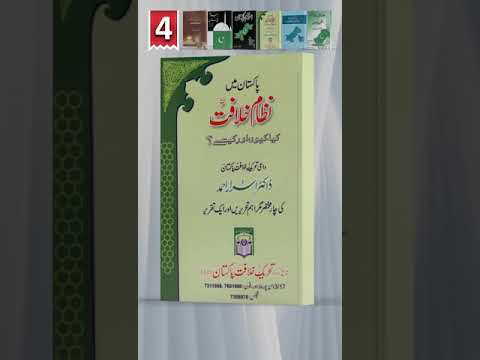
This collection of lectures by Dr. Israr Ahmad addresses critical questions about Pakistan’s history, ideology, and future. Topics include the legacy of the founder of Tanzeem-e-Islami, the viability of a caliphate system, the historical and political context of Islam in Pakistan, the factors contributing to Pakistan’s instability, and the reality of the Pakistan Ideology. The set also features Dr. Ahmad's analysis of Pakistan's political landscape from 1977 to 1987. Available for ₨1200 (originally ₨1900) from Maktaba Khuddam-ul-Quran, Lahore. Home delivery is free with cash on delivery. Order online at www.maktaba.com.pk or WhatsApp at 0301-1115348.
56
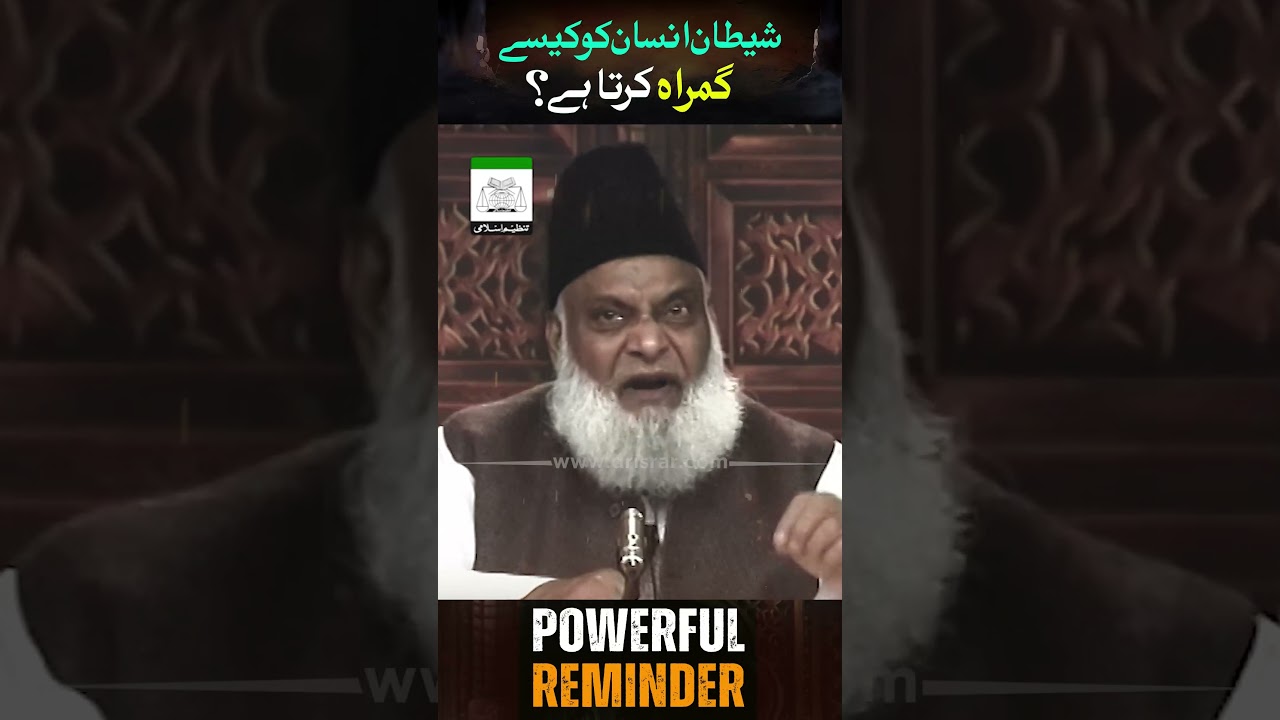
The verse from Surah Ma'idah highlights Satan’s primary tactic: sowing discord and animosity between people. This disruption extends to fracturing familial and marital bonds, leading to the disintegration of entire social structures. A hadith recounts Satan praising a demon for successfully creating strife between a husband and wife, recognizing its devastating impact on the family unit and, consequently, society. The creation of enmity and discord is presented as Satan's most effective weapon against humanity and its social cohesion.
68
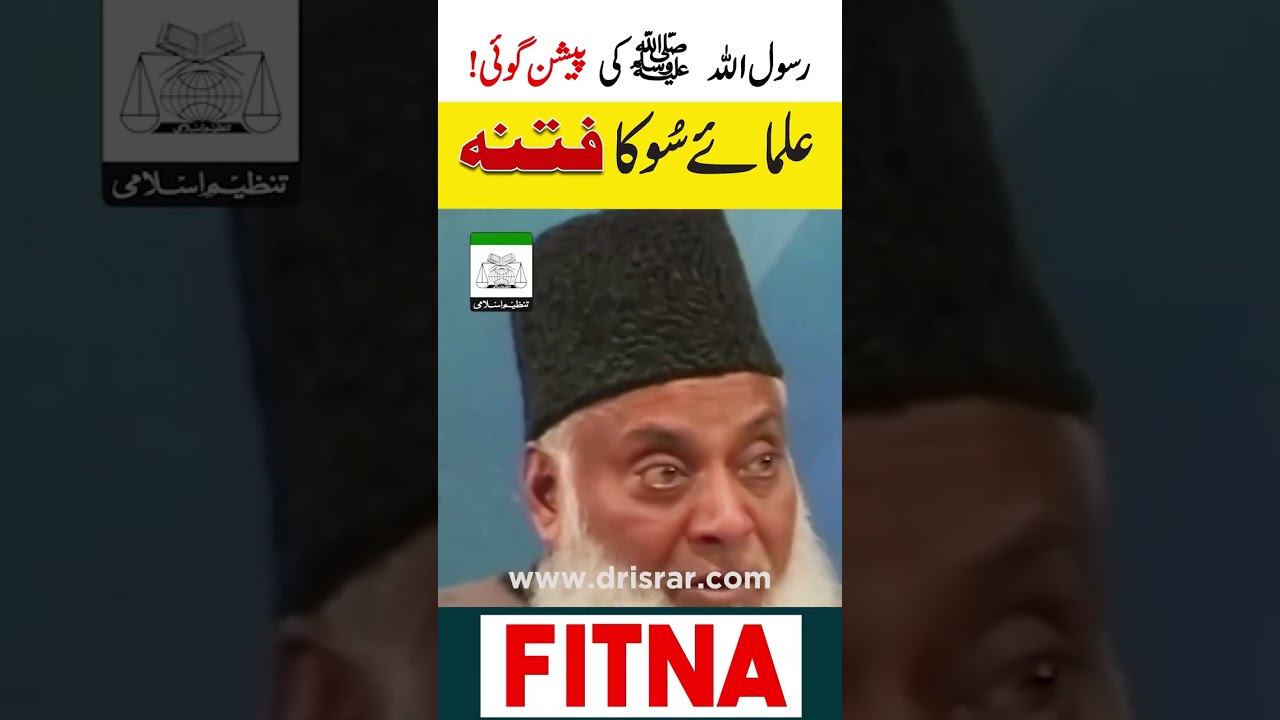
Dr. Israr Ahmad warns of a time when the Muslim community will be left with only the name of Islam, and the Quran will be reduced to its calligraphy and letters. He emphasizes a divine guarantee for the preservation of the Uthmani script. He predicts a proliferation of mosques that are devoid of guidance, and describes scholars who will be the worst of people, fostering discord and conflict. These scholars will be the source and destination of fitna (discord), promoting sectarianism and exacerbating differences among Muslims. He observes that a vast majority of contemporary religious leaders exhibit these characteristics.
84
This lecture emphasizes the severe consequences of mocking others based on their physical appearance or perceived flaws. It argues that outward imperfections should not be the basis of ridicule, as true worth lies in inner piety, love for God and His Messenger, and virtuous character. Mocking a believer is presented as an act of hostility towards God Himself, citing a divine tradition warning those who antagonize God’s friends will face His wrath. The lecture stresses the importance of respecting all believers and avoiding actions that cause them emotional pain.
49
Musab bin Umar, a young man raised in luxury, faced ostracism when he refused to renounce his faith after his father’s death. His mother, unable to defy her brother, the head of the family, was forced to comply with the uncle’s decree that Musab forfeit his inheritance and leave the house. The uncle, angered by Musab's adherence to his father’s religion, demanded he relinquish all property acquired through his father's wealth. Musab accepted the exile, even removing the clothes he wore, which were purchased with that wealth, before leaving his home. This demonstrates a powerful commitment to belief and principle.
55
