شارٹس
Dr. Israr Ahmad explains that all trials and tribulations, whether on a large scale like natural disasters or personal misfortunes, are part of Allah’s preordained plan, recorded in His knowledge. He emphasizes that nothing happens by chance; everything occurs with Allah’s permission and is within His complete knowledge of past, present, and future. Acceptance of this truth, rather than grief or blame, is the key to peace and resilience. The speaker illustrates this with the story of a Sufi saint who accepted being struck by a stone as a decree from Allah. True understanding means recognizing Allah’s hand in all events and trusting in His wisdom, even when experiencing hardship.

90
This lecture clarifies whether performing Umrah necessitates performing Hajj. It addresses the scenario of someone performing Umrah while on official government travel, funded by the state, and lacking the financial means for Hajj. The core point is that Umrah itself does not automatically make Hajj obligatory. However, if an individual possesses the financial capability, they should prioritize fulfilling the obligatory Hajj pilgrimage. The lecture emphasizes that if someone can afford to perform Hajj, it becomes an obligation upon them.
75
The Quran fundamentally transforms an individual's worldview. Before encountering the Quran, a person might perceive the universe as a random, self-operating system driven by mindless matter. Afterwards, they recognize the existence of a single God – Allah – who is all-powerful, all-knowing, the Sustainer, and the Creator and Director of the universe. This realization shifts perspective from accidental creation to purposeful design and divine governance.
51
علامہ اقبال نے برعظیم پاک و ہند میں ایک علیحدہ مسلم مملکت کے قیام کی تین بنیادی وجوہات بیان کی ہیں۔ اول، یہ متحدہ ہندوستان میں مسلمانوں اور ہندوؤں کے درمیان جاری کشمکش کا واحد حل تھا۔ دوم، اس مملکت کے ذریعے مسلمانوں کو اسلام کا حقیقی نظام، جو محمد عربی صلی اللہ علیہ وسلم نے قائم کیا تھا، بحال کرنے کا موقع ملے گا۔ یہ نظام خلافت راشدین پر مبنی ہے، جو ملوکیت کے دور میں فراموش ہو گیا تھا۔ سوم، اقبال نے کہا کہ پاکستان، بھارت کا سب سے بڑا محافظ ثابت ہوگا۔ انہوں نے کہا کہ یہ ملک شمال مغربی سرحد پر بھارت کی حفاظت کرے گا۔
37
This lecture discusses the profound significance of Ramadan. It highlights that the blessings of this sacred month begin to manifest even before its official commencement, foreshadowing the spiritual benefits to come. The speaker emphasizes Ramadan as a time of immense blessings and spiritual elevation, particularly noting the presence of Laylat al-Qadr, a night superior to a thousand months. The talk centers on the anticipation and arrival of this blessed month, and the preparation for its spiritual opportunities.
76
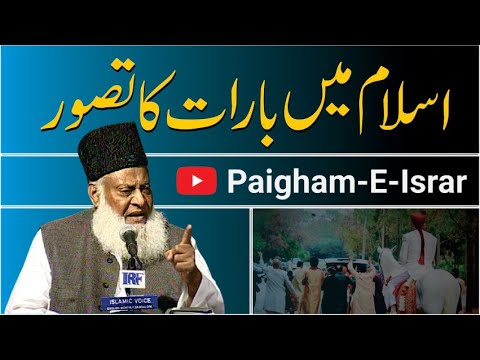
This lecture clarifies that the practice of *barat* (a wedding procession) is not an Islamic tradition. The *nikah* (marriage contract) in Islam is performed in the mosque, without lavish feasts or processions. The historical context reveals that the custom originated from pre-Islamic Hindu traditions, stemming from the need to protect the bride and her dowry during travel between villages. It was a protective measure against bandits, evolving into a large, extravagant procession with feasting and displays of wealth at the groom's home. The example of Prophet Muhammad's daughter, Fatima, demonstrates that even in her marriage to Hazrat Ali, there was no such elaborate procession; rather, a few women accompanied her after the *nikah*. The lecture emphasizes that this practice is a cultural addition, not a religious requirement.
91
