מִכְנָסַיִים קְצָרִים
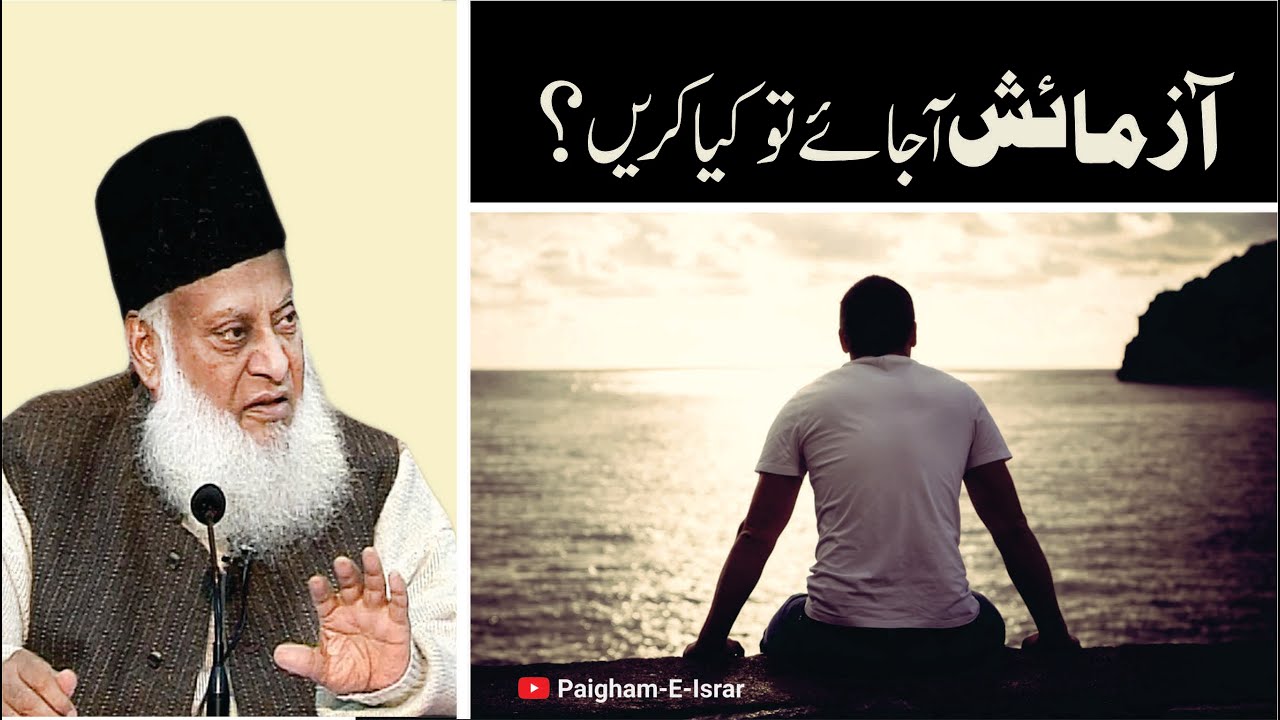
Dr. Israr Ahmad explains that all trials and tribulations, whether on a large scale like natural disasters or personal misfortunes, are part of Allah’s preordained plan, recorded in His knowledge. He emphasizes that nothing happens by chance; everything occurs with Allah’s permission and is within His complete knowledge of past, present, and future. Acceptance of this truth, rather than grief or blame, is the key to peace and resilience. The speaker illustrates this with the story of a Sufi saint who accepted being struck by a stone as a decree from Allah. True understanding means recognizing Allah’s hand in all events and trusting in His wisdom, even when experiencing hardship.

90

This lecture emphasizes the importance of inviting people to the path of God with wisdom, good counsel, and respectful debate. It highlights that delivering the message of God is a duty, best fulfilled through gentle persuasion and eloquent communication. The speaker stresses that even in disagreement, one must maintain a dignified and courteous approach.
43
This lecture emphasizes that the completion of divine law through the Prophet Muhammad (peace be upon him) necessitates adherence for personal growth and fulfillment. It clarifies that Islamic law is not a burden but a guide for navigating life’s challenges, using the analogy of road signs on a dangerous mountain path. These signs, like the tenets of Shariat, are preventative measures designed to ensure safety and lead individuals towards the purpose for which they were created by God. The speaker highlights that restrictions within Shariat are not arbitrary, but rather safeguards for one’s wellbeing and spiritual development.
58

This lecture addresses a critical deviation within the Muslim community, identifying a shift towards Murjiya – a state of complacency where outward claims of faith overshadow genuine inner conviction. It clarifies the distinction between legalistic faith, reliant on outward actions, and true faith rooted in sincere belief and heartfelt certainty. The speaker emphasizes that authentic faith necessitates the inseparable integration of belief and practice, where deeds are not merely supplementary but integral components of a living, breathing faith. The lecture warns against prioritizing outward adherence to rituals over cultivating genuine fear of God and hope for His mercy, advocating for a balanced state between these two essential qualities.
46

This lecture explains a crucial Islamic principle: the balance between reliance on God (Tawakkul) and utilizing practical means (Asbab) to achieve goals. The Prophet Muhammad (peace be upon him) rebuked a Bedouin for leaving his camel untethered, emphasizing that true faith requires both trust in God *and* responsible action. The speaker clarifies that simply relying on God without making an effort is incorrect, and neglecting to utilize available resources after making an effort is also a mistake. Results ultimately come from God, but effort is a prerequisite. It is crucial to strive, use resources, and *then* place trust in God for the outcome. True Tawakkul is not passivity, but a confident reliance on God *after* taking all necessary steps.
87
The lecture clarifies that the blessings of Laylat-ul-Qadr (the Night of Power) are not limited to the night itself, but extend to the following day. The Quranic use of terms like ‘yom’ (day) and ‘layl’ (night) encompasses the full 24-hour cycle. This means the entire day following Laylat-ul-Qadr shares in its spiritual significance. This resolves a potential issue regarding time zones; the blessings are universally available regardless of geographical location, ensuring no part of the Earth is excluded from this divine blessing. The lecture emphasizes the Quran’s comprehensive nature, leaving no aspect untouched by divine grace.
79
