السراويل القصيرة
This lecture analyzes the power dynamics within a political system, asserting that media, particularly television, has become a dominant force, exceeding the influence of the traditional fourth estate. It argues that media outlets, especially those controlled by specific interests, shape public opinion and restrict independent thought. The speaker contends that this control effectively holds the nation hostage, dictating beliefs and perspectives. The analysis ultimately suggests a reduction in the pillars of power from four to three – the executive, judiciary, and legislature – due to the manipulative power of modern media.

39
This lecture emphasizes perseverance in the face of adversity and detachment from worldly concerns. It asserts that genuine spiritual progress isn't measured by visible success but by sincere effort and complete surrender to God. The speaker stresses that one should not be disheartened by a lack of immediate results, as true reward lies in divine acceptance. It warns against superficial displays of sacrifice and highlights the importance of complete submission, offering everything to God, not just symbolic gestures. Ultimately, the message encourages consistent striving, regardless of worldly outcomes, with the assurance of divine reward.
56
The Prophet Muhammad (peace be upon him) stated that Allah showed him the entire Earth, its east and west. This revelation signifies that the influence and dominion of his community will eventually extend to all corners of the world. A further hadith indicates that no dwelling or nomadic settlement will remain where the message of Islam does not enter. This can happen either through acceptance of Islam by its inhabitants or through their submission to its principles. This lecture explores the implications of these prophecies for the future of Islam and its global reach.
59
Dr. Israr Ahmad delineates the distinct yet complementary roles of Allama Iqbal and Quaid-e-Azam in the creation of Pakistan. He emphasizes that Iqbal was the visionary and philosopher who conceived the idea of a separate homeland, while Quaid-e-Azam was the architect and founder who materialized that vision into reality. Iqbal focused on conceptualizing the nation through thought and imagination, while Quaid-e-Azam concentrated on the practicalities of building and establishing it. The lecture highlights the importance of recognizing this difference in their contributions.
53
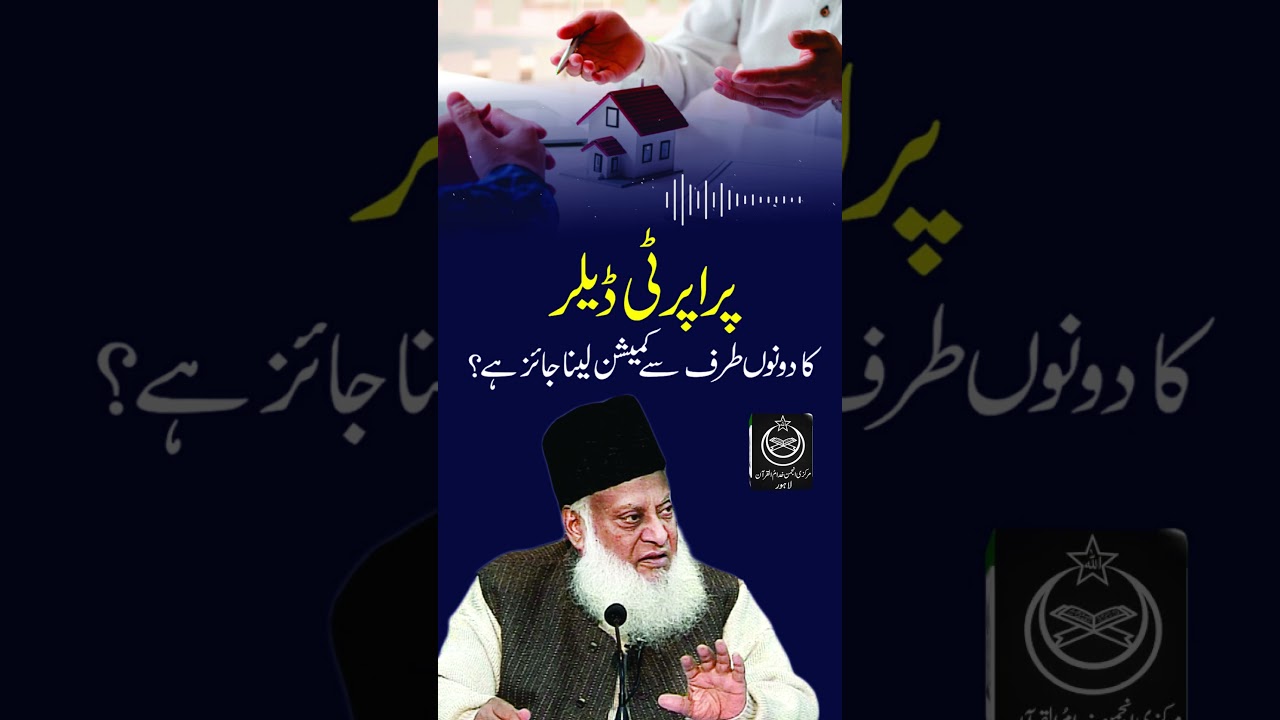
Dr. Israr Ahmad discusses the Islamic ruling on property dealers charging fees from both the buyer and seller, or from both landlord and tenant. He asserts that taking fees from both sides is *haram* (forbidden). The dealer should only take a commission from one party to incentivize securing the best possible deal for that client, whether a lower rental price or a better sale price. This approach ensures fairness and ethical conduct in property transactions.
75
This lecture discusses the diminishing spiritual impact of rituals like mourning ceremonies, prayer, fasting, sacrifice, and pilgrimage. It argues that mere performance of these acts, without genuine inner transformation, yields no societal benefit. The speaker contends that individuals often return from these practices unchanged, even emboldened to sin, perceiving them as a license for future transgressions. True spiritual benefit requires a profound personal change, not simply the outward completion of religious duties. The speaker emphasizes the lack of positive impact on society despite large numbers participating in religious observances.
42
