শর্টস

Shirk fi zāt, considered the most egregious form of polytheism, involves associating partners with God's very essence. This belief, tragically prevalent amongst some communities claiming Abrahamic lineage, manifests as attributing offspring to God. The argument posits that just as offspring inherit traits from parents, a divine 'offspring' would necessarily share God's attributes, thereby equaling God. This concept fundamentally contradicts the absolute uniqueness and transcendence of God, and is a severe transgression. It represents the ultimate in associating partners with God, exceeding even the worship of idols.

70

This lecture discusses the esteemed position of Hazrat Ali (RA) within Islamic history and theology. It establishes him as one of the rightly guided Caliphs and highlights his exceptional virtues among the companions of the Prophet Muhammad (peace be upon him). The discussion clarifies his rank relative to Abu Bakr, Umar, and Uthman (RA), acknowledging their superior position, while affirming Hazrat Ali’s prominence among all other companions. The lecture focuses on the sequential order of Caliphs according to the Sunni perspective and establishes Hazrat Ali's elevated status within that framework.
98
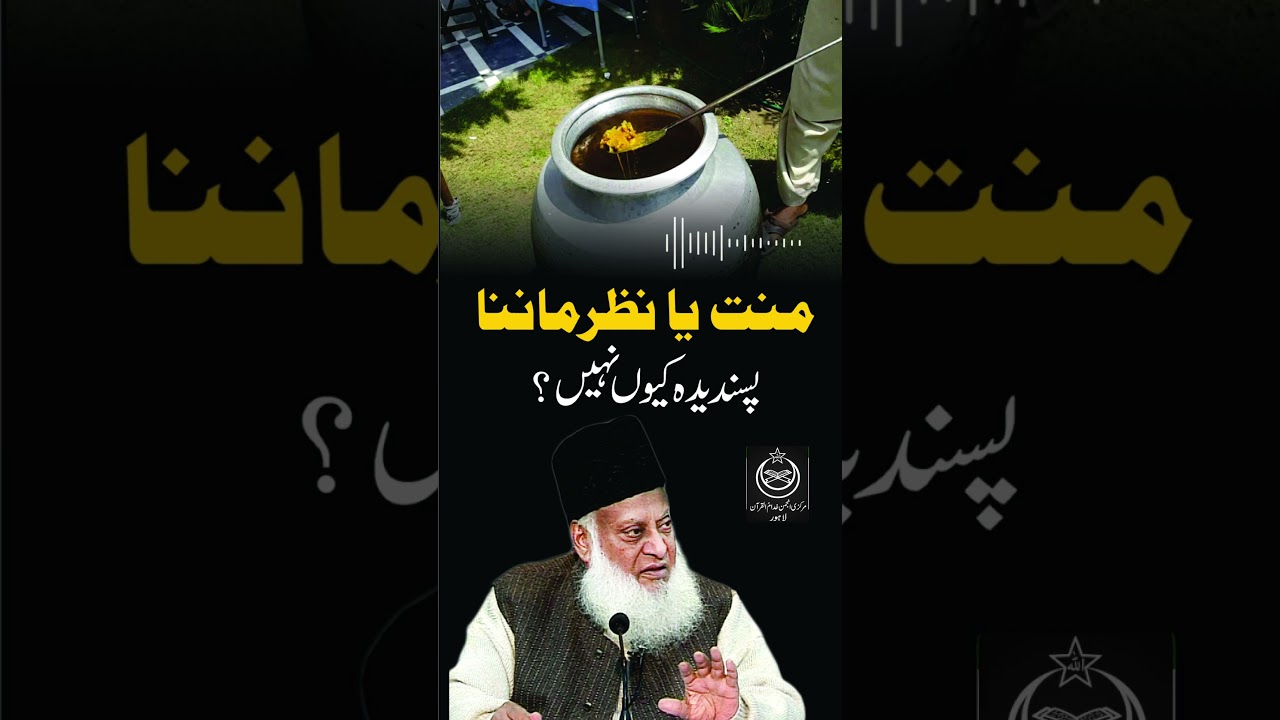
Dr. Israr Ahmad discusses the permissibility and desirability of gazing, clarifying that while not forbidden, it is personally discouraged. He explains that his disapproval doesn't obstruct legitimate interactions. He cites a divine decree stating that once Allah’s judgment concerning someone is established through observation, it remains unchanged, though He may draw sustenance from the miser's wealth to aid the needy. This decree effectively supersedes any further deliberation on the matter.
69
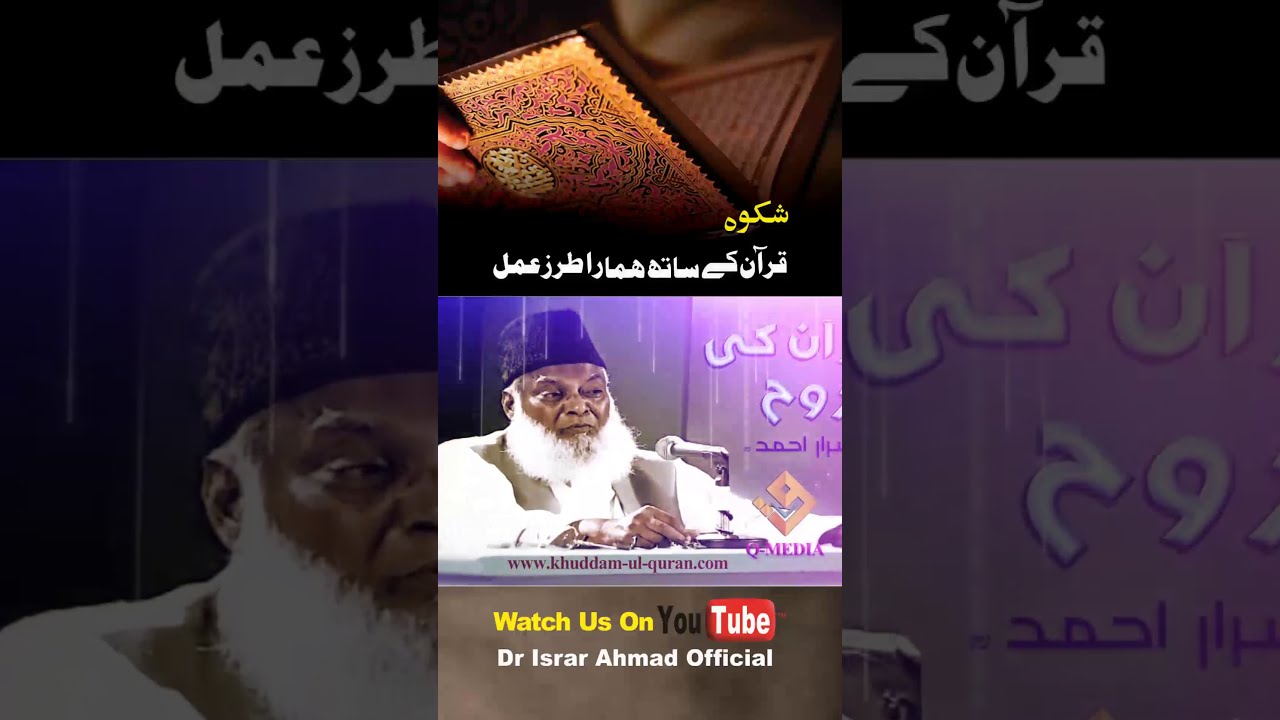
This lecture emphasizes that genuine access to the essence of the Quran is only possible through self-purification. The speaker highlights a lament about humanity’s disregard for this immense blessing – neglecting to read, understand, implement, or make the Quran a guiding principle in life. Instead, many actively reject it, shaping their own unfortunate destiny through denial. The core message is a call to prioritize internal purification to unlock the true meaning and benefits of divine revelation.
620

True piety (taqwa) isn't about outward appearances or rituals, but an internal state of consciousness and unwavering faith. It’s a complete immersion of one's personality in the principles of divine guidance. Genuine piety manifests as a consistent effort to please God and avoid disobedience, permeating the entire being with a distinct spiritual color. It resides in the heart and is intrinsically linked to faith. The Prophet Muhammad (peace be upon him) repeatedly pointed to his chest to emphasize that piety dwells within the heart, not in external displays.
44

This lecture discusses the importance of *khushu* (humility and devotion in prayer) and *tazkiya-e-nafs* (self-purification). It emphasizes that true worship goes beyond merely performing rituals; it requires a sincere connection with the Divine and a constant striving for self-improvement. The speaker highlights that valuable time should not be wasted on frivolous activities but dedicated to personal growth and purification. The concept of *zakat* is explained not as financial charity in its later legal form, but as a continuous process of self-assessment and removing inner flaws. The focus is on consistently striving for moral and spiritual cleansing.
82
