Corti
Prophethood and Messengership progressed gradually, reaching their peak and culminating in completion. This fulfillment of the mission and perfection of prophecy forms the foundation of Muhammad’s excellence. The greatest manifestation of the completion of Messengership is that no other messenger achieved the dominance of God’s religion through their call, propagation, organization, struggle, and striving—except Muhammad, the Messenger of God. Every prophet was a caller, a proclaimer, a teacher, and a guide. However, Muhammad, the Messenger of God, was not merely a caller, a proclaimer, a witness, a bearer of glad tidings, an exemplar, or a caller to God, but the one who actually established God’s religion.

42
This lecture explores the concept of self-awareness and its connection to recognizing the Divine. It emphasizes that true identity lies beyond superficial characteristics and material possessions. The speaker explains that neglecting self-knowledge leads to spiritual forgetfulness and a loss of one’s true potential. Recognizing one’s inner self is presented as the key to knowing God. The discussion underscores the importance of not becoming like those who have forgotten God and, consequently, lost themselves.
78
This lecture discusses the plight of women, particularly in Western societies, highlighting the burdens they bear – pregnancy, childbirth, and financial responsibility. It critiques the objectification of women and questions the values of Western civilization, suggesting a concerning trend of exploitation and disregard for their dignity. The speaker emphasizes the need to understand and respect women's true worth and role in society.
421
This lecture discusses the underlying unity of the African continent, despite its diverse cultures, languages, and physical appearances. The speaker highlights a shared spiritual resonance, symbolized by the continuous recitation of ‘Labbaik Allahumma Labbaik’ during pilgrimage, indicating a common faith and devotion. The continuous arrival of pilgrim groups exemplifies this widespread spiritual connection, creating a powerful, unifying presence across the land. The lecture emphasizes that this spiritual unity transcends geographical and cultural boundaries.
52

This lecture explores the distinction between inherited faith and consciously accepted belief. The speaker argues many identify as Muslim due to birth rather than a personal, conscious decision and realization of faith. True Islam, it is asserted, requires *yaqeen* – a deep, experiential certainty – not merely adherence to dogma or inherited creed. This conviction, akin to the spiritual realization described by Allama Iqbal, is essential for meaningful practice and spiritual growth. Without this inner certainty, religious observance remains superficial.
55
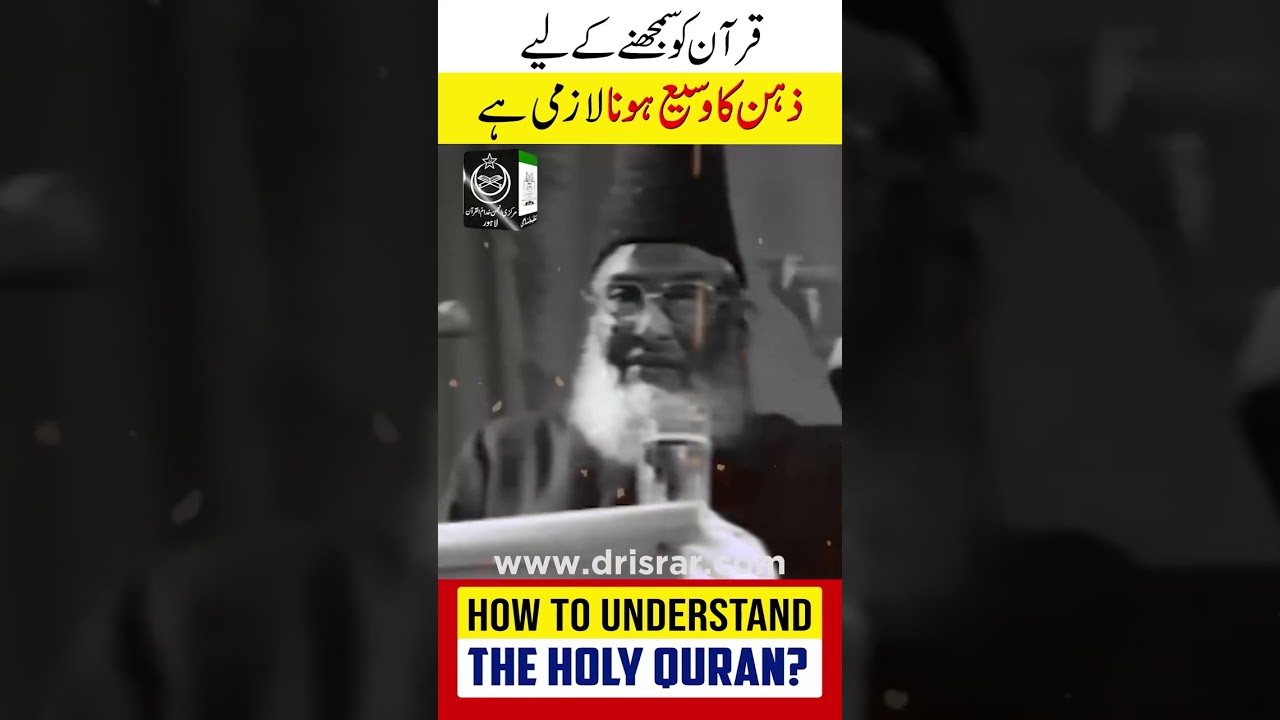
The capacity to receive and benefit from divine knowledge, specifically the Quran, is directly proportional to one’s mental capacity. Just as a small bucket can only hold a limited amount of water from a vast ocean, a limited mind can only absorb a fraction of the Quran’s wisdom. Expanding mental capacity through the study of sciences, philosophy, and logic is essential to fully grasp the Quran’s teachings. A broad and sharp mind is more receptive to understanding the subtleties and depths of divine knowledge. Continuous learning and intellectual exploration are vital for maximizing one’s capacity to benefit from the Quran's guidance and wisdom.
48
