Şort
This lecture explores the meaning of ‘Akbar’ as revealed in the initial verses concerning the prophethood. It emphasizes rising above complacency and recognizing the grandeur of God. The verses urge individuals to abandon their comfort and embrace a life dedicated to proclaiming the truth of resurrection and divine greatness. The core message centers on acknowledging God’s supremacy, establishing a system that reflects that greatness, and actively conveying this message to others. The lecture calls for a complete submission to God and a life lived in recognition of His power and majesty.

48
This lecture explores the conflict between intellect and passionate faith, using the story of Ibrahim and Nimrod as a central analogy. It argues that true devotion requires transcending rational self-preservation. The speaker emphasizes that while intellect provides guidance and direction, moments of profound commitment demand acting beyond logical calculation, fueled by unwavering belief. It highlights the importance of emotional conviction in propagating a message, even at personal risk, and asserts that intellectual analysis alone cannot drive transformative action. The lecture encourages listeners to move beyond purely rational thought when pursuing higher purposes, embracing the power of heartfelt conviction.
66
Dr. Israr Ahmad comprehensively explains the profound concept of *tazkiya* (self-purification) as outlined in the Quran. He breaks down the process into four essential stages: purification of thought (*tathir-e-fikr*), purification of the *nafs* (lower self), purification of the heart (*tasfiya-e-qalb*), and illumination of the soul (*tajalliy-e-ruh*). He emphasizes that true progress requires removing obstacles to spiritual growth, addressing both internal and external influences. The lecture highlights the Quran as the primary tool for *tazkiya*, detailing how it affects the intellect, the heart, and the soul. Dr. Ahmad draws parallels between the Quran's wisdom and the purification process, explaining how its verses resonate with the human spirit. He concludes by referencing the teachings of Iqbal and Hadith, further illustrating the importance of confronting and reforming the inner self, and how the Quran can transform an individual’s life.
175
Dr. Israr Ahmad strongly discourages involvement with astrology, palmistry, and similar predictive practices. He asserts that while these systems might contain partial truths, Muslims are explicitly commanded to abstain from them due to the lack of definitive evidence and their potential for misguidance. The lecture emphasizes adherence to established Islamic principles and reliance on divine guidance rather than speculative beliefs. This bayān clarifies the Islamic stance against seeking knowledge of the future through unverified means.
39
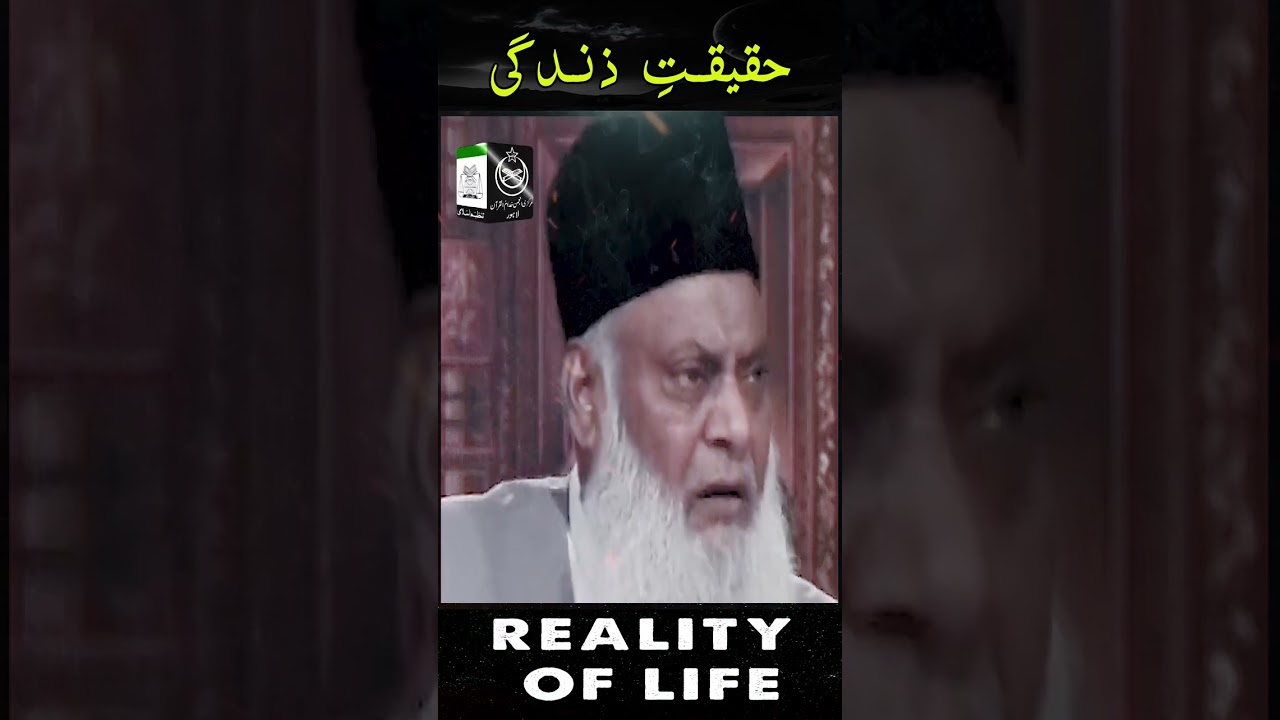
This lecture emphasizes the transient nature of worldly life and the importance of preparing for the afterlife. It highlights that life in this world is merely a temporary diversion, like a game or play, and true life resides in the hereafter. The speaker stresses that the passage of time feels incredibly swift, akin to a few hours when viewed from the perspective of eternity. A firm belief in this reality should empower individuals to face trials and tribulations with resilience, knowing that death is an inevitable journey toward union with the Beloved – Allah. The lecture encourages a joyful acceptance of death as the lifting of a veil separating us from our ultimate home and true happiness.
52

This lecture details the revelation of the Quran and its transmission. The Quran originated from the Preserved Tablet and the Book of Decrees, conveyed by Archangel Gabriel to Prophet Muhammad (peace be upon him). This transmission wasn't literal hearing with ears, but a direct conveyance to the heart. From the Prophet’s heart, it was then articulated through his blessed tongue to the ears of his companions, and preserved in their memories. The lecture emphasizes the trustworthiness of both Gabriel and Muhammad in preserving the divine message, highlighting that neither altered the revealed text. It draws a distinction between divine revelation and the words of poets or soothsayers, reinforcing the unique and sacred nature of the Quranic message. The Prophet’s role as a receiver and communicator of this message is also underscored.
46
