ショーツ

This lecture explores the profound connection between the Quran and spiritual well-being. It emphasizes that true guidance and divine mercy are attained not merely through ritualistic prayer, but through a heart cleansed of spiritual ailments and fully receptive to the Quran's message. The speaker highlights the Quran as an immense blessing and a source of joy, urging listeners to find celebration in its teachings rather than worldly possessions. The core message stresses that genuine happiness lies in recognizing and appreciating the Quran's unique value, surpassing all material wealth.

54

The Quran uses the term ‘Noor’ (light) as a metaphor for Allah and also for the Quran itself. The verse ‘Believe in Allah, His Messenger, and the light which We have sent down’ clearly refers to the Quran. While ‘Noor’ can encompass the entirety of religion, the core essence of religion ultimately boils down to the concept of Tawhid (Oneness of God). Therefore, equating ‘Noor’ with Tawhid is also justifiable. This lecture explores the multifaceted meaning of ‘Noor’ within the Quranic context and its significance for faith and understanding.
59
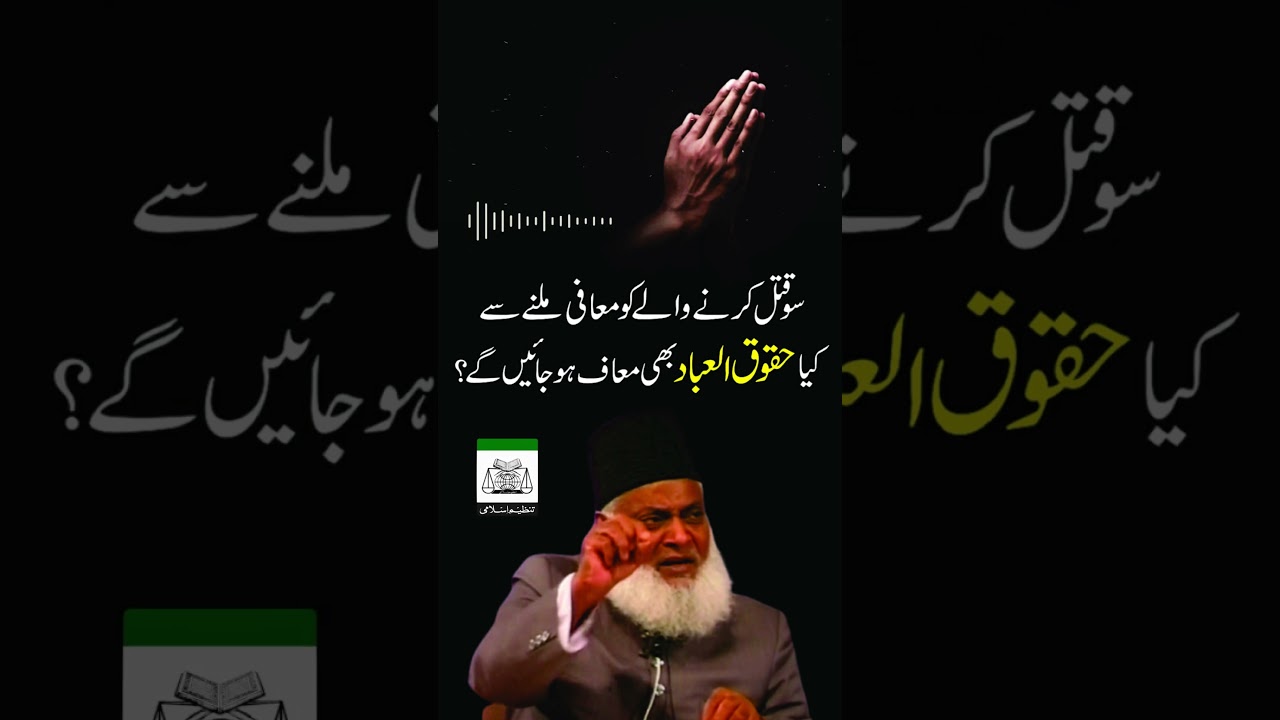
This lecture addresses the question of whether sincere repentance absolves a murderer of all consequences, both in this life and the afterlife. It clarifies that while Allah is merciful and can forgive, the rights of the victim ('diya') must be addressed. Repentance does not negate worldly justice; the perpetrator still faces legal consequences. True repentance stems from the depths of the heart and leads to divine forgiveness. Allah will compensate the victims in the hereafter from His vast treasures. The lecture emphasizes that repentance is a process, not a mere declaration, and does not exempt one from accountability for their actions.
61

The lecture contrasts two concepts of religion: a static view focused solely on ritual observance, and a dynamic view centered on striving for the dominance of Islam and the betterment of the world. The speaker argues that a truly devout person dedicates their energies to both earning a livelihood and working towards the elevation of Islamic values. One approach limits faith to personal piety, while the other sees it as a driving force for positive change in society. The ultimate purpose of a Muslim’s life, according to this perspective, is to contribute to the glory of Islam.
60

The Quran’s true greatness lies in its being the expression of the Divine Speaker, revealing the entirety of God's attributes. Just as one can discern a person's intellect, understanding, and character from their speech, the Quran manifests all of God’s qualities. The text’s eloquence embodies complete divine attributes, making it a reflection of the Divine Being.
64

This lecture clarifies the distinction between Allah’s personal name and His attributes. It explains that ‘Allah’ is the sole proper name, while all other names found in the Quran represent divine attributes. By removing the definite article and adding *tanween*, names transform into descriptive qualities. For example, ‘Al-Qadir’ is a name, but ‘Qadir’ or ‘Qadeer’ is an attribute. Similarly, ‘Al-‘Alim’ is a name, while ‘Alim’ or ‘‘Aleem’ is a quality. Essentially, names serve as indicators of a being, and Allah's personal name is unique.
57
