Shorts
This excerpt details the catastrophic events preceding and occurring on the Day of Judgement. It describes the dimming of vision, the extinguishing of the moon, the merging of the sun and moon, and the resulting panic and desperation of humanity. People will search for any refuge, but find none. The verse emphasizes ultimate accountability before God, where every deed—past and future—will be revealed. It highlights that on that day, humanity will be made to realize the consequences of their actions and be held accountable for everything they have done.

94

This lecture explores the unique responsibility of the final messenger and the final nation (Ummah). It emphasizes that while other nations historically lived for their own interests and glory, this nation’s purpose is to live for the world, striving for guidance and leaving a lasting legacy. The speaker highlights a concern that the Muslim community has forgotten its mission and questions whether it will fulfill its role of disseminating truth and knowledge. It is a call to action, urging self-reflection and a renewed commitment to the core principles of Islam.
57
Human beings have a limited capacity for repentance and return to faith. As prejudice and obstinacy increase, individuals reach a point of no return, where their hearts are sealed by God. This sealing is not a sudden event but a gradual process resulting from consistent rejection, denial, and stubbornness. Once sealed, faith becomes impossible. This parallels the Quranic verse in Surah Baqarah, describing those who persistently reject guidance. The sealing affects their hearts, hearing, and vision, leaving them subject to divine punishment.
56
During standing in prayer (namaz), it is permissible to look at the mosque wall or generally around. The gaze should remain focused on the spot where one prostrates. Raising the head and looking around or upwards at the sky is strongly discouraged. Maintaining focus on the prayer spot is essential for proper concentration and devotion.
90
Dr. Israr Ahmad discusses the differences between Christian and Islamic marriage ceremonies. He highlights that in Christian weddings, the bride and groom stand face-to-face before the priest, openly professing their acceptance of each other. This contrasts with the Islamic practice where the bride and groom often remain somewhat secluded during the Nikah. He observes the respect afforded to the church and the priest within the Christian tradition, and contrasts this with the often-devalued position of the Imam or Nikah officiant in some Muslim communities. The lecture emphasizes the importance of dignity and reverence in religious practices.
74
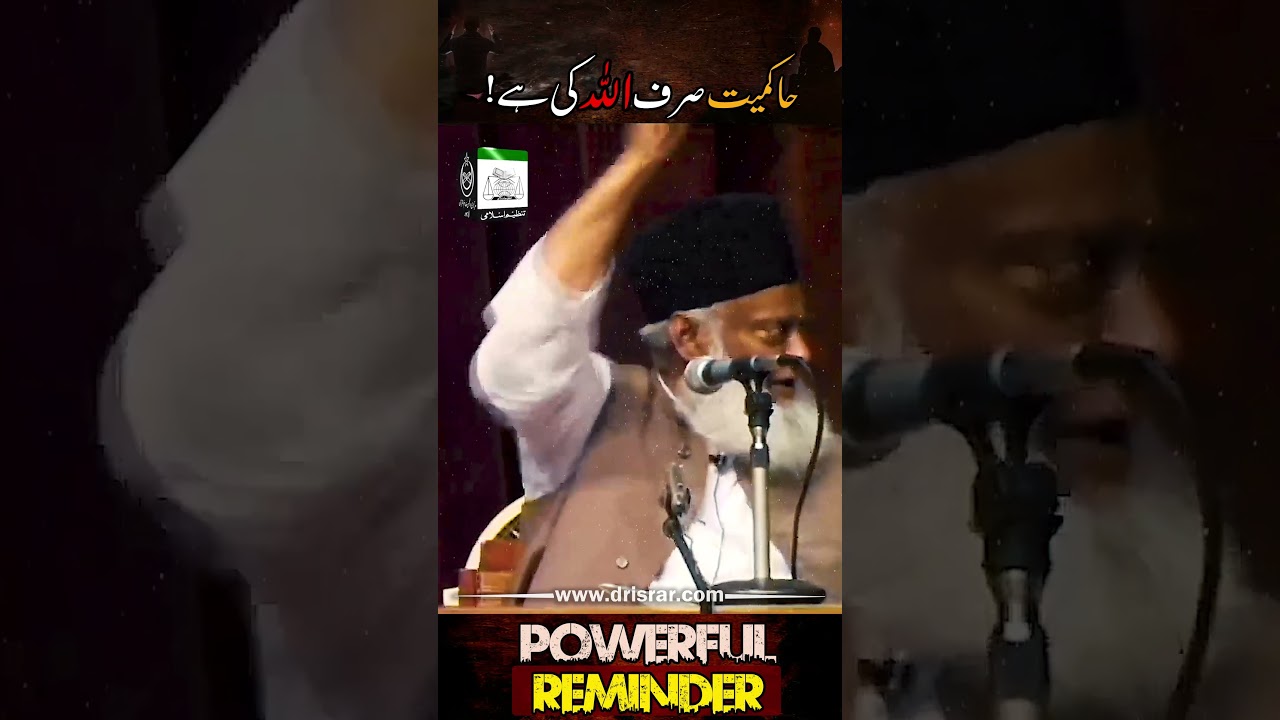
This lecture asserts that true sovereignty rests solely with God, rejecting the concept of human or national governance. It emphasizes that ownership, in its entirety, belongs to God, with all possessions – including one’s own body and progeny – being held in trust. The discussion refutes any form of human rule, whether individual kingship, national dominion, or popular sovereignty, deeming them forms of associating partners with God. The speaker stresses that God, or His appointed representatives, are the sole law-givers, and true authority emanates only from the Divine.
71
