شلوار کوتاه
Dr. Israr Ahmad discusses the future establishment of a global caliphate rooted in the prophetic tradition. He references prophecies indicating a time when the message of Islam will permeate every corner of the earth, reaching all of humanity. He describes a vision where no home or dwelling will remain untouched by the teachings of Islam, and that his community will govern the entirety of the earth, having witnessed its eastern and western reaches in a divine revelation.

93
This lecture explores the divine protection of scriptures. It questions why, if God protected the Torah and Gospel, alterations still occurred. The argument centers on the unique preservation of the Quran, asserting that human intervention cannot corrupt its original form. The Quran's protection is explicitly stated in scripture, contrasting with the perceived lack of such protection for previous texts. Human translations and interpretations are acknowledged as sources of potential distortion, while the Quran itself remains inviolable.
50
Dr. Israr Ahmad explains the importance of performing the movements of prayer (Salat) correctly and with complete attention. He highlights that rushing through the postures – especially transitions between standing, bowing (Ruku), prostration (Sujud), and sitting – constitutes a deficiency in prayer. Complete upright posture after rising from each movement is crucial, ensuring a moment of stillness (Qawmah) before proceeding. This meticulous adherence to the rituals, coupled with appropriate supplications during the sitting position, constitutes a truly accepted prayer.
69
Humanity has been created in the best form, but when individuals descend to a bestial level, they become worse than animals. This lecture explores the inner self—the spiritual personality that perceives beyond the physical senses of sight, hearing, and intellect. It emphasizes the role of the heart in true understanding and perception, contrasting it with reliance solely on rational thought. This inner being witnesses, hears, and contemplates not through eyes or ears, but through the heart.
60
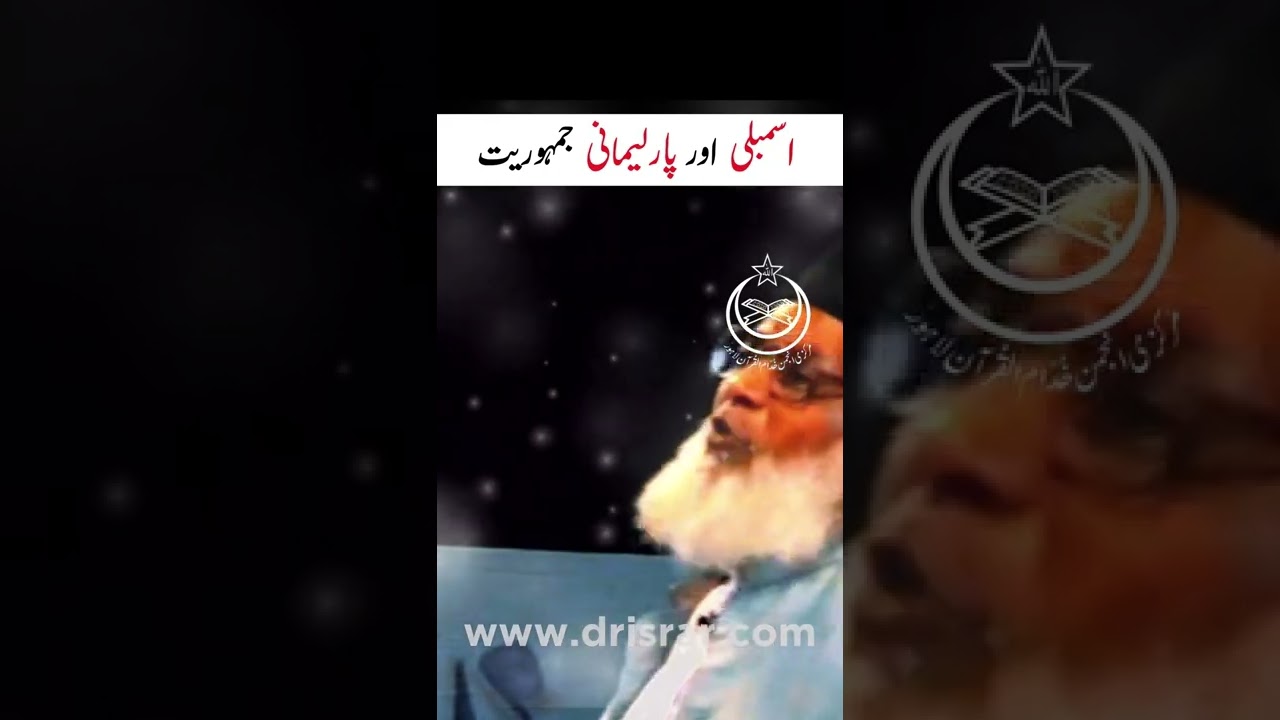
This lecture discusses the foundational principles of Pakistan’s political system, highlighting its historical roots in British parliamentary democracy. It emphasizes the concept of a shared national identity encompassing both Muslims and non-Muslims, established during the creation of Pakistan. The speaker points out that despite establishing Pakistan with a different vision, the country largely retained the British parliamentary system. The lecture examines the perception that this system was considered divinely ordained, leaving little room for alternative models and solidifying its place as the established political norm.
79
True faith stems from acting solely for the pleasure of God. This lecture explains that complete devotion requires loving and hating, giving and withholding, all motivated by a desire to please God alone. Genuine goodness isn’t merely outward action, but the purity of intention behind it. A believer’s actions—love, dislike, generosity, and restraint—become complete when driven by a sincere desire for God’s acceptance and satisfaction. This complete devotion defines the essence of faith.
67
