شلوار کوتاه
Human beings possess an inherent understanding of good and evil, stemming from a divinely inspired moral compass embedded within their nature. This internal faculty guides individuals towards righteousness and away from wrongdoing. The core principles of ethical conduct – fulfilling obligations, avoiding prohibited acts like usury and intoxicants, and embracing virtues like prayer and fasting – are foundational to this innate understanding. This inherent moral sense is not learned but rather a natural attribute of the human soul, a divine endowment that distinguishes humanity.

53
The lecture emphasizes the importance of reciting the Quran with a beautiful voice. It states that those who do not attempt to recite the Quran melodiously are not considered among the believers, referencing a hadith encouraging beautification of Quranic recitation with one's voice. Utilizing a gifted voice during recitation enhances the Quran’s inherent beauty and provides a unique experience to the listener.
61
This lecture explores the fleeting nature of worldly life and the imminence of the afterlife. It emphasizes that the time spent in this world, including childhood and the entire period of existence before the Day of Judgment, will seem as short as a single day. The speaker highlights the inevitable accountability before God and encourages reflection on the true purpose of life, urging listeners to prepare for the ultimate reckoning. The lecture stresses the brevity of existence and the importance of recognizing the approaching moment of divine call, emphasizing that the entire span of life—from birth to death and beyond—will ultimately feel condensed into a brief period.
58
This lecture explores the concept of *noor* (light) as inherent within the human heart and soul, predating the revelation of the Quran. The Quranic light, upon its descent, awakens and activates this pre-existing inner illumination. This process is exemplified in the Prophet Muhammad’s life, where the Quran served as a catalyst for his inherent spiritual capacity. The Quran is presented as a divine guide, empowering the Prophet to lead humanity towards righteousness. The lecture emphasizes the transformative power of the Quran in illuminating the inner self and guiding others towards the straight path.
65
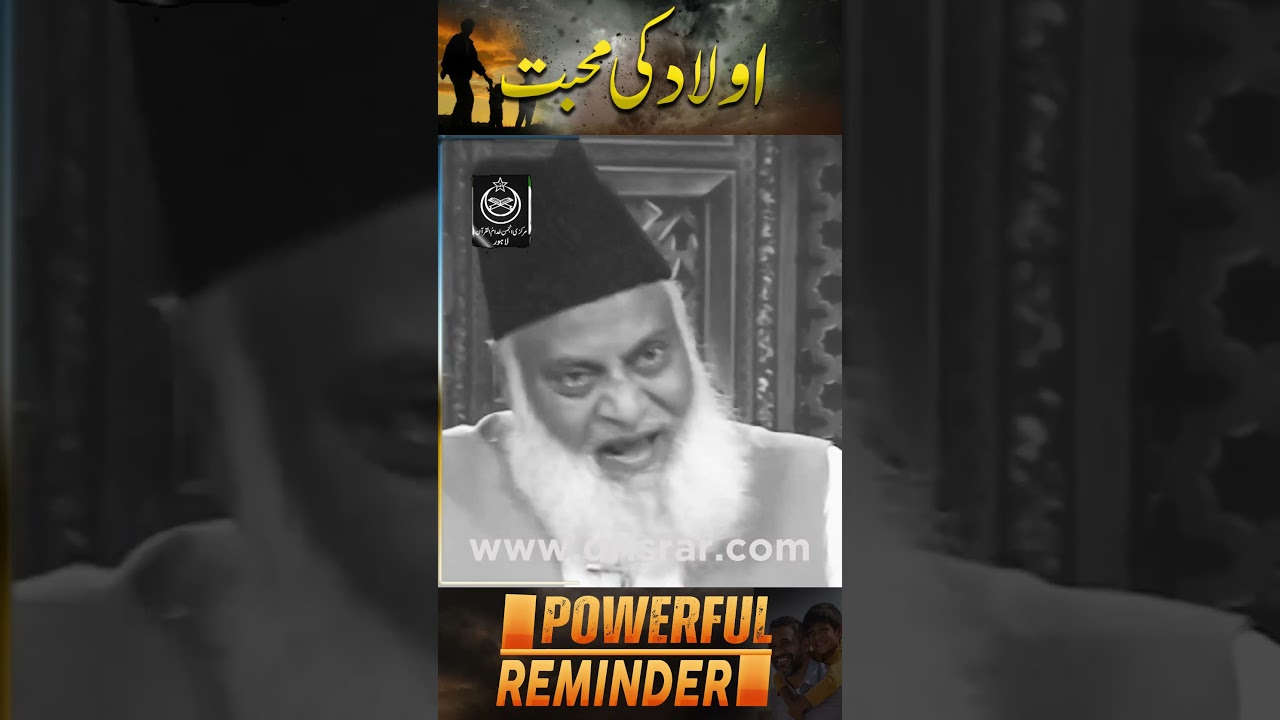
This lecture addresses the challenges of raising children in a materialistic world. It clarifies that not all spouses and children are supportive, and some may lead one astray. The core message emphasizes that true success lies in nurturing children with Islamic values, providing them with a good education through lawful means, and avoiding compromise on principles for their sake. It warns against prioritizing children’s worldly desires over one’s own spiritual well-being and highlights that sacrificing integrity for their happiness is detrimental. The speaker stresses that the greatest misfortune is to ruin one’s afterlife while trying to build a good life for one's children.
104
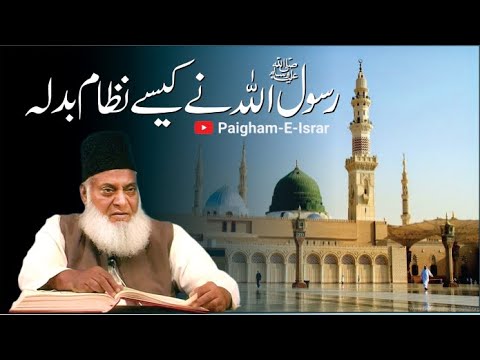
Dr. Israr Ahmad discusses the true nature of revolution as exemplified by the life of the Prophet Muhammad (peace be upon him). He emphasizes that genuine change doesn’t come through mere promises or superficial reforms, but through a comprehensive process of spiritual purification (tazkiya), organization, and unwavering commitment to establishing justice. He explains that this involves a disciplined, morally upright society prepared to challenge oppressive systems and establish a just order, guided by divine principles. He highlights the historical attempts at reform and the necessity of a strong, dedicated leadership committed to implementing Islamic principles in all aspects of life. The lecture also touches on the difference between implementing Sharia at a micro and macro level, and the historical precedent of Sharia being implemented for over a thousand years.
70
