Corti

Dr. Israr Ahmad explains that memorizing the Quran is one task, and *retaining* it is another. Forgetting memorized verses is a serious offense. Consistent recitation and revision are crucial for long-term retention. Many who claim to have memorized the entire Quran struggle to recall it throughout the year, requiring frequent re-memorization. He highlights that consistent practice is more valuable than merely claiming complete memorization, even if one is unable to perform regular prayers.

61

Dr. Israr Ahmad discusses Allama Iqbal’s vision for the Muslim Ummah, his early exposure to Islamic teachings, and the connection between his poetry and the Quran. He details the establishment of an organization fulfilling Iqbal’s dream of combining Quranic study with modern education, and the principles behind the founding of an organization dedicated to practicing Muslims committed to Quranic principles. He also explains the reasons behind the failure of the establishment of Jamaat-e-Islami and the founding of Tanzeem-e-Islami. Dr. Ahmad emphasizes the importance of prioritizing faith and practice over political engagement and adhering to a system based on commitment rather than elections. He shares his personal connection with Iqbal’s legacy and his commitment to continuing his work.
89

This lecture discusses the significance of Friday sermons (Jum'ah) as a weekly reminder of life's true purpose: seeking the pleasure of God. It emphasizes that worldly possessions are merely necessities, not ultimate goals. The speaker highlights the importance of regularly renewing one's commitment to faith, clearing away distractions, and continuously seeking knowledge and spiritual training. The weekly gathering serves as a forum for reaffirming core beliefs and strengthening the foundations of faith, much like a revolutionary movement dedicated to God.
78

This lecture explores the profound impact of consistent Quranic recitation on the purification of the self. It details how deep contemplation and repetition remove intellectual and philosophical errors, dismantling false beliefs and flawed ideologies. True purification manifests not in outward cleanliness, but in the correction of inner thought and the alignment of actions with divine guidance. The speaker emphasizes that a focus on the afterlife fosters cautious behavior, mindful speech, and a commitment to earning a lawful livelihood. This process, rooted in the teachings and example of the Prophet Muhammad, peace be upon him, cultivates a life guided by truth, accountability, and a fear of divine judgment. It is a transformation from heedlessness to awareness, from worldly desires to spiritual fulfillment.
71

This lecture explores the concept of divine guidance and its profound impact on human life. It emphasizes that success and righteousness are not achieved through personal effort alone, but are gifts from God. The speaker highlights the importance of recognizing God's favor and the potential for life to drastically change with even the smallest deviation. It underscores that all praise and gratitude belong to God, who bestows guidance and directs individuals toward the right path. The lecture serves as a reminder of God's grace and the need for constant acknowledgment of His blessings.
78
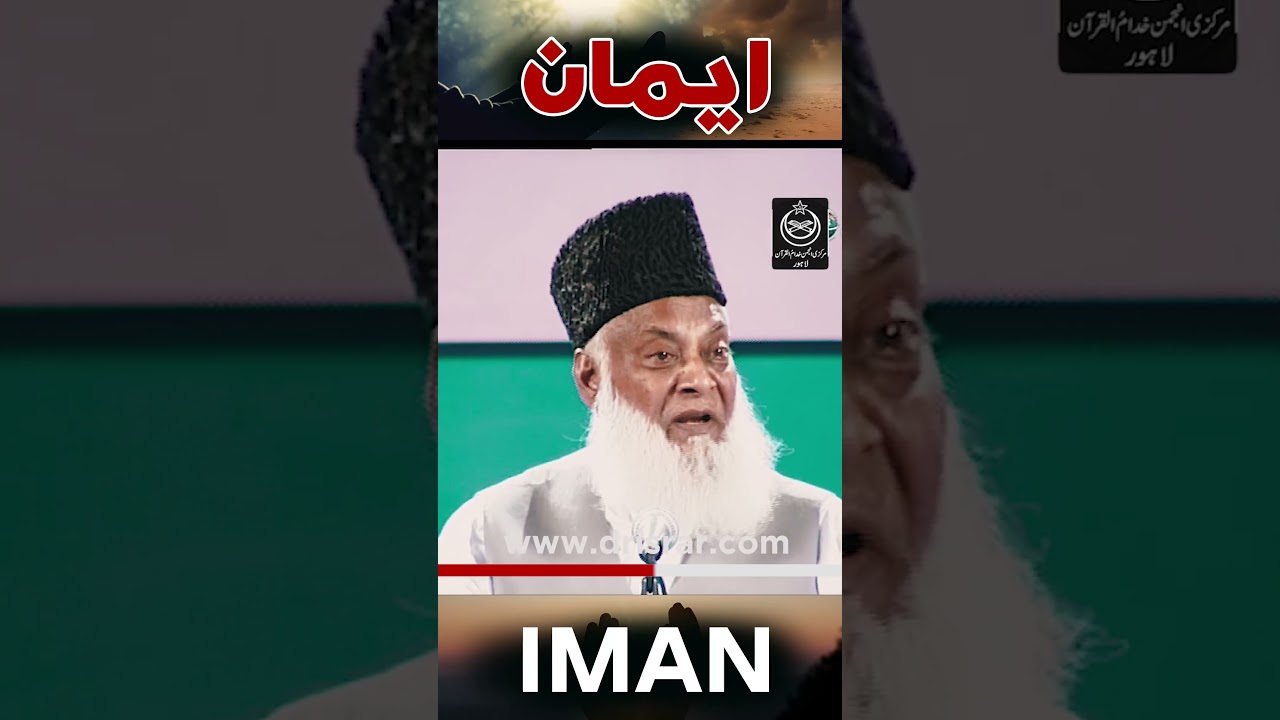
This lecture details the fundamental tenets of faith in Islam. It covers belief in Allah, the prophets, the final prophet Muhammad (peace be upon him), revealed scriptures including the Quran, the Day of Judgment, accountability, life after death, Paradise, and Hell. The discussion highlights the extensive treatment of these topics within the Quran, particularly in its earlier Meccan verses.
74
