شلوار کوتاه
This lecture discusses the foundational principles of Pakistan’s political system, highlighting its historical roots in British parliamentary democracy. It emphasizes the concept of a shared national identity encompassing both Muslims and non-Muslims, established during the creation of Pakistan. The speaker points out that despite establishing Pakistan with a different vision, the country largely retained the British parliamentary system. The lecture examines the perception that this system was considered divinely ordained, leaving little room for alternative models and solidifying its place as the established political norm.

72
The concept of *shahadat* (witnessing) in Islam extends beyond martyrdom. It encompasses bearing witness to the Oneness of God, the Prophethood of Muhammad, and the truth of the Quran, both through verbal affirmation and practical conduct. This witnessing occurs on both individual and collective levels, demonstrated through one's character, actions, and adherence to a righteous life. True faith is proven not merely by professing belief, but by embodying it in every aspect of life, reflecting a sincere connection with God, the Prophet, and the divine message.
59
This lecture explores the critical connection between mindful prayer and genuine spiritual transformation. The speaker explains that rote recitation without internal presence renders prayer ineffective. A wandering mind, preoccupied with worldly concerns, prevents the experience of divine connection. True prayer requires focused attention, a conscious awareness of standing before God, and a heartfelt submission. Only when the mind and heart are fully engaged does prayer become a powerful force for character building and positive change. The speaker emphasizes that a distracted mind will fill with anxieties and worldly matters, negating the spiritual benefits of prayer. The essence of prayer lies in experiencing a direct connection with the Divine.
72
Dr. Israr Ahmad discusses the comprehensive nature of Prophet Muhammad’s personality, highlighting his multifaceted roles as a ruler, leader, judge, husband, father, and spiritual guide. He contrasts this with the limitations of modern religious leaders who often struggle to fulfill even basic duties like leading five daily prayers consistently. The lecture emphasizes that the Prophet Muhammad embodied all these roles flawlessly, serving as a complete example for believers. The speaker points out a disconnect in modern religious practice, where individuals dedicated to self-purification often avoid leading congregational prayers.
51
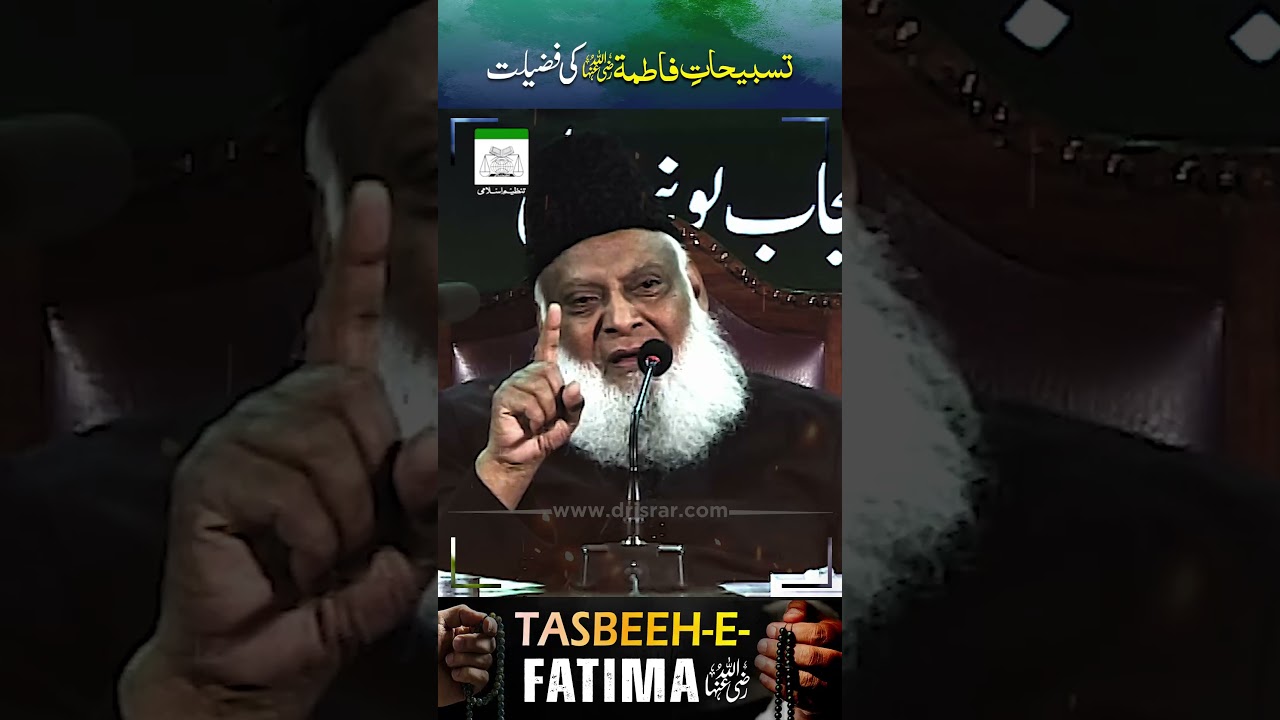
This lecture explores the life of Syeda Fatima, the beloved daughter of the Prophet Muhammad (peace be upon him). It details her hardships, including physical strain from household chores and the challenges faced by early Muslims. The discussion emphasizes her devotion, piety, and the sacrifices she made for her father and the nascent Muslim community. It also addresses a poignant moment where she questions the disparity in worldly possessions, highlighting her spiritual focus despite material needs. The lecture concludes with a reflection on the immense love and respect the Prophet held for his daughter and the practice of reciting specific praises after each prayer.
51

The core message of the Quran centers on the singular worship of Allah. This lecture explains that the foundational principle of the Quranic invitation is devotion to Allah alone, rejecting all other forms of worship. The Quran emphasizes establishing worship of the Creator, as highlighted in Surah Hud’s opening verses, which describe the Quran as a firmly established book with detailed revelations from the All-Knowing, Wise Creator. The Quranic command, 'Do not worship anyone besides Allah,' reinforces this central theme, making the exclusive worship of Allah the essence of the Quranic message. This singular devotion is the key takeaway of the entire scripture.
85
